
Four Facilitator Voices: Creating the Foundations for the Green Mindset Collective Report – The Changemaking Power of 3%

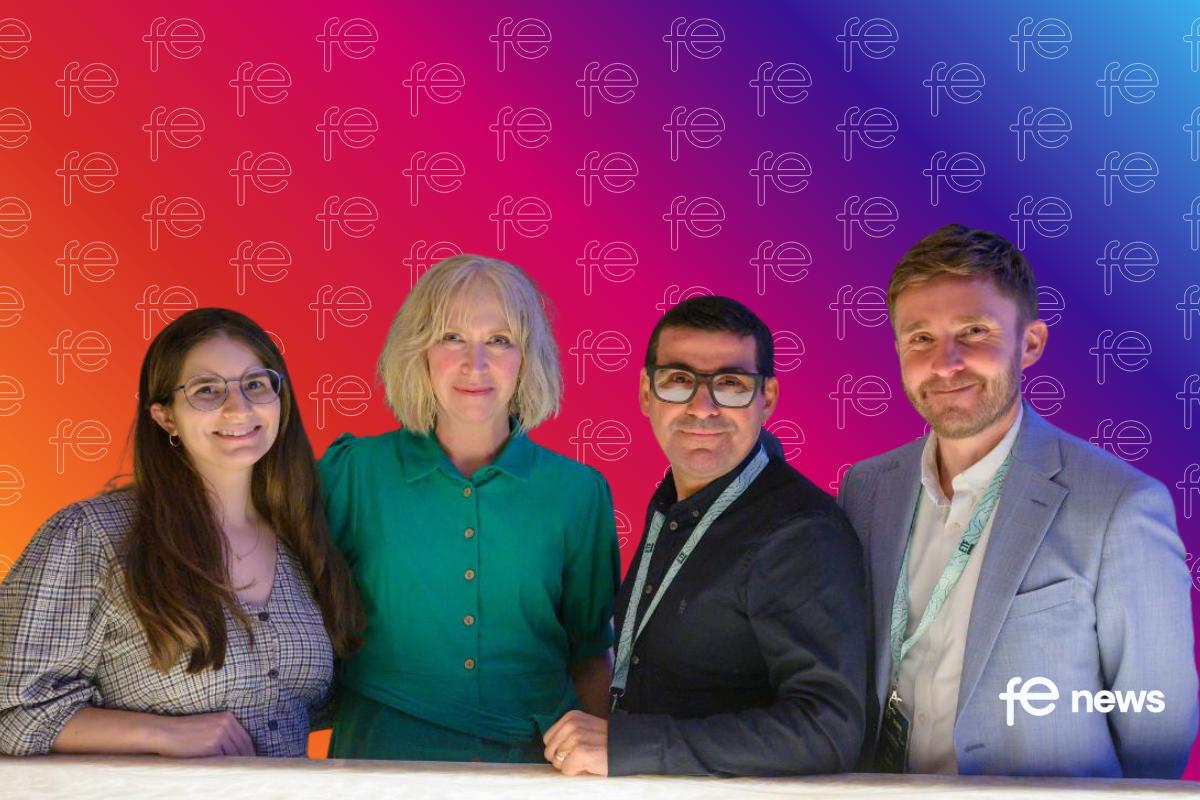
The countdown to the Green Mindset Collective report is now on. Dr Vikki Smith, from ETF and Charlotte Bonner from EAUC will be launching the report on Wednesday, 10th December. Along with a Reflective Collective live stream to unpack the report.
54 Leaders, One Report and Playbook
The Green Mindset Collective was a gathering of 54 sector leaders all working together to produce a sector-led report exploring: What is a Green Mindset? How can the FE and Skills sector develop one? How can we encourage sustainability with learners, employers, and across our organisations? As this was everyone working together, the idea was to produce a truly sector led report, with a ‘wide angled’ voice from the sector. This was a Collective Intelligence event in partnership with the Education Training Foundation and FE News.
The morning of the Collective was all about ‘scene setting’ where we look at opportunities and challenges.
The afternoon was all about the collective intelligence and breaking into small groups to work together on shaping the report (which is coming on the 10th December).
Each group had a facilitator and scribe to try our best to capture the different points from each member of the collective. To truly make this an inclusive report and playbook (and make it action-oriented), look at the big-picture macro view and the immediate: what can we do as individuals tomorrow to make a difference?
So below, we have the four facilitators’ report and findings that we wanted to share to show the collective’s vision and ideas on developing a Green Mindset and what the individual groups or pillars shared for the actions and solutions for the way forward for the sector, but for their teams to have a Green Mindset.
We split the working groups, the collective into four groups, or four pillars:
Paul Smith , Head of Quality and Standards from ETF was the facilitator for Pillar 1: Shaping the future – the FE and Skills workforce as leaders of sustainable transition
Sorah Gluck, Senior Policy and Public Affairs Manager from Edge Foundation was the facilitator for Pillar 2: A Just Green Transition – Inclusion, Equity and Belonging in Sustainable Education
Lou Mycroft, from Green Changemakers, was looking after Pillar 3: FE and Skills as Place-Based Changemakers – Anchor Institutions for Greener Futures
Toby Shergold, Group Head of Policy and Communications at Energy & Utility Skills was looking after Pillar 4: Breaking the Silos – Systems Thinking Through Interdisciplinary Practice
In the run-up to the report launch, we thought it would be interesting and helpful to share each group’s individual findings, which have served as the foundation for the report that Vikki and Charlotte have been working on. Instead of breaking these up individually, I thought it could be helpful to have this as one doc, to see the overall themes, ideas and vision in one place.
Personally, I can’t wait to launch the report on the 10th December, and I hope you find the findings from the four facilitators interesting.
Collective Principles – Trust, Autonomy and Servant Leadership
One of the principles of the Collective is that as a sector we ask for more trust, more autonomy… so at the Collective, we live this out. Each facilitator is trusted to run their group, how they see fit, it is a true ‘servant leadership’ role and what I have always found interesting, is how every facilitator runs their group in a different way on each of the Collectives we have run.
So, in keeping with this, each facilitator has written their group feedback and action points in a slightly different way, so I thought it would be interesting to keep it as is (and true to each working group) and share it with you.
Many people reading this will have been at the Collective, but this is also designed for the wider FE and Skills sector, Colleges, Training Providers, Awarding Organisations, Employers, learners… and I hope you find the ‘workings’ and ‘calculations’ to get to the report interesting.
Four Styles Create a Wide-Angled Voice Of The Sector
What emerges from these four facilitator voices is fascinating – Paul’s structured analysis, Sorah’s policy focus, Lou’s urgent poetry, and Toby’s practical approach – together they create the ‘wide angled voice’ from the sector that we were aiming for. Different perspectives, different styles, but a shared vision… and running through all four groups, one powerful idea kept surfacing (which was shared from Lou from the morning sessions): that just 3% of passionate changemakers can influence the 85%, creating momentum that transforms organisations, communities, and ultimately the sector… and sectors that we serve.
Unique Sector Led Report
The report from Charlotte and Vikki is like no report I have ever seen in 22 years, it is truly action orientated, so I hope you find this interesting and once the report is live, it could be a very cool companion on change making and making impactful change in your organisation, in your community, with communities of practice and how to transform your sector, your locality. It is really exciting to see this grow, so I hope you can catch the vision as well.
Below are the four facilitator group findings from the Collective.
Intro by Gavin O’Meara, CEO and Founder, FE News
Pillar 1: Shaping the future – the FE and Skills workforce as leaders of sustainable transition
By Paul Smith from ETF
Opportunities discussed were vast and varied in nature reflecting the complexity of the challenge faced and diverse nature of roles and objectives in FE and skills (FES). It was positive to see no specific focus on ‘academic/teaching staff’ reflecting the understanding and importance of the whole FES workforce in being vital to the success of future strategies in FES and globally. Learners were central to discussions on workforce development, with emphasis on providing social and professional support, high-quality information, skills, and guidance. Learners’ energy and knowledge should be harnessed as equal partners in driving green strategies forward. Solutions linking to improving workforce knowledge, AI use and green responsibilities, curriculum models and staff working patterns, utilising learners’ motivations and knowledge more, scaling up with existing staff/student cohorts, improved careers data and interlinking jobs/skills. Combined trends were noted for some key opportunities/solutions linking to:
(1) Workforce Knowledge; increasing confidence in the green agenda, communicating realistic levels knowledge, simplifying terminology, and improving overall information advice and guidance to all stakeholders, such as learners, parents, employers etc.
(2) Curriculum Models: breaking away from traditional models which cause restraints. Naturally embed sustainability and future skills into existing programmes in new ways to immediately impact on thousands of learners already enrolled or new cohorts needing training and new ‘green skills’. Solutions such as modulisation of knowledge/content, demand-led programmes by regional job/skills needs, alternative working and teaching patterns (E.g., ‘bulk weekends’ to attract staff and learners), highlighting interconnecting programmes required for job sectors and transferable skills.
(3) Global Solutions: harness international collaboration to identify effective practices from other countries and explore how deeper partnerships can help address challenges in shaping the future workforce.
Discussions and statements on actions to drive forward the agenda and maintain momentum were equally diverse and personal to everyone considering their role, priorities and opportunities to influence (E.g., teachers on learners, professionals with colleagues, CEO’s with politicians). Actions linked to shaping the future of the FE and Skills workforce as leaders of sustainable transition included:
- Immediate (tomorrow’s) actions: such as building instant connections (E.g., in person like Collective events and LinkedIn), sharing knowledge through more collaboration (E.g., with learners/professionals to attract the 3% needed to influence), telling positive stories (E.g., case studies on success, regular FE News blogs, celebrating awards), and talking to politicians to influence systemic changes.
- Long-term actions: such as increasing high-quality collaboration (E.g., with employers/providers and directly with green jobs/development pathways), evolving the curriculum models to increase accessibility and decrease staffing challenges (E.g., modulisation, and weekend delivery), utilising devolution and LSIPs experiences and research trends and focusing on cultural changes (E.g. Green mindsets!).
Shifts in Policy: to support the whole workforce, such as increases in mandatory strategies for providers, reporting (E.g. Environmental, Social, and Governance), policy and regulation for senior teams and funding access. The quality assurance, regulation and promotion of effective CPD opportunities to support workforce access to high quality, efficient training. Utilising and influencing devolution approaches for skills development and funding opportunities.
Pillar 2: A just green transition – inclusion, equity, and belonging in sustainable education
By Sorah Gluck, from Edge Foundation
Whose voices are missing?
Particularly when considering a topic like inclusion, we need to think about whose perspectives aren’t being heard, including FE teachers, employers, non-academics, and (most importantly of all) young people themselves, especially those with SEND and from minority or disadvantaged backgrounds.
Things we can consider to empower these voices include:
- Ensuring FE representation on DfE trailblazer groups, including through paid time off to participate.
- Opportunities outside of formal education to give students a voice.
- Online discussions bringing employers, providers, and local stakeholder e.g. LSIPs together.
- More outreach to groups that may not know that they deserve to have a say in these decisions.
How we can create real momentum in this space
It’s important first to recognise the barriers that get in the way of us driving change. It’s not always easy to involve certain groups in the green agenda as it’s too often seen as a middle-class pursuit. This is also seen in education where the independent sector often has the time and money to deliver a broader curriculum that teaches sustainability in a more engaging way. In addition, the lack of green jobs can turn people away from learning about sustainability, especially in areas with high NEET rates.
The group shared some excellent suggestions on how we can create a just green transition:
- Embed sustainability into the curriculum by making it relevant to learners’ lives. Connect it with nature, their community, and their health. Help show them what sustainability looks like in their day-to-day lives to broaden their understanding of what “green skills” might mean.
- Empower educators and the wider FE workforce by connecting this work to wider national Net Zero missions, through initial teacher training and CPD.
- Share best practice of what has made a real difference to communities by businesses, providers, and other organisations, particularly where sustainability initiatives have created benefits in other areas. These can be promoted through a nationally recognised sustainability award.
- Harness our diversity by giving voice to students and educators from diverse backgrounds.
- Challenge orthodoxy by interrogating our views, seeking diverse perspectives, and taking innovative approaches.
- Empower changemakers by handing responsibility to those with real passion and power to create impact – these may not be obvious choices.
- Showcase routes into green jobs by forming partnerships around specific professions through career hubs.
- Incentivise employers to create green jobs through financial support or utilising CSR budgets to ensure that young people can access opportunities in this space.
Participants were well aware that many of these changes will not be possible without wider policy change. For example, embedding sustainability in the curriculum will require more teaching time and better funding for FE, while driving local change will require greater devolution of powers. However, there was also a sense that a lot of this change can only be driven by people with a real passion, regardless of policy shifts.
Pillar 3: FE and Skills as Place-Based Changemakers – Anchor Institutions for Greener Futures
By Lou Mycroft, Green Changemakers
Leading anti-competitively and with equality is the path, working with the whole community. Collaboration is a ‘green skill’ and is for the wider good.
3% (changemakers) are passionate and hopeful. They need time and agency to connect the 85% with why they care. Leadership is enacting the value of collaboration and framing the challenge so that parameters are clear.
‘Green confetti’ already exists and needs to be brought into a coherent encounter. The work doesn’t need to be perfect. Green action should be empowered/embodied (beyond embedded) in all areas of operations.
Local political/community relationships are challenging but necessary. There is momentum in the world, we can draw energy from this and resist being super-localised. We are beautifully placed to instil curiosity and creativity.
Momentum doesn’t have to mean speed. Change happens as a consequence of small, slow, patient actions taken by people who are enabled to take risks, innovate, fail and learn.
An ‘evidence-based’ culture holds us back. We can’t start with answers, nobody has faced this before. We get tangled in language – new ideas dropping into old cognitive containers. We focus on ‘sustainability training’, when it needs to be innovation.
The first operating system is focused on the day-job, which dominates and exhausts. Good intentions lead to unintended consequences. Leaders’ mindset needs to shift to creating opportunities for the 3% and using their power to shift systems. The urgency of the situation is more important than the money this may cost.
Actions:
- Green Confetti. Piece together everyone’s ‘One Big Thing‘ onto a website so it makes up a world map.
- Green Research. What are its ethics and how can we adapt and share?
- Skills Levy. Use to support climate action innovation, to incentivise employers.
- Exec Teams. Empower 3% of colleagues to reach 85%. An additional 3% each year.
- Local/Combined Authorities. Place-based collaborations with green skills on the agenda.
- Green Changemakers. Be intentional in training the 3%.
It can feel so big it’s out of reach – take account, celebrate, empower a step change to move forward (messily) as one.
The system needs to be comfortable with uncertainty. We can’t predict the future, so we need to define the environment we want to operate in. It’s up to us to lead on what ‘exemplary’ looks like. How can we get everyone broadly in step? The term ‘Green Mindset’ is helpful!
Time and resource are needed for something to become part of DNA. What can we remove to open up space? Compliance removes the creativity we need for the art of possibility. Disruptive conversations can energise and shifts are possible. We need to be optimistic and move outside constraints.
Pillar 4: Breaking the Silos – Systems Thinking Through Interdisciplinary Practice
By Toby Shergold from EU Skills
The group focussed on looking at existing systems and finding small wins or marginal gains that could have the potential to aggregate into something significant, especially if we used joined-up thinking and approaches.
While the group believed that a small but very active and motivated group could make a big difference (the 3%) their focus was more on the next circle of influence and how to get more people doing a small amount (the 25%), enabling a distributed group as well as a centralised small group.
They discussed how to make sure sustainability was accessible – its complexity was seen as a potential barrier and that the language used was positive and enabling rather than excluding and guilt-inducing. Another potential barrier was the feeling of ‘What difference can I make?’, whether on an macro, international level, or within a large institution. Giving people the agency to go ahead and make small incremental changes is important to counter this.
One focus was on curriculum and assessment and what they can do to ensure sustainability was not a bolt-on but a fundamental part of apprenticeships as other regulated areas are. As courses come up for renewal would be an opportunity for them to be assessed and reconfigured.
Also, it was asked, what could colleges do to offer short courses and sustainability-focused skills training in light of the changes to the Growth and Skills Levy? Continuing Professional Development was another area where a sustainability focus can be introduced. Specific teaching methods or tools were seen as an effective way of inspiring students and staff, offering simple and relevant exemplars. For example teaching ‘nose-to-tail’ principles in butchery, introducing some online teaching to reduce driving miles, or the electric cow’ project
Because of the group’s focus, we tried to steer clear of demanding major, whole-systems changes, but it was unavoidable that legislation, regulation and policy were barriers that participants felt got in their way when trying to make even small changes. The response was that, rather than waiting for governments to make these changes, see what can still be done today to remove, or go around, these barriers.
Tapping into the energy and enthusiasm of students and newly qualified teachers was seen as an opportunity, although they were among the voices it was felt were not heard enough. Again, bottom-up movements were seen as a potential for change and giving students agency rather than top-down directives.
Other voices that weren’t heard included support staff, local community members and local businesses, especially SMEs. Bringing people together was seen as an excellent way bring about change, through sharing learning and best practice. Use existing forums to hear unheard voices on sustainability, and if they don’t exist, create them. These can be formal or, casual ‘fika’ get togethers.
The What Next and Collective Intelligence
So… you have the calculations, the findings, the group collective intelligence. Can I suggest two things:
One, please check out the report on the 10th December… and most importantly, use the ‘playbook’ as an action-focused tool and resource to be one of the 3% changemakers to make positive, impactful change for you, your colleagues, your locality and the employers, learners and sectors you serve
Two, join us live at 1pm on the 10th December for the Green Mindset Collective report…. A Collective Reflective with the report authors. We are live 13.00 – 13.30 UK Time.
… and three… be one of the 3%… not the 15% that do not want to change!
Here is a short video to give you a snapshot of the day, and the collaborative vibes from the Green Mindset Collective if you missed out:
Responses