The Coronavirus Job Retention Scheme has done vital work protecting jobs. The scheme has supported 9.6 million people in total, with over 6.8 million people still supported by the scheme at the end of June 2020. However, whilst this has been supportive, the threat of mass unemployment still exists. The Bank of England estimates that unemployment could rise to 7.5 per cent by the end of the year, leaving 2.5 million people out of work.
One of the key points from TUC’s Job Retention Deal is to develop the skills of the future, by funding any worker undertaking less than 50% of their normal working time to part in training. In addition, the proposal includes targeting support on the businesses that need it most and encouraging a return to work. This would mean the scheme was supporting viable businesses that can retain the skills of their workforce – but need more time to get back on their feet.
“It’s crucial we take this opportunity to prepare our workforce for the jobs of the future – building a stronger labour market that will support businesses through challenging economic conditions. Organisations will need to think holistically about managing reskilling, upskilling and job transitioning.
As the war for talent intensifies in the post-pandemic circumstances, employee development and talent pooling will become increasingly vital to building a modern workforce that’s adaptable and flexible. Addressing and easing workplace role transitions will require new training models and approaches that include on-the-job training and opportunities that support and signpost workers to opportunities to upgrade their skills. Similarly, investing in digital talent platforms that foster fluidity, by matching workers and their skills with new work opportunities within the enterprise will be key.
Most organisations now understand that by encouraging personal development and providing opportunities to learn a new skill, employees are also more positive and engaged. If we can create good learning habits right now, it will stand us in good stead to be able to carry them through into the future.”

In my first two articles of this series, I explored the history of New Zealand’s vocational education system and the announcement of the 2026 reforms.…
Welcome to FE Soundbite Edition 828: 20th December 2025. Last Soundbite of 2025: Mayors, Milburn and Major Welfare Reform This is the weekly e-newsletter and…
City Region needs estimated 9,000 extra construction workers in next five years Mayor Steve Rotheram today signed a first-of-its-kind training agreement to tackle an estimated shortfall of 9,000 building…
New City College Hackney welcomed two senior Government ministers this week as students told them how international study opportunities have enriched their learning and boosted…
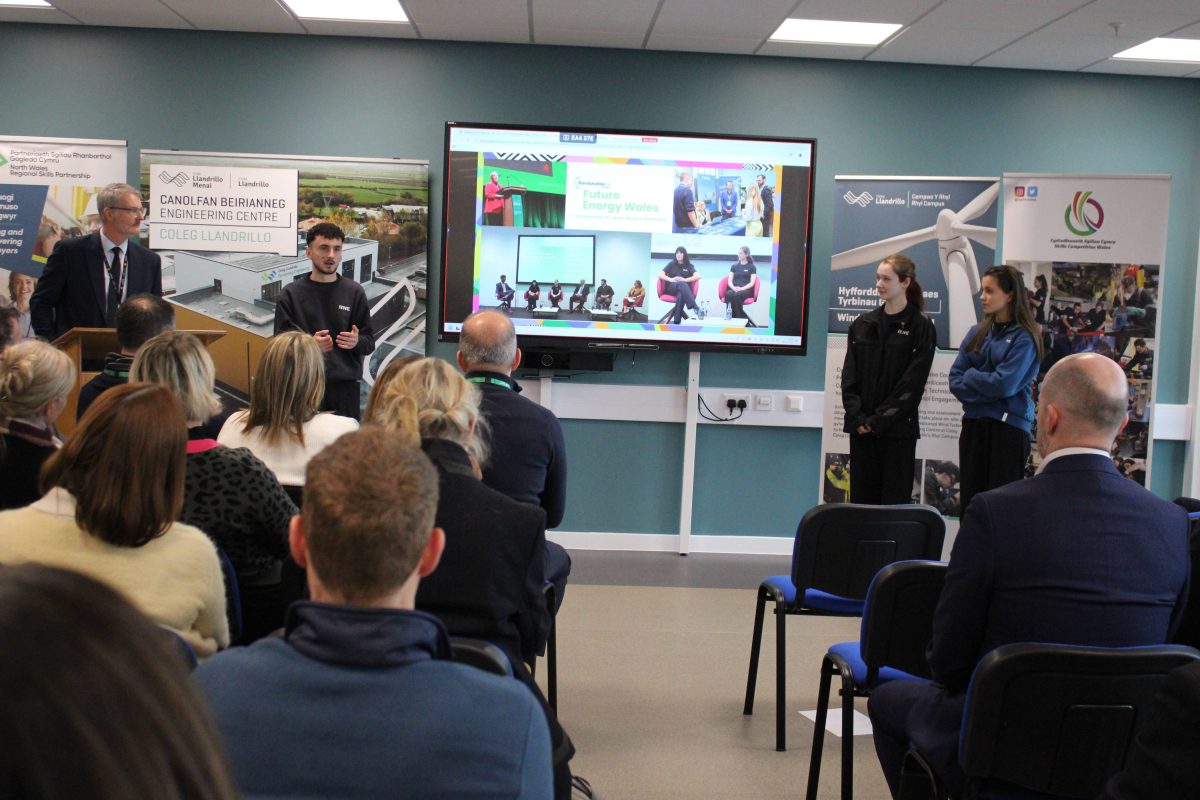
The North Wales Regional Skills Partnership in collaboration with Grŵp Llandrillo Menai, hosted a highly successful Renewables Skills Roundtable at Coleg Llandrillo’s Engineering Centre on…
Colleges are now operating in an environment where the traditional markers of credibility have weakened to the point of near collapse. Information that once arrived…
The UK and EU today announced a major package of agreements, including the UK’s association to the Erasmus+ programme in 2027, alongside moving forward on energy…
New City College’s Construction and Engineering Campus in Rainham was in the spotlight when it welcomed Baroness Jacqui Smith, Minister for Skills, for a visit…
Barnsley College is celebrating the opening of a groundbreaking new training centre preparing students for careers in Low Carbon, Renewable Energy, Retrofit and Sustainable Construction.…
Please allow a few minutes for this process to complete.
Report
You have already reported this .
We use cookies on our website to give you the most relevant experience by remembering your preferences and repeat visits. By clicking “Accept”, you consent to the use of ALL the cookies. However you may visit Cookie Settings to provide a controlled consent. Read More
This website uses cookies to improve your experience while you navigate through the website. Out of these cookies, the cookies that are categorized as necessary are stored on your browser as they are essential for the working of basic functionalities of the website. We also use third-party cookies that help us analyze and understand how you use this website. These cookies will be stored in your browser only with your consent. You also have the option to opt-out of these cookies. But opting out of some of these cookies may have an effect on your browsing experience.
Necessary cookies are absolutely essential for the website to function properly. These cookies ensure basic functionalities and security features of the website, anonymously.
Cookie
Duration
Description
cookielawinfo-checkbox-analytics
11 months
This cookie is set by GDPR Cookie Consent plugin. The cookie is used to store the user consent for the cookies in the category "Analytics".
cookielawinfo-checkbox-functional
11 months
The cookie is set by GDPR cookie consent to record the user consent for the cookies in the category "Functional".
cookielawinfo-checkbox-necessary
11 months
This cookie is set by GDPR Cookie Consent plugin. The cookies is used to store the user consent for the cookies in the category "Necessary".
cookielawinfo-checkbox-others
11 months
This cookie is set by GDPR Cookie Consent plugin. The cookie is used to store the user consent for the cookies in the category "Other.
cookielawinfo-checkbox-performance
11 months
This cookie is set by GDPR Cookie Consent plugin. The cookie is used to store the user consent for the cookies in the category "Performance".
viewed_cookie_policy
11 months
The cookie is set by the GDPR Cookie Consent plugin and is used to store whether or not user has consented to the use of cookies. It does not store any personal data.
Functional cookies help to perform certain functionalities like sharing the content of the website on social media platforms, collect feedbacks, and other third-party features.
Performance cookies are used to understand and analyze the key performance indexes of the website which helps in delivering a better user experience for the visitors.
Analytical cookies are used to understand how visitors interact with the website. These cookies help provide information on metrics the number of visitors, bounce rate, traffic source, etc.
Advertisement cookies are used to provide visitors with relevant ads and marketing campaigns. These cookies track visitors across websites and collect information to provide customized ads.
Responses