
Degree Apprenticeships – Passing or Failing the Social Mobility Test?
Ever since their launch in 2015 Degree Apprenticeships have been criticised for not delivering on the social mobility agenda. The charge has also been levelled…

Higher apprenticeships go from level 4 to 7 and are equivalent to a foundation degree and above. Degree apprenticeships are available at levels 6 and 7 and are equivalent to a full bachelor’s and Master’s.
They combine work with study and may include a work-based, academic or combined qualification or a professional qualification relevant to the industry.
In the UK, you can apply directly to the employer. You can also use the Find an Apprenticeship website or explore options through UCAS. Applying for a degree apprenticeship resembles a job application, allowing flexibility as applications can be submitted at any time, unlike traditional university courses.
The application process may include submitting a CV and participating in an interview, with specific requirements varying depending on the apprenticeship.
Overall, they are a great way to get the best of both worlds, by enjoying a university education all the while gaining professional experience. There will be a higher workload than with a regular apprenticeship or degree, but you will also have the support you need to do well.

Ever since their launch in 2015 Degree Apprenticeships have been criticised for not delivering on the social mobility agenda. The charge has also been levelled…

New model university backed by Cranfield University, MK:U, pilots first four Level 6 Degree Apprenticeship courses in partnership with Grant Thornton UK LLP. Businesses able…
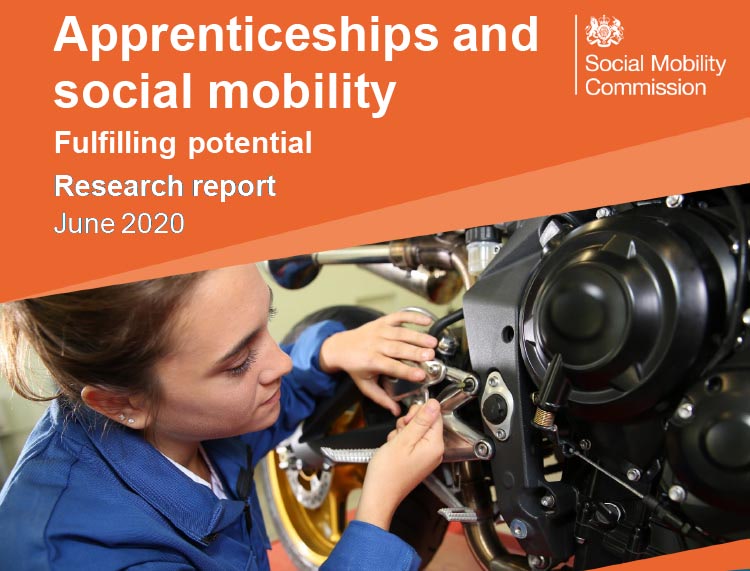
Apprenticeship system failing people from disadvantaged backgrounds Today (24 Jun), @SMCommission published its latest research report, ‘Apprenticeships and social mobility: fulfilling potential’. This systematic analysis investigated…
Please confirm you want to block this member.
You will no longer be able to:
Please allow a few minutes for this process to complete.