
BIEA highlights urgent need to combine AI literacy with youth wellbeing at World Internet Conference 2025

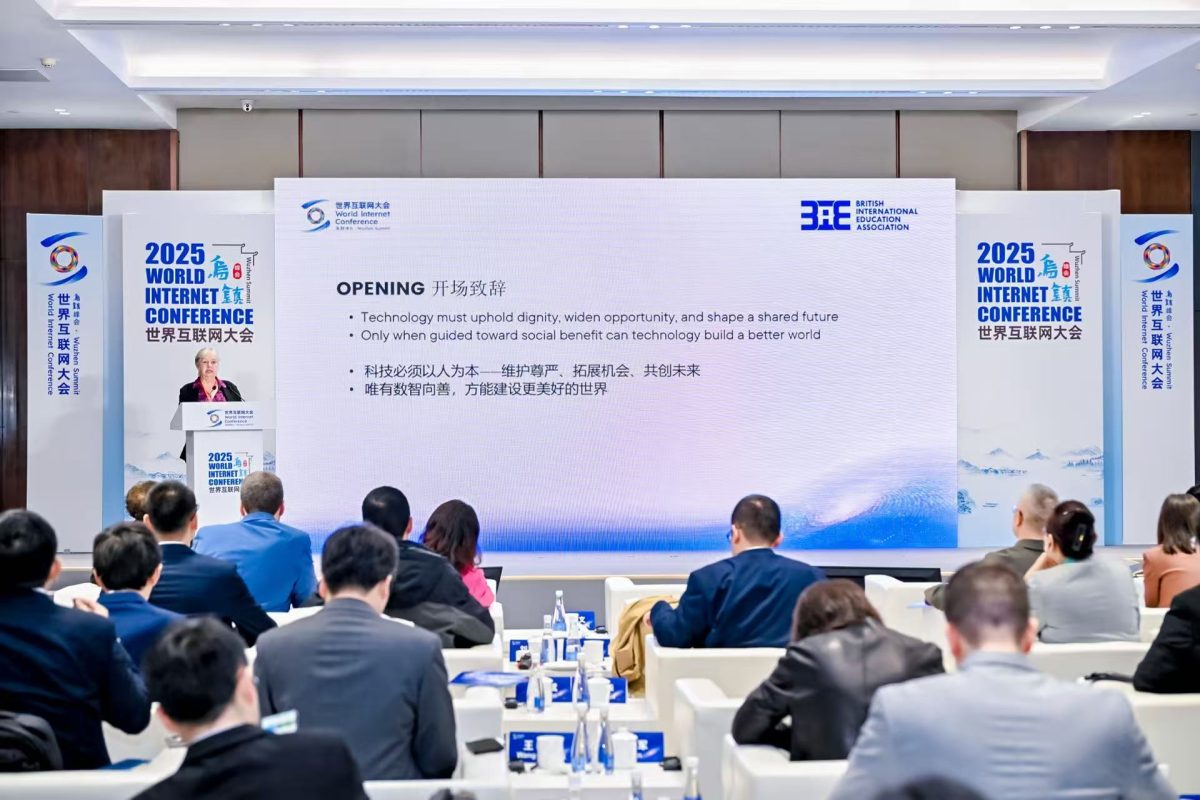
The British International Education Association (BIEA) has called for stronger integration of AI skills, mental-health awareness, and equitable access to STEM pathways during its participation at the World Internet Conference (WIC) Charity Forum 2025 in Wuzhen, China.
Representing BIEA, Nikki Collins addressed global leaders and organisations on how education systems must adapt to ensure young people can participate meaningfully — and safely — in the digital future.
This year’s WIC brought together 1,600+ delegates from over 130 countries and regions, focusing on “Building an Open, Secure and Inclusive Intelligent Future — Jointly Constructing a Community with a Shared Future in Cyberspace.”
Digital literacy is not translating into STEM participation
Speaking at the forum, Collins stressed that digital familiarity does not automatically translate into future-ready skills.
“Despite growing up as digital natives, many young people lack the confidence, aspiration, and direction to engage with STEM careers,” she said. “Closing this gap is not just an educational priority — it is an economic necessity.”
Research quoted during the talk highlights persistent disparities:
- Young people in disadvantaged groups remain 44% less likely to pursue STEM after age 16 despite similar device access.
- OECD analysis warns that shortages in STEM talent could limit national competitiveness in AI, data science, and green innovation.
BIEA’s work across more than 30 countries suggests that hands-on, purpose-driven STEM experiences are key to unlocking interest. Initiatives that enable young people to apply AI tools to real-world challenges — from biodiversity monitoring to ocean-plastic analysis — build not only technical understanding, but also critical thinking and ethical awareness.
AI education must include well-being
Alongside the economic case, Collins raised concerns about the mental-health pressures linked to digital environments.
Global reports increasingly connect heavy social-media use with rising rates of anxiety, attention difficulties and low self-esteem among young people.
“Digital access without digital wellbeing leaves young people vulnerable,” Collins warned. “We must ensure that AI education addresses both capability and safety.”
A recent collaboration between BIEA and University College London found that students engaging with collaborative STEM projects showed improved problem-solving confidence and greater environmental awareness — all linked to enhanced resilience.
A whole-society approach to preparing young people
BIEA advocates a joined-up strategy involving:
- Schools and teachers
- Families and community organisations
- Universities and research bodies
- Employers and industry partners
This approach prioritises:
- Lowering barriers to STEM participation
- Embedding wellbeing into digital and AI learning
- Developing ethical awareness and responsible use of AI
- Promoting collaboration between education and industry
“Young people must be supported not only to use technology, but to shape it,” Collins said.
“Strong youth capability equals strong national capability.”Learning from global partners
The conference also featured contributions from international charities and technology companies. UNICEF highlighted the importance of safeguarding and resilience for young people engaging with online spaces, while Xiaomi, Tencent, Alibaba and Ant Foundation discussed how technology-enabled platforms can broaden participation in education and civil society.
Looking ahead
BIEA is expanding its programmes to support educators and young people through:
- The BIEA International STEM Competition
- BIEA STEM Stars accreditation
- Teacher and mentor training
- Youth innovation and community projects
These initiatives aim to strengthen STEM confidence, skills and wellbeing for young people aged 0–25, with particular focus on widening participation and supporting under-represented communities
Responses