
Freelance Education Framework launches as UK’s first national standard for freelance careers in education

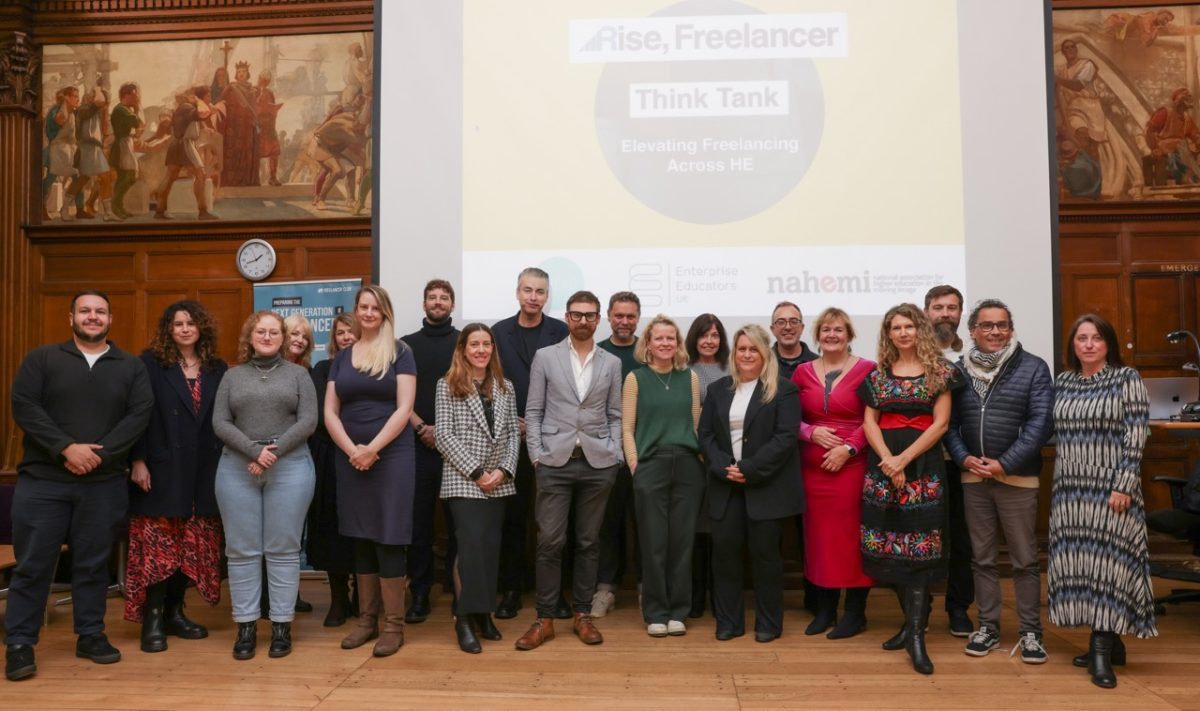
The Freelance Education Framework (FEF), a new national standard designed to embed freelance career pathways into Further and Higher Education, will officially launch this spring, providing institutions with a structured approach to supporting students entering freelance, self-employed, and portfolio careers.
Developed by Freelancer Club in collaboration with leading institutions and sector bodies, the framework responds to a growing shift in how students earn while studying and continue to freelance after graduation. Increasing numbers of students are building side hustles, pursuing freelance careers, and seeking flexible ways of working, yet institutional support has historically been fragmented, inconsistent, or absent altogether.
The Freelance Education Framework introduces a clear, consistent model to help education providers recognise, support, and measure freelance outcomes. It establishes a shared language across the sector and a practical roadmap for embedding freelance education into curriculum, careers support, and institutional strategy.
A soft launch of the framework will take place online on 29th April 2026 in association with the Council for Higher Education in Art & Design (CHEAD). This will be followed by a live national launch event on 30th June 2026 in Birmingham, bringing together educators, sector leaders, and policymakers to mark the introduction of the framework.
The framework has been co-developed through the Freelance Education Think Tank, a collaboration of 11 institutions recognised for their leadership in freelance education, alongside sector partners including CHEAD, Enterprise Educators UK (EEUK), and the National Association for Higher Education in the Moving Image (NAHEMI). This cross-sector approach ensures the framework reflects both academic and industry needs, while aligning with evolving graduate outcomes and employability priorities.
Matt Dowling, CEO of Freelancer Club and Chair of the Freelance Education Think Tank, said:
“Less than a decade ago, freelancing sat on the fringes of education. It was widely misunderstood, unsupported, and often dismissed as a fallback option. Today, it’s how the majority of students are earning, learning, and building their careers from day one.
The Freelance Education Framework is the sector catching up with that reality. It’s providing the structure, recognition, and consistency that’s been missing, and turning what was once fragmented into a credible, supported pathway at scale.”
The Freelance Education Framework also introduces a three-tier accreditation model, giving institutions a way to understand their current approach and track progress over time. By embedding freelance pathways more clearly, it supports stronger graduate outcomes and helps ensure students are better prepared to succeed independently.
The launch marks a significant step towards recognising freelancing as a legitimate and viable graduate destination. It also signals a broader cultural shift within education, moving from isolated initiatives to a coordinated, institution-wide approach that reflects the realities of the modern workforce.
Freelancer Club, the organisation behind the framework, has spent over a decade supporting freelancers through jobs, training, and community. Through the Freelance Education Framework, it aims to align education, industry, and policy to create a more inclusive and effective pathway into freelance careers.
Responses