
Beyond Green Confetti: What the Green Mindset Collective taught us

On 30 October, nearly 80 leaders from across FE and skills including providers, educators, sustainability leads, employers, awarding bodies, policymakers and student voices spent a day doing something unusual: thinking and working across the system. Not another “green skills” talking shop, the Green Mindset Collective set out to surface what’s already working, name the tensions honestly, and co-design practical next steps.
Convened by FE News and the Education Training Foundation (ETF) – the professional body for the FE and Skills workforce – the Collective aimed to turn intent into coordinated action.
“All skills are green skills – if we choose to teach and lead that way.”
What moved on from the pre-event debate
In our earlier articles, we argued three things. First, “green” must be defined plainly and used consistently; vague labels breed mixed signals and muddled delivery. Second, technical skills and education for sustainable development belong together: the workforce needs hands-on capability and the critical understanding to apply it ethically and systemically. Third, culture change matters as much as curriculum change: unless the everyday habits of teaching, leadership and operations shift, new courses alone won’t deliver meaningful or lasting impact.
The Collective confirmed these, and pushed further. Three insights particularly stood out.
1) From green initiatives to a Green Mindset
Participants resisted “project-itis”. The signal from the room was clear: sustainability must become the default lens for decisions in curriculum, leadership and operations, not an add-on or a tranche of new courses. It means treating sustainability as a decision-making lens, not a project list — something that shapes priorities. It’s reinforced by leadership routines: the questions asked in meetings, what’s measured, and what’s celebrated so sustainability becomes the default expectation across governance, curriculum, estates and partnerships. It also rests on shared language and purpose, so people pull in the same direction even when local contexts differ. Above all, it prioritises alignment over activity so we have join-up across policy, funding, standards, regulation and practice to reduce friction and increase impact.
2) System coherence beats heroic effort
The sector is rich in intent but hampered by policy churn, slow qualification refresh cycles and fragmented signals. The ask was not for another initiative but for alignment: DfE, Ofsted, Skills England, awarding bodies and combined authorities pulling in the same direction, with faster update cycles that bake sustainability into standards and assessment. The forthcoming ETF Recognition Framework for Sustainability will help bring that alignment to life, offering a shared benchmark for what good looks like, connecting individual practice, institutional culture and system-level progress.
3) People First
People First: agency, identity and belonging Learners want to lead; staff want permission and time. The most cited catalyst was the 3%/85% effect: identify a small, motivated group of champions and give them permission, visibility and time and they will influence the majority. This isn’t about perfection; it’s about confidence, equity, recognition and belonging.
“Hope is a renewable energy, if we harness it.”
What we heard (and what it means)
Across the day a clear message emerged: sustainability has to be instinctive rather than additive. Many described a shift from teaching about sustainability to teaching through it: letting people–place–planet shape decisions in curriculum design, leadership conversations and day-to-day operations. That change of stance is inseparable from agility. Instead of waiting for the next reform cycle, providers can reach today’s learners through modular, stackable and demand-led learning, including teaching formats that make participation realistic for SMEs and adult learners.
Equity and Social Justice
Equity ran through the discussion. “Sustainability without social justice is incomplete” captured the mood: learner voice, including SEND and marginalised groups, should shape priorities alongside employer and government inputs. Practical barriers such as timetables, transport and funding need attention if participation is to be genuine. Employer partnership also looks different when framed this way. Co-design works best when the business case is explicit: productivity gains, risk reduction, brand value and talent pipeline. The Apprenticeship Levy and micro-qualifications were repeatedly cited as underused levers to make that real.
Place matters too. FE and skills providers are often anchor institutions in their communities and LSIPs should act as connective tissue, not another layer of paperwork. That means plain-English priorities, shared datasets that everybody can see, and quick, visible wins that build trust. We also need a grown-up conversation about technology. AI can help with teaching, personalisation and operations, but it brings costs and risks that must be acknowledged and managed: energy use, ethics and access.
Finally, language and story carry more weight than we admit. Shared terminology reduces friction between partners; human case studies build belief in a way that slogans never will. One-off short term “green confetti” projects can do the opposite in the long term even with good intentions.
From talk to traction
Translating this into practice will look different in each place, but some patterns are already visible. For providers, the first step is to look at sustainability from a whole organisation perspective, and start to name and empower a small group of early adopters, giving them protected time and profile. For educators and teams, traction starts with mapping where sustainability already appears in lessons or workflows, adapting one unit or process to include people–place–planet impacts, and sharing short “how we did it” notes so colleagues can copy and improve.
Employers can move quickly by nominating a liaison to co-design with their local FE and skills providers, using levy or micro-quals to upskill existing staff, and hosting learner projects. At system level, combined authorities and LSIPs can publish green skills ask with shared metrics, convene regular roundtables that include SMEs, awarding organisations and youth/SEND voices, and keep a simple local dataset that spotlights practical wins rather than paperwork.
Policy makers and sector agencies can reduce drag by synchronising signals on expectations, funding, inspection and standards. Rather than launching new initiatives, again whole-organisation approaches can be used so that the levers that already influence what ‘business as usual’ looks like in our sector consistently and explicitly drive sustainability.
Awarding organisations, in turn, can integrate cross-cutting sustainability outcomes into standards and assessment, prototype modular units with providers and employers, and open-source exemplar tasks to speed adoption.
What to carry forward: the 3% moving the 85%
Three ideas deserve to travel. Firstly, a small, visible core of champions can influence the many: the 3% can move the 85% when they are connected and supported. Secondly, all skills are green skills when we choose to teach and lead that way, from catering to care, welding to web. And finally, clarity matters: shared language unlocks collaboration, while our estates and operations must model the values we teach. Above all, remember that system change begins with mindset change.
What’s next
Out of the day we’re producing three practical resources:
- A Green Mindset Playbook blending the Collective’s stories with concrete recommendations for individual, institution and system action.
- A Provocation Pack which contains short, audience-specific briefing sheets for different audients to help teams decide quickly: one quick win, one bigger bet, one barrier to remove so we’re all taking action regardless of our role or organisation.
The transition we face is as much cultural as technical. It will be led by people – fallible, brilliant, tired, hopeful people – who choose to act with purpose. If we align signals and free our champions, if we define the connective tissue required and providing a visible, credible structure for recognising progress across individuals, institutions and systems, we can move from green confetti to green culture.
The question now is simple: What will you change, and who will you bring with you?
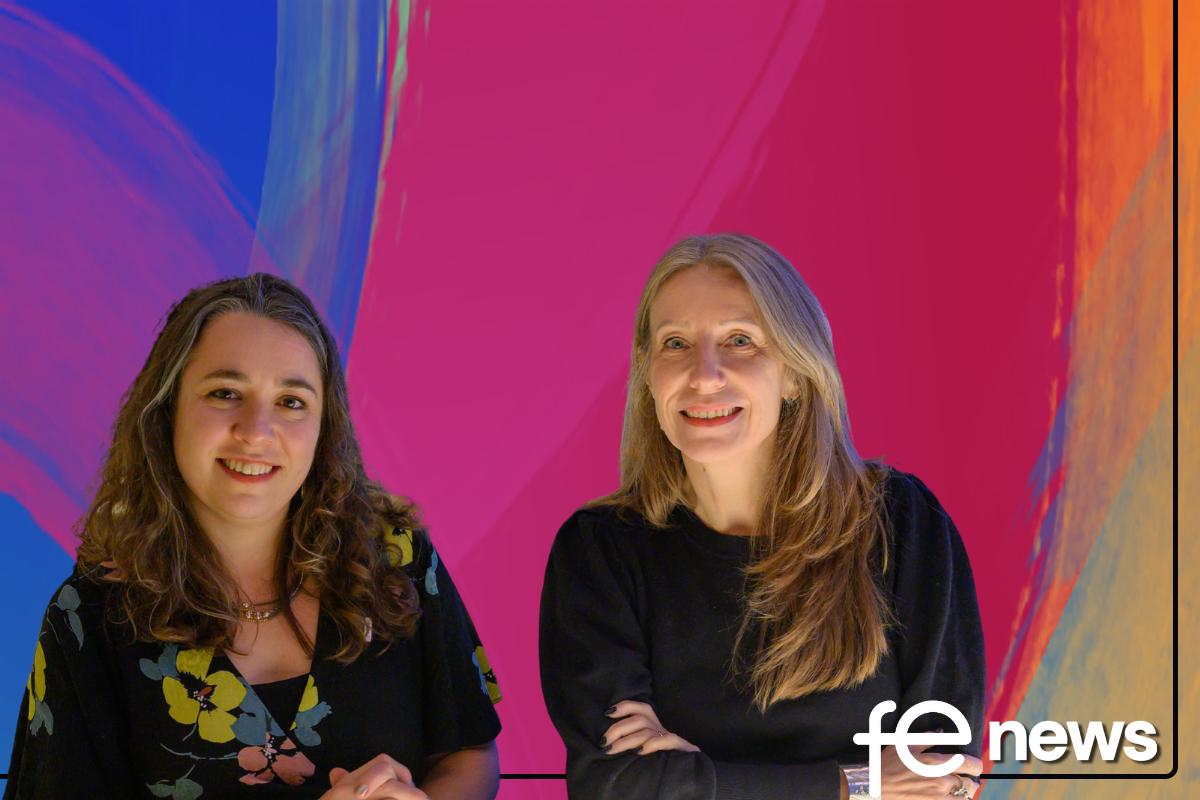
Dr. Vikki Smith, Executive Director of Education and Standards at The Education Training Foundation and Charlotte Bonner, CEO at EAUC (The Environmental Association for Universities and Colleges)
Vikki and Charlotte are the Green Mindset Collective report co-authors.
Responses