
Government Responds to the Curriculum and Assessment Review
- Reforms to update the national curriculum will enable young people to seize opportunities so they can achieve and thrive in the modern world, including navigating the threat of fake news and online disinformation
- High standards for every child with strong foundations in oracy, reading, writing and maths especially in primary and the “lost years” at the start of secondary
- Revitalised curriculum delivers on promise in manifesto and is central to the Prime Minister’s target of two-thirds of young people participating in higher-level learning by age 25
Children and young people will leave school fully equipped to thrive in the modern world of work under reforms to breathe new life into the national curriculum unveiled today.
Responding to the recommendations of Professor Becky Francis’s Curriculum and Assessment Review (5 November 2025), the government has confirmed steps to ensure every young person has a cast-iron grip on the basics of reading, science and maths, alongside the knowledge and skills required for life and work over the next decade – raising school standards and boosting opportunity under the Plan for Change.
The revitalised curriculum is a core part of how the government will deliver the Prime Minister’s target of two-thirds of young people participating in higher-level learning by age 25, ensuring they have the skills needed to get on in life.
For the first time, primary aged children will gain vital skills like how to spot fake news and identify misinformation and disinformation, helping them develop the critical thinking needed to challenge what they see and protect them from online harms. Primary pupils will also learn more about the fundamentals of money, recognising that children are now consumers often before they reach secondary school, while bringing important changes to strengthen children’s reading.
The government will introduce a new statutory reading test in year 8 and a strengthening of writing assessment in year 6 to spot pupils who need extra support at a crucial point in their development. Currently around 1 in 4 children leave primary school without being able to properly read and too many are leaving school without passing their GCSE English. The new year 8 test will pinpoint those who could benefit from further stretch, while repairing falling standards in the “lost years” at the start of secondary, when too many working-class young people fall behind.
Under the new arrangements, arts GCSEs will be given equal status to humanities and languages, recognising their value in boosting confidence and broadening skills for a competitive job market. To complement this, a new core enrichment entitlement will offer all pupils access to civic engagement, arts and culture, nature and adventure, sport, and life skills to build resilience and opportunity.
Schools will also be expected to work towards offering triple science GCSE as standard, which comes alongside the government exploring a new qualification for 16-18 year olds in data science and AI – helping more young people succeed in the science and tech careers that power our economy.
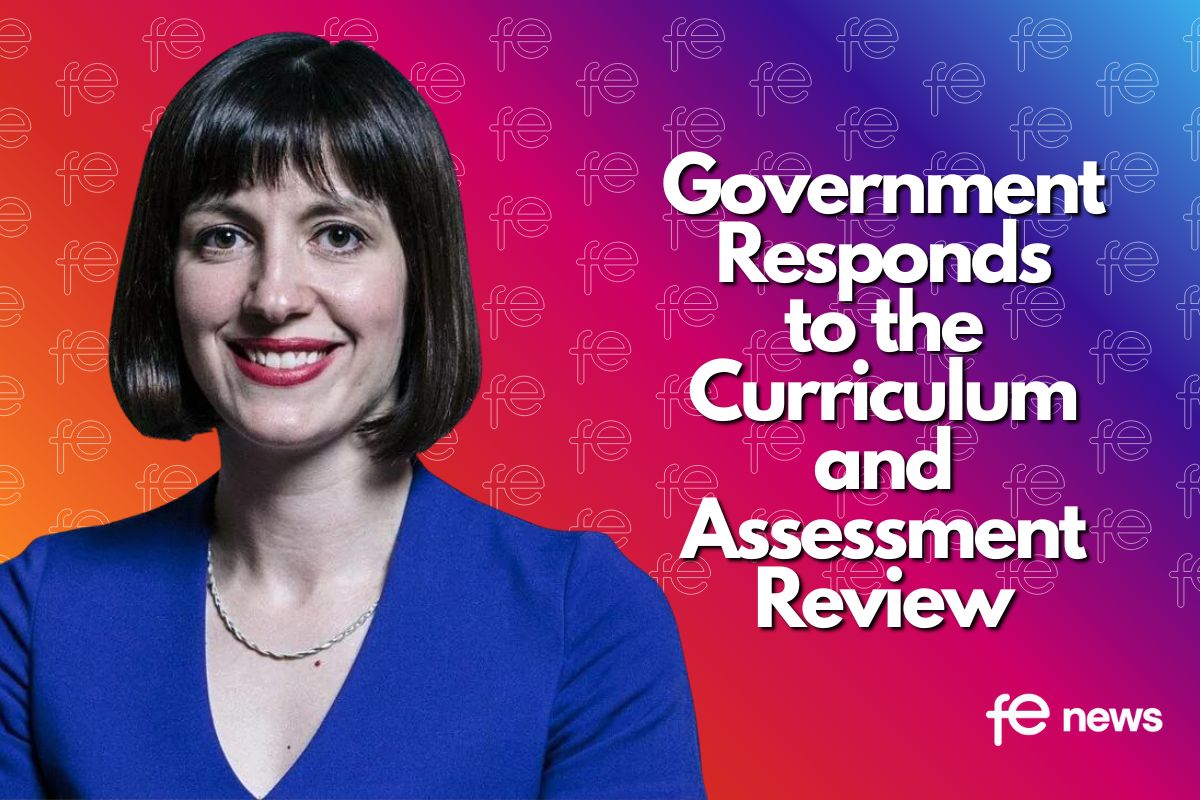
Education Secretary, Bridget Phillipson, said:
“It has been over a decade since the national curriculum was updated, and it’s more crucial than ever that young people are equipped to face the challenges of today, so they can seize the exciting opportunities that life has to offer.
“The path to our country’s renewal runs through our schools: they must be an epicentre of the strongest possible foundations of knowledge, and the skills to excel in the modern world.
“From the fundamentals of reading to the present danger of spotting fake news, as part of our Plan for Change, these landmark reforms will help young people step boldly into the future, with the knowledge to achieve and the skills to thrive as the world around us continues to rapidly evolve.”
The government will publish a new oracy framework to ensure more young people become confident and effective speakers, building on the success of the reading and writing frameworks, and help teachers strengthen their teaching of oracy through practical tips, tried-and-tested strategies and examples of best practice.
Evidence shows that increased participation in extra-curricular activities is associated with higher academic outcomes, so the government is also setting out a new core enrichment entitlement, so that every child – wherever they go to school – has access to sport, the arts and more.
The government will publish a new set of enrichment benchmarks with schools asked to ensure every child has access to activities across five categories of enrichment. Ofsted will consider as part of routine inspection how this expectation is being met, with information also made available to parents through a new information service – school profiles.
Key reforms include:
- Making citizenship compulsory in primary, ensuring all pupils learn media literacy and financial literacy, law and rights, democracy and government, and climate education early on.
- Replacing the narrowly focused computer science GCSE with a broader, future-facing computing GCSE and exploring a new qualification in data science and AI for 16–18-year-olds.
- Changes to school performance measures – removal of the EBacc and reforms to Progress 8 – to encourage students to study a greater breadth of GCSE subjects including the arts, humanities and languages alongside English, maths and science. This follows the failure of the EBacc measure to encourage take up of subjects including languages and constraining student choice.
- Supporting schools to develop a triple science offer, ahead of introducing a statutory entitlement for all GCSE pupils.
- A new primary oracy framework, and a new combined secondary oracy, reading and writing framework so these are embedded across the whole curriculum.
- Exploring a new language qualification which banks progress and motivates pupils to want to continue studying, complementing existing GCSEs and A levels.
- A new core enrichment entitlement for every pupil – covering civic engagement; arts and culture; nature, outdoor and adventure; sport and physical activities; and developing wider life skills.
For the first time, the new national curriculum will be digital and machine-readable, to support teachers to more easily sequence their school curricula.
The new curriculum will be implemented in full, for first teaching from September 2028. Government will aim to publish the final revised national curriculum by spring 2027 – giving schools four terms to prepare for the changes.
Sector Reaction
Chair of the Education Committee Helen Hayes MP said:
“I’d like to thank Professor Becky Francis and her panel for their thoughtful and evidence-based work on the Curriculum and Assessment Review.
“The Review’s recommendations represent important reforms of the current curriculum and assessment framework, and in responding to the Review it is vital that the Government sets out how teachers, school leaders and support staff will be provided with the resources they need to implement the reforms in full, along with clear timescales for implementation.
“I welcome the proposed changes to the curriculum which are designed to ensure access to a greater breadth of subjects including within science and the arts, and that children and young people leave school with the skills they need to succeed in the modern world, particularly the focus on citizenship, digital and media literacy, climate science, oracy and enrichment.
“The Government is working to deliver education reform through a range of different mechanisms and timescales, with the Children’s Wellbeing and Schools Bill and Further Education and Skills White Paper already published, a new Ofsted framework about to be implemented and the Schools White Paper and SEND reform yet to come. It is important that the Government establishes a clear overall vision for education and that all of the different components of reform, including the Curriculum and Assessment Review work coherently together.
“I am concerned that in a number of areas, the Government’s approach differs from Professor Francis’s independent, evidence-based recommendations, and it is important that they set out why this is the case and their own evidence that they have relied on in reaching a different conclusion.
“Finally, although the Curriculum and Assessment Review argues persuasively for additional maths and English assessments in Year 8 (Key Stage 3), the thought of sitting more tests will likely cause anxiety for some children and parents. The Government must demonstrate clearly how this would be an inclusive, diagnostic test that would purely be used by schools to identify children who could benefit from extra support – not another method of scrutinising school staff or pupils, of which there are already many.
“My committee looks forward to undertaking detailed scrutiny of the Review and the Government’s response in due course.”
Liberal Democrat Education Spokesperson, Munira Wilson MP, said:
“It is a welcome step to see that Labour has listened to Liberal Democrat calls to embrace a broader curriculum with a clear focus on arts and digital education, but scrapping instead of broadening the EBacc is not the right move.
“The fiscal and practical feasibility of these changes have not been addressed. Headteachers, who are already having to cut their budgets to the bone will be asking one simple question – ‘how am I supposed to pay for this?’
“Liberal Democrats are calling for Labour to be honest with schools. To admit that without a costed plan and proper workforce strategy, these reforms will stretch teachers even further and fail our children.”
Natalie Perera, the Education Policy Institute’s Chief Executive, said:
“The government has set out a broadly sensible direction of travel in its response to the Curriculum and Assessment review. We are particularly pleased to see a greater focus on speaking, listening and oracy and reforms to accountability measures for secondary schools that will offer a better balance between academic and creative subjects and better choice for students.
“Enrichment activities provide longer-lasting benefits to young people through the development of soft skills, improved health, cognitive development, and through establishing new friendships. The government will need to set out how disadvantaged young people are fully able to access such activities, as they often have both direct and indirect costs to parents.
“It is also critical that the outcomes from any new assessments are used appropriately. Assessments have the potential to identify pupils in need of further support and help them to make progress, particularly during the first years of secondary school. But with no adjustments being made to age-related stages of education, assessments for younger children risk continuing to lead to misidentification of SEND and children being labelled as failing.
“While there are aspects of today’s announcements that will benefit children with special educational needs, the government will need to be even more ambitious in its forthcoming white paper if it is to deliver a system that works for all.”
NFER Chief Executive, Carole Willis, said:
“We welcome any proposals which seek to give children a strong foundation in life and the skills to succeed in a rapidly changing world, but look forward to more details when the full review is published tomorrow.
“A renewed focus on oracy, critical-thinking, civic engagement, extra-curricular activities and life skills in general are all to be commended. But effective delivery will require consideration of how proposed reforms can be implemented within the capacity and resources of schools already managing high workloads, a demanding curriculum and competing financial pressures.”
Paul Whiteman, general secretary at school leaders’ union NAHT, said:
“While it doesn’t deliver everything we had called for, this package of recommendations is a step in the right direction in better meeting the needs of all pupils, including children from disadvantaged backgrounds and those with additional needs.
“We are pleased that the review has recognised that the current national curriculum is outdated and overloaded, and that the volume of content in the curriculum must be appropriate for the teaching time that is available. Crucially, this creates the space schools need to develop their curriculum, ensure it is relevant to all pupils and better meet individual needs.
“Reducing the content in the current programmes of study will also be important to make time for the positive additions to the curriculum including financial, digital and media literacy, climate change and sustainability, and speaking skills.
“NAHT has been clear that the local decisions on the Religious Education curriculum lead to big differences and inconsistency in content and pupil experience. We therefore support the recommendation to make the subject part of the National Curriculum and urge the government to act swiftly to move this work forwards.
“The recommendation that the EBacc should be scrapped is absolutely welcome – NAHT has campaigned against the measure since its inception – and the government’s proposal to reform progress 8 to remove the EBacc restriction and bring back breadth and more meaningful choice for students is encouraging.
“The review report is clear that any student should be able to study separate sciences if that want to, but not that this should be compulsory for every student. To achieve this, the government must address the barriers schools face, including a lack of specialist teachers and timetabling challenges.
“Despite the recommendations to amend the GPS (grammar punctuation and spelling) test and consider the accessibility of some other primary tests, it is immensely disappointing that the opportunity has been missed to reduce unnecessary primary school tests. These take up a disproportionate amount of time and place enormous strain on children and teachers for little obvious benefit.
“The recommendation for diagnostic assessments in English and maths during Year 8 has resulted in the government announcing a Year 8 reading test, a much more simplified and blunt approach than that proposed by the review. NAHT is clear that tests in themselves do not improve standards – good teaching does.
“We now urge the government to work closely with the sector on the implementation of these recommendations and to ensure schools and colleges are provided with the time and resources they need.












Responses