
V Levels To Replace 900 ‘Confusing’ Level 3 Qualifications. New ‘Mix and Match’ Qualification Model Of V Levels and A Levels For Students

New Vocational Qualifications (V Levels) have been announced, and will be available as a ‘mix and match’ with A Levels for students aged 16-19 years old. Unlike T Levels, (which are equivalent to 3 A Levels), young people will be able to take a mixture of the new V Levels and A Levels together, offering more choice and flexibility to students.
The new V Levels will streamline the confusing landscape of approximately 900 equivalent vocational qualifications at level 3 currently available to 16 to 19-year-olds which mean learners and employers are unclear about the purpose and value of some qualifications. V Levels will replace other qualifications to sit alongside T Levels and A levels.
- New V levels will support young people into good jobs or study and replace the 900 qualifications that are currently available alongside A and T Levels
- Government commits to stronger support for students to get vital pass in English and maths GCSEs – driving up standards
- Ambitious reforms to be announced in Post 16 Education and Skills White Paper will be pivotal in delivering plan for national renewal
Generations of young people will be supported to progress into work or university with new qualifications to break down barriers to opportunity and help to deliver on the Prime Minister’s plan to get two-thirds of young people participating in higher-level learning, academic, technical or on an apprenticeship.
More Details in.. Guess What the Post 16 Education and Skills White Paper!
The Post 16 Education and Skills White Paper – being published today – will reveal plans for the introduction of V levels. These are new vocational qualifications tied to rigorous and real-world job standards. They will replace other qualifications to sit alongside T Levels and A levels, providing a clear option for young people who want to get on in the world of work, university or apprenticeships but want to explore different key sectors, which could include engineering, agriculture, digital or creative, before choosing where to specialise. Unlike T Levels, which are equivalent to 3 A Levels, young people will be able to take a mixture of V Levels and A Levels, offering more choice and flexibility.
Flexibility: Mixing and Matching V Levels with A Levels
For example, a student wanting to get into either the creative arts or media industry could choose to do a mixed V Level and A level study programme, by taking two V Levels (one in Craft and Design; and one in Media, Broadcast and Production) and one A Level in Music. Or, a student wanting to get into either the health or fitness industry – but also wants to learn more about digital – could do three V Levels (in Sport and Exercise Science; Digital; and Health and Care services).
DfE have explained that the new V Level qualification will streamline the confusing landscape of approximately 900 equivalent vocational qualifications at level 3 currently available to 16 to 19-year-olds which mean learners and employers are unclear about the purpose and value of some qualifications.
English and Maths GCSEs
Young people will also be supported to get the vital pass they need in English and maths GCSEs. A new qualification will be targeted at students with lower attainment as a stepping stone to better prepare them to resit these GCSEs.
This will support white working class pupils in particular. More than six in ten White British pupils eligible for free school meals do not achieve a grade 4 or above in English and maths by the end of Key Stage 4, meaning they are more than twice as likely to need to resit these exams post-16 than their more affluent peers. Interestingly, those in the Gypsy, Roma and Traveller of Irish Heritage communities are also far less likely to achieve a grade 4 or above in these qualifications by the end of Key Stage 4.
This package of ambitious reforms will drive up standards and better prepare young people for the world of work or further study, in turn, growing our economy and delivering on the government’s plan for national renewal.
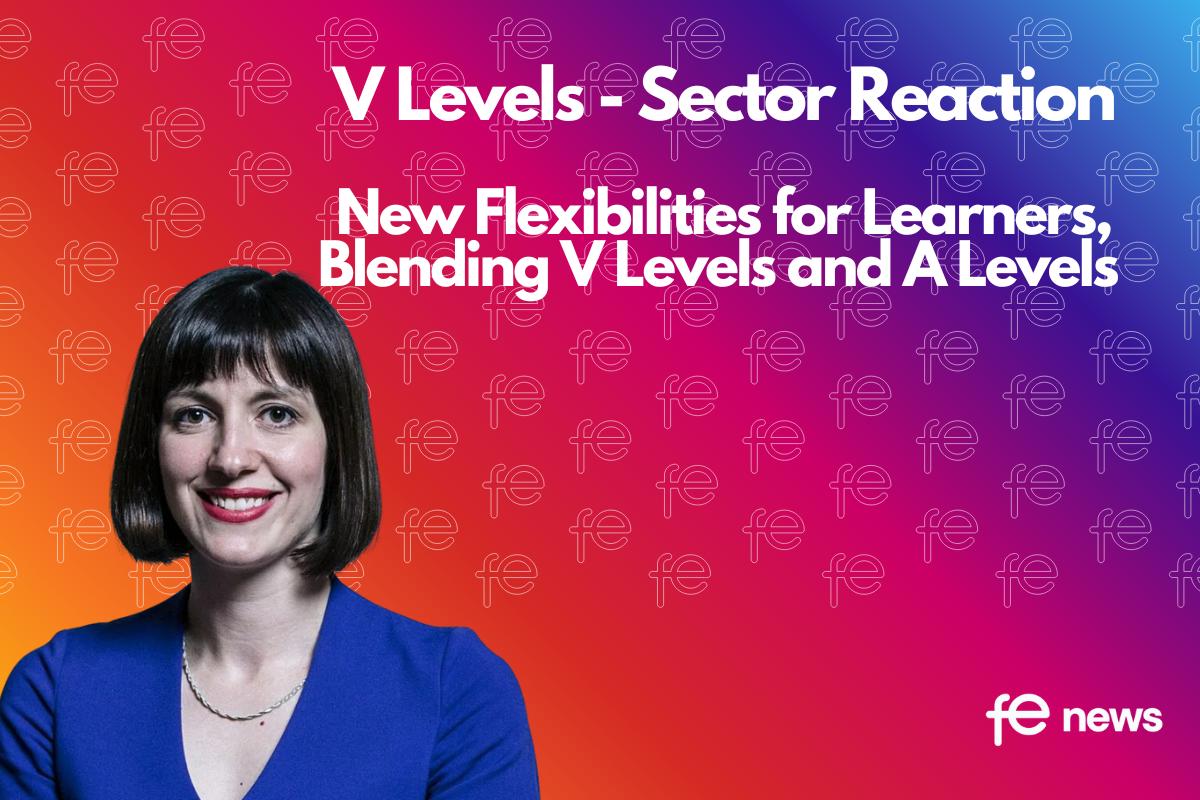
Education Secretary, Bridget Phillipson said:
“Technical and vocational education is the backbone of this country’s economy and central to breaking the link between background and success, helping hundreds of thousands of young people get the skills they need to get good jobs.
“But for too long it has been an afterthought. Young people have been left to navigate an overcomplicated landscape and repeatedly labelled as ‘failures’ by a system that has held them back from all-important English and maths grades.
“Through our Plan for Change we are turning the tide. Our reforms are building a post-16 education system that truly matches young people’s aspirations and abilities, delivering the opportunity and growth our economy needs.”
These ambitious reforms in the upcoming White Paper are backed by an extra £800 million of funding for 16-19 education in 2026/27, 14 new Technical Excellence Colleges in key Industrial Strategy sectors and improvements to the quality of teaching in further education. Schools will play a greater role in ensuring every pupil has a clear post-16 destination, supported by Ofsted, with a new approach to a guaranteed college or FE provider place available as a safety net being tested.
Two New Pathways At Level 2 Are Also Being Launched
Two new pathways at level 2 are also being launched to prepare more young people for success, whether that is progressing from level 2, including GCSEs, onto a level 3 qualification, including A levels, T Levels or V levels, or joining the workforce.
These transformative reforms to the post-16 education landscape have been informed by the Curriculum and Assessment Review, which will publish its full recommendations later this year.
Chair of the Curriculum & Assessment Review, Professor Becky Francis CBE:
“Post-16 education is crucial as young people study for their qualifications that will allow them to progress to work, training or university. But while academic qualifications have a strong reputation and provide a clear pathway, the routes for those wanting a more applied offer have been much less coherent.
“The Curriculum and Assessment Review has collected and weighed a huge quantity evidence. Our full report will be published very soon, and I am delighted that the Government has recognised and accepted our recommendations to promote excellence and improve young people’s life chances by ensuring a choice of strong, well-regarded qualifications: A level, T Level or V level. The direction supporting improved Level 2 progress, including study of maths and English, will also help secure successful futures.
“I hope that leaders, teachers, employers and young people themselves engage closely with the consultation to ensure that these new vocational qualifications flourish and support young people to succeed.”
The government will launch a consultation to support the introduction of V levels, designed to strengthen skills across industry including in the government’s priority industries. T Levels will continue to expand to other subjects.
Further details on the measures announced today will be confirmed soon in the government’s Post-16 Education and Skills White Paper.
Interesting Timing for V Levels at the end of T Level Week
The V Levels announcement comes at the end of T Level Week 2025. T Level Week has previously been a time of big announcements, but previously for other qualifications and significant qualification change. Many of our FE News readers may remember the timing of the Advanced British Standard qualification annnouncement back in 2023, with the then Prime Minister Rishi Sunak (and the the previous Conservative Government) announced the Advanced British Standard during T Level week in 2023. To highlight, the Advanced British Standard Qualfication route has now been scrapped, but we found the announcement of V Levels to be interesting timing. T Levels were introduced in September 2020, In 2025, T level students were just 1% of the 1.1 Million Level 3 students who received their T levels, A Levels, BTECs or Level 3 qualification results, with just 11,909 T Level students receiving their results on Results Day 2025.
V Level Announcement Sector Reaction
Pepe Di’Iasio, General Secretary of the Association of School and College Leaders, said:
“We are pleased that the government has recognised the importance of having a third vocational pathway to sit alongside the academic and technical qualifications offered by A-levels and T-levels. It is vital that post-16 students are provided with a choice of pathways which suit the interests and aspirations of different learners, and supports them in accessing higher education, apprenticeships, and careers.
“We have to get to grips with the fact that a very large number of young people are currently not in education, employment or training. Ensuring that there are a range of excellent pathways available to all our students is essential in tackling this issue. We are also pleased with the recognition that a new approach is needed to support post-16 students in English and maths.
“This must move us away from the current morale-sapping system of mandatory GCSE resits. We need an approach which builds confidence in these subjects and gives young people the best possible opportunity to achieve qualifications of which they can be proud.”
“The paper’s proposals to introduce new V levels alongside T levels and A levels, plus a new stepping stone level 1 qualification in both maths and English, feel more based in the realities of the students colleges work with and meeting the needs of every young person. They are proposals we will engage with to ensure they work. We know, though, that qualifications reforms are complex, and that this will mean further change over a number of years.
“Although they are limited, the white paper’s commitments on funding are also welcome – in particular the pledge to maintain real terms per-student funding for young people and the confirmation that there will be at least 29 Technical Excellence Colleges (TECs).
“The paper is strong on more collaboration between colleges and universities – something we have been working hard to facilitate – to open up pathways from Level 4 to Level 6 and more flexible modular provision to enable more adults to benefit from further learning.
“Today’s announcement shows that the government is ambitious for colleges and wants them to scale up their impact through more investment and enabling policies. It also sets out ambitious plans for the post-16 education and skills system, with employers as partners and a collaborative approach in which colleges can work in tandem with schools and universities. We look forward to working with them and with the sector on how to start implementing those ambitions and plans.”
Phil Smith, Chair of Skills England, said:
“Our nation needs a joined-up and forward-looking skills system that supports businesses to succeed and creates life-changing opportunities for people from all walks of life. We are on a clear path towards that and I’m delighted Skills England will be key to making it happen.”
Daniel Kebede, general secretary of the National Education Union, said:
“The National Education Union welcomes today’s announcement as a significant step forward for vocational education. For too long, the post-16 qualifications framework has lacked coherence and clarity. While students following academic routes have benefited from a clear and structured pathway, those pursuing vocational options have too often faced a confusing and under-resourced system. These reforms present an important opportunity to deliver greater fairness, consistency and quality for all learners.
“The government is right to have listened to teachers and school leaders who have long highlighted that repeatedly forcing students to resit English and maths GCSEs is both demoralising and ineffective. We now have the chance to build a system that engages every student, values a broad range of skills, and properly recognises their achievements.”
“To truly revitalise post-16 education, the government must also address the chronic issue of low pay among post-16 teachers and lecturers. Years of underinvestment have led to widespread recruitment and retention difficulties, leaving too many vacancies unfilled. Ensuring that staff are properly valued and fairly rewarded is essential if these reforms are to succeed.”
Rob Nitsch, Chief Executive Officer of the Federation of Awarding Bodies (FAB) said:
“The announcements thus far around the Post 16 White Paper indicate this will be very extensive change for a sector that is mid-implementation of the last change programme and changes to apprenticeship assessment. It would be surprising if DfE does not envisage that the majority of the cost of this change will be carried by Awarding Organisations. They will hope that: the Government has taken the time to build cross-party consensus; the up-coming consultation is just that; implementation arrangements are sensible; and that there is a commercial strategy that ensures that the deep-seated sector expertise that Awarding Organisations possess is not lost to learners and employers in this new re-ordering of the post 16 landscape. I am sure that the sector will get behind V levels and the adjustments to English and Maths arrangements as they have T Levels, but the status and understanding of purpose-based vocational education will never truly emerge if we do not develop a plan that we stick to; this is one place that A Levels can be acknowledged as gold-standard. “
Alice Gardner, CEO, Edge Foundation said:
“We welcome the introduction of V Levels which could be a positive step towards simplifying the post-16 landscape and offering young people more flexible, high-quality routes. In particular the ability to ‘mix and match’ academic and technical qualifications is highly valued by the public according to our polling.
“It’s vital, however, that schools and colleges are fully supported and brought on board amid wider ongoing policy change, and that V Levels maintain strong employer relevance and parity of esteem with A Levels. In particular, the replacement of applied general qualifications needs to be carefully managed to ensure a smooth transition for providers and learners.
“Done well, this reform can help every young person access the skills and opportunities they need to thrive. We look forward to seeing more details in the White Paper later today and engaging in the upcoming consultation.”
Tom Arey is Director at PfP Thrive said:
“Today’s announcement is a positive step towards recognising and strengthening the role of technical and vocational education in key UK industries – notably housing, construction and the built environment.
“As a business that already supports apprenticeships and uni-skill qualifications across these sectors, PfP Thrive believes the new V-Levels have the potential to help close the national skills gap, attract young talent, and create a more diverse and future-ready workforce.
“For too long, vocational routes have been seen as a secondary option rather than a direct path to success. Any move that gives young people more flexibility and genuine choice in how they build their careers is welcome news.
“Crucially, we also believe the success of these new qualifications will depend on the involvement of industry experts. When people already working in housing and construction play an active role in mentoring and teaching, it ensures that learning is grounded in real-world experience and gives students a genuine head start in their careers.”
David Gallagher, Chief Executive of NCFE, said:
“The Post 16 Education and Skills White Paper presents the sector with another period of significant change, as well as opportunity. As an educational charity and awarding organisation, we provide a critical interface between understanding the needs of employers and the labour market, and the support that learners, teachers and our centres need to be successful. Therefore, we look forward to working with the government on this as part of its consultation process and welcome the desire to support young learners to progress into work or further education, whilst ensuring that qualifications are well understood and valued by employers. We will be reviewing the details in full as soon as the paper has been published.”
Freya Thomas Monk, Managing Director of Pearson Qualifications, said:
“The Skills White Paper marks a shift in the system of vocational education for young people that will help tackle the UK’s widening skills gap in industries vital to economic growth.
“We believe the UK needs a broad qualifications landscape, offering clearly defined pathways from foundational levels through to higher technical and professional qualifications, to build a highly skilled workforce capable of delivering on the ambitions of the UK’s industrial strategy.
“For decades, BTEC Nationals have helped millions of people enter the workforce, progress to further education, and achieve their career ambitions. We are also proud to be the largest provider of T Levels, helping students gain the technical knowledge and real-world skills they need to progress into apprenticeships, work, and further study.
“We now look forward to bringing our extensive experience in designing and delivering vocational qualifications to V Levels, working with the Department for Education and Ofqual to ensure the new qualification helps people build successful careers and equips employers with the skills they need to drive productivity and growth.”
V-level rollout “pie in the sky” without substantial investment in staff, says UCU
The University and College Union (UCU) today (Monday) said the rollout of V-levels will fail to get more young people into work and training unless the government substantially raises college staff pay. The union was responding to the government’s unveiling of the new vocational qualification.
UCU general secretary Jo Grady said:
“Tearing up the current post-16 qualification framework and asking already overworked staff to create completely new courses will require substantial investment from the government.
“Ministers must set out a clear road map that shows how colleges will recruit and retain the skilled further education staff needed to deliver the new V-level qualifications. Believing you can use colleges to get more young people into work and training without increasing staff pay is just pie in the sky thinking.
“Further education has been subject to a brain drain with one in two staff leaving within three years of joining. As it stands, the salaries offered by colleges are not nearly competitive enough with schools and industry to recruit, let alone retain, staff.
“We now need to see a joined-up skills and workforce strategy backed by big increases in funding for V-levels to be a success.
“The crisis in further education is so great UCU is currently balloting around 10,000 further education staff. The government can show it is serious by helping deliver pay parity with schools, bringing in national bargaining and ensuring workloads are manageable.”
Myles McGinley, Managing Director of Cambridge OCR, said:
“If we get this right, this could be a tremendous opportunity for young people. The sector needs the time to collaborate and develop qualifications that meet the needs of students, offer lasting value, and elevate the esteem in which vocational qualifications are held. We also need to learn the lessons from developing and implementing previous vocational qualifications. Schools and colleges must be given the space and resource to prepare to teach V-Levels to the highest standard.”
Sarah Beale, AAT CEO said:
“AAT welcomes the UK Government’s Post-16 Skills and Higher Education White Paper launched today, it’s a pivotal moment and one which we hope the government will seize to ensure alignment across the education, skills and labour market, ensuring no aspiring person is left out in the cold. But with ongoing reforms this must deliver stability and clarity to a fragmented skills system for better learner outcomes which are employer-led and outcome-focused.
“AAT will carefully review the White Paper’s proposals, particularly to understand how V-levels fit into the qualification landscape and urges the government to ensure clear progression routes from A ‘Levels, T-levels, and apprenticeships to professional qualifications. We also urge better use of the Growth and Skills Levy to help SMEs invest in the digital and financial skills the UK needs.”
Jamie Cater, Senior Policy Manager – Skills and Employment, Make UK said:
“With a large majority of manufacturers identifying a lack of technical skills as the biggest barrier to successful recruitment, they will welcome the Government’s focus on improving technical and vocational training options for young people. Following the announcement of additional funding for engineering skills in the industrial strategy, and the Prime Minister’s party conference speech putting gold-standard apprenticeships on an equal footing with academic routes, today’s publication of the post-16 education and skills white paper is another important step forward.
“Employers often find the post-16 landscape difficult to navigate – the Government is right to try to address this by streamlining the large number of qualifications with the introduction of V Levels. However, care must also be taken to ensure that employers understand these new qualifications – the skills and knowledge they will give to young people, and the expectations on employers to provide industry experience, must be made clear.
“Manufacturers will be optimistic that reformed and improved training options through new V Levels and continued support for T Levels will boost their apprenticeship recruitment, which is critical to developing the future workforce the sector needs. We look forward to continuing to work with the Government on making these reforms a success and improving employer investment in the technical skills that are crucial to the success of manufacturing.”
Responding to the proposals on new technical qualifications, V Levels, NUS Vice President Further Education, Qasim Hussain, said:
“Right now, there’s a lot of different options, and students need clarity. Any new qualifications should be designed to open doors for learners and create opportunities for training or further study and investment into high quality education.
“Two hundred thousand young people are currently taking qualifications that they have been told will lose funding. We need to make sure that the transition into new qualifications is as smooth as possible and we look forward to working with government to put what students need right at the heart of their design.”














Responses