
European Business Schools Look to Africa as Global Influence Grows

European business schools are strengthening partnerships with institutions across Africa as the continent’s leading schools climb international rankings and gain greater global recognition.
Institutions including Trinity Business School, NEOMA Business School, Corvinus University of Budapest and Frankfurt School of Finance & Management are expanding their connections across Africa through recruitment offices, student residencies, exchanges and academic partnerships.
The trend reflects Africa’s growing importance to European business education—not simply as a source of international students, but as a centre of management knowledge, entrepreneurship and innovation that can help prepare future leaders for an increasingly complex global economy.
Trinity Business School MBA students completed an international residency at the University of Cape Town Graduate School of Business in 2025. The programme focused on management and sustainability in emerging markets, giving students direct experience of the opportunities and challenges facing organisations in Africa.
France’s NEOMA Business School has opened a permanent recruitment office in Côte d’Ivoire. The new presence is intended to strengthen the school’s relationships with prospective students, academic institutions, businesses and other organisations across West Africa.
Corvinus University of Budapest also works with several African institutions, including the American University in Cairo School of Business, ISCAE and Mohammed VI Polytechnic University in Morocco, and Wits Business School in South Africa.
Frankfurt School of Finance & Management has developed connections with schools in Egypt, Morocco, Kenya and South Africa, supporting student exchanges, academic collaboration and engagement with emerging markets.
These partnerships are developing as African business schools strengthen their own position within international management education.
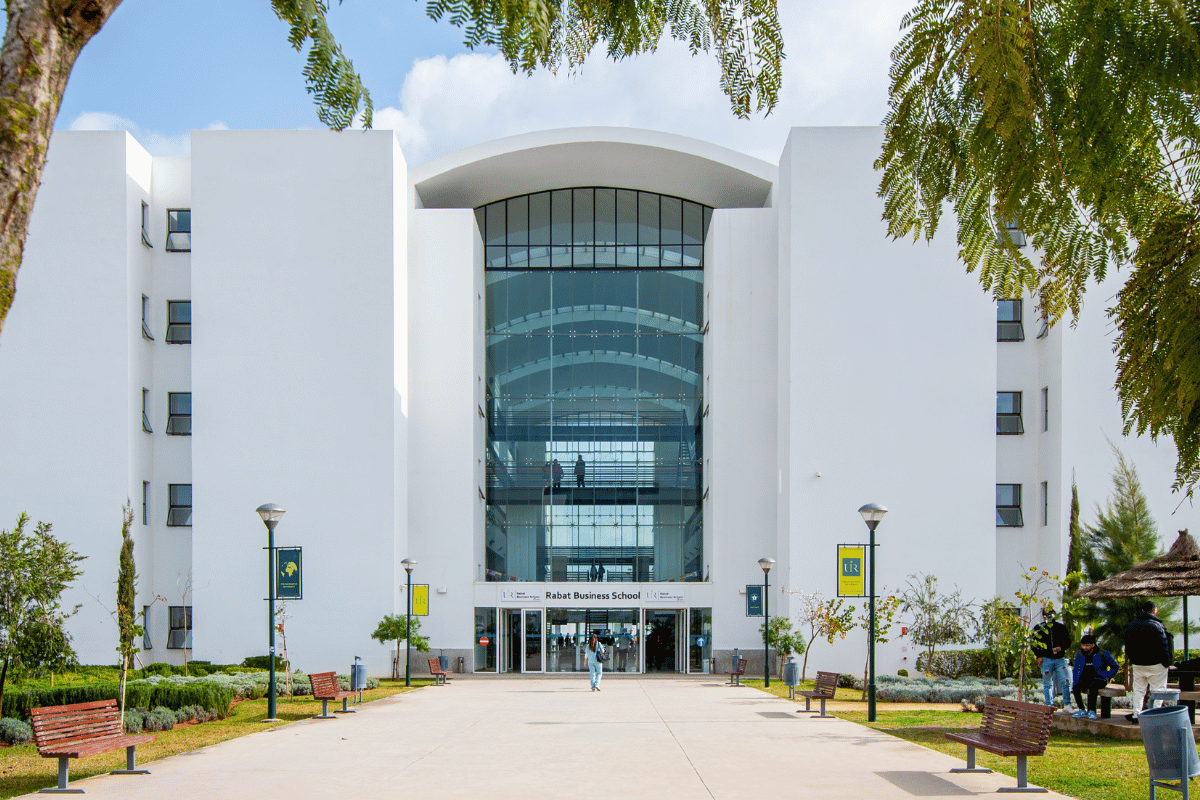
Rabat Business School (RBS) in Morocco is among the institutions leading this rise. The school placed 20th globally in the Financial Times Masters in Management ranking in 2025, helping to establish Morocco as an emerging centre for international business education.
RBS has built a network of more than 100 international partners and established 18 double-degree agreements. It has also achieved two international accreditations, entered the QS Executive MBA Rankings and become a full member of the Global Business School Network.
Its partners include emlyon business school in France, Aalto University School of Business in Finland, Corvinus University of Budapest, Maastricht University and KCA University in Kenya.
These relationships extend beyond student exchanges and are increasingly supporting joint programmes, academic collaboration and the creation of shared educational frameworks.
RBS is also using Morocco’s position between Africa, Europe and the Middle East to establish itself as a bridge between established business centres and the wider Global South.
Its progress reflects a broader increase in the international visibility of African management education.
South Africa is already home to several globally recognised institutions, including the University of Cape Town Graduate School of Business, Gordon Institute of Business Science and Wits Business School. These schools have built international reputations through MBA programmes, executive education, research, corporate engagement and extensive alumni networks.
Elsewhere, Lagos Business School has developed close ties with Nigeria’s business community, while the American University in Cairo School of Business and Kenya’s Strathmore Business School are combining strong regional connections with growing international engagement.
The increasing quality and visibility of these institutions is changing the nature of their relationships with European schools. African partners are no longer being viewed simply as destinations for study trips or gateways to student recruitment, but as equal contributors to teaching, research and management thinking.
Dr Nicolas Arnaud, Dean of Rabat Business School, argues that African institutions should be recognised for the perspectives they can bring to global questions surrounding leadership, innovation and economic transformation.
Businesses across the continent are responding to rapid technological change, demographic growth, sustainability pressures, infrastructure constraints and uncertain economic conditions. These challenges have encouraged new approaches to entrepreneurship, resilience and leadership that have relevance far beyond Africa.
However, emerging economies are still frequently presented through individual case studies or specialist modules within international business programmes, rather than being fully integrated into the curriculum.
“The future of global business education depends on recognising that there is no single centre of innovation, leadership, or expertise,” says Dr Arnaud.
At RBS, 66% of faculty are international, with more than 20 nationalities represented. Students learn through African and international business cases, practical projects, international mobility and daily interaction within highly diverse cohorts.
This wider exchange of knowledge is becoming particularly important as businesses face challenges that cannot be understood from one geographical or cultural perspective. Climate change, technological disruption, economic inequality and geopolitical instability affect markets differently, requiring leaders who can operate across contrasting social, political and institutional environments.
Rankings and accreditations will remain important measures of progress, but genuinely international education requires more than establishing overseas offices or increasing student mobility.
As African schools gain greater recognition, the most valuable partnerships will be those based on reciprocity, shared knowledge and equal participation. For European institutions, working more closely with African partners offers access to new ideas and approaches that can provide students with a more complete understanding of the global economy.
The rise of African business schools is therefore creating opportunities on both sides. African institutions gain greater international reach, while their European partners can develop curricula and learning experiences that better reflect where innovation, growth and management knowledge are emerging.
Responses