
University teams up with Toyota and secures major funding to revolutionise sustainable urban mobility

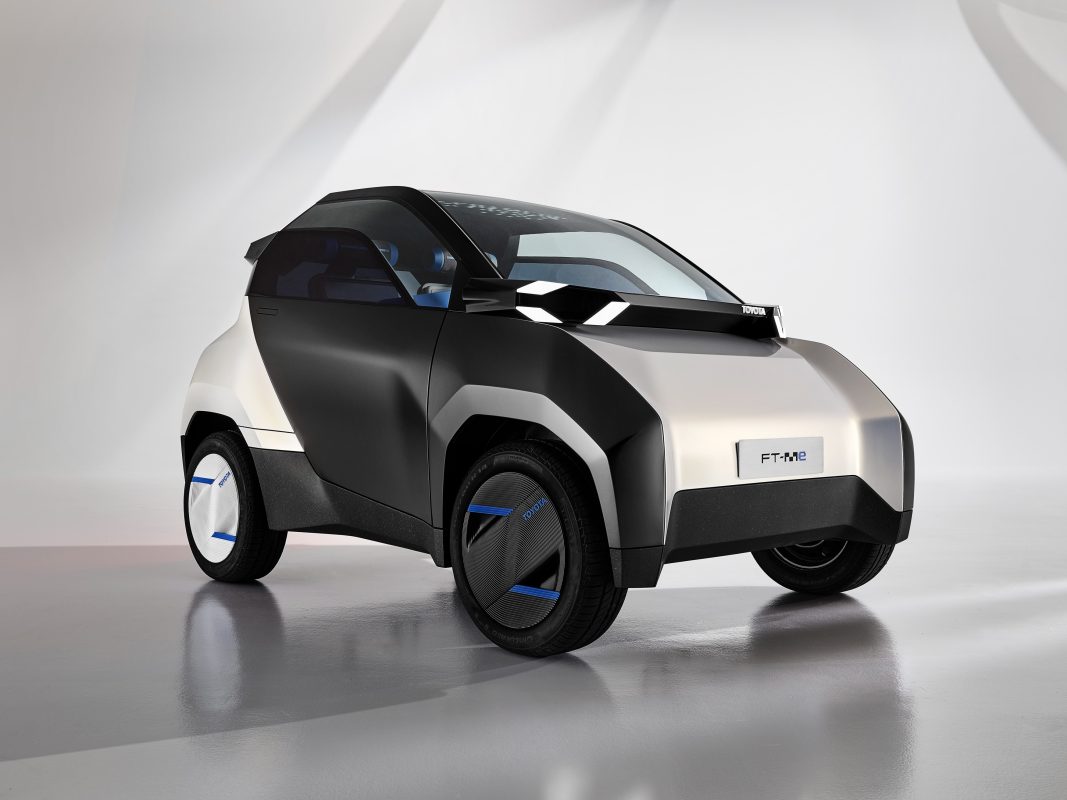
A consortium of partners, including the University of Derby and Toyota Manufacturing UK (TMUK), has been successful in securing significant government funding to undertake a feasibility study for a next-generation, lightweight Battery Electric Vehicle (BEV) in the L6e category.
Funded by the UK Government’s DRIVE35 with support from the Advanced Propulsion Centre, the project will explore innovative micromobility solutions that will redefine urban transport across Europe, making cities cleaner, smarter and more accessible.
The University of Derby is joined by leading industry innovators in the Toyota-led consortium, including ELM Mobility Limited and Savcor.
The new car prototype, which will be designed, built and validated at TMUK’s Burnaston site in Derby, will feature advanced sustainable technologies, including a solar-powered roof, smart digital connectivity, and the use of lightweight recycled materials to support recycling and resource recovery.
The University of Derby will play a critical role in the study, leading on real-world testing and analysis, leveraging its expertise in micromobility user behaviour and solar energy viability.
Together, the consortium partners are studying how to shape a smarter and more sustainable future for urban mobility across Europe. Acting as a ‘living lab,’ the University will evaluate how the BEV fits evolving patterns of sustainable urban mobility and assess its potential to transform city transport.
Professor Chris Bussell, co-lead on the University’s element of the project and Pro Vice-Chancellor and Dean of the College of Science and Engineering, said:
“As a university, we are committed to partnering with industry leaders who share our vision of delivering meaningful, real-world impact.
“We are thrilled to collaborate with Toyota on this pioneering project to deepen our understanding of how micromobility can be successfully adopted and integrated into future urban transport ecosystems, while advancing the UK’s net zero ambitions.”
As micromobility becomes central to the future of urban transport, this study marks a vital step toward understanding and meeting the evolving mobility needs of city populations, while accelerating the shift toward reduced congestion emissions and enhanced urban accessibility.
The research aligns with the University of Derby’s flagship Derby Urban Sustainable Transport Transition (DUST) project, focused on enhancing the city’s green spaces and promoting low-carbon mobility.
Paul Stewart, Professor of Control and Systems Engineering at the University of Derby and co-lead on the project, added:
“We are excited to bring our zero-carbon research capabilities and innovation expertise to this transformative project.
“By applying innovations in data-centric engineering, market demand opportunities along with user engagement and experience, we will explore how novel technologies will be adopted and accepted such that micromobility reaches the most appropriate users and locations, maximising accessibility and effectiveness.”
Dariusz Mikolajczak, Managing Director of TMUK, said:
“We are delighted to receive support from the Advanced Propulsion Centre for this important feasibility study.
“This funding allows us to advance our understanding around the feasibility of creating a cutting-edge battery electric vehicle that addresses the growing demand for sustainable urban mobility. The project acknowledges TMUK’s overall project excellence and will further strengthen the capabilities of our members.”
Responses