
Beyond the Bolt-On: Dr Vikki Smith on Making Sustainability Instinctive in FE

The FE sector has a bolt-on problem. Sustainability gets added to curriculums, tacked onto strategies, and treated as another requirement to tick off. But what if the real challenge isn’t adding more? What if it’s changing how we think about what we’re already doing?
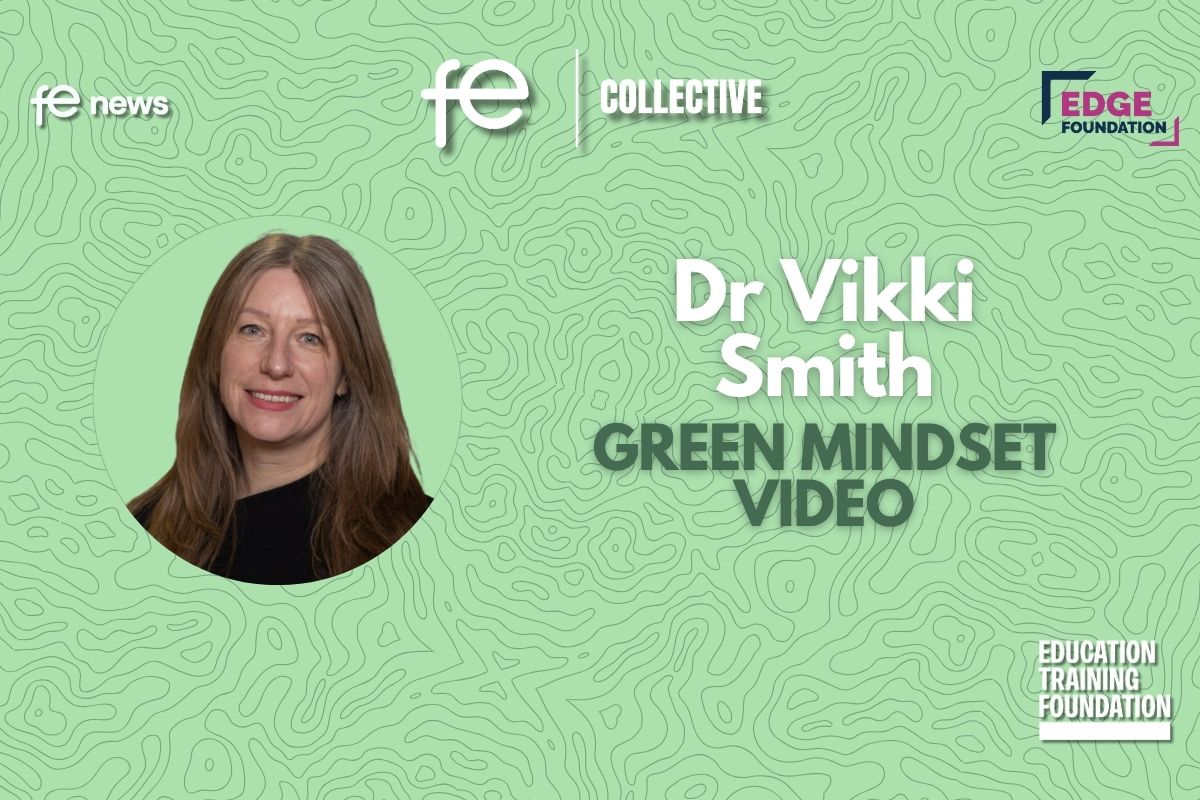
That’s the argument from Dr Vikki Smith, Executive Director of Education and Standards at the Education Training Foundation, in an interview at the Green Mindset Micro-Collective event.
From Bolt-On to Built-In
“The green mindset is really important for FE and skills. It’s about how we think, how we act, and how we make choices every day,” Vikki explains. But the current approach isn’t working.
The problem lies in how the sector has traditionally responded to new priorities. “It’s also about how we make this more instinctive and how we make it less of a bolt-on in how we teach, how we lead, and how we engage with employers.”
This distinction is fundamental. One approach treats sustainability as another item on an ever-growing list. The other embeds it into the fabric of how FE operates.
Culture as the Starting Point
So where does change begin? Vikki identifies culture as the immediate opportunity, focusing on “creativity, imagination and innovation” to create conditions where sustainability thinking becomes automatic.
When that happens, sustainability “becomes just commonplace and becomes normalised and actually then it can become something of a movement because if people can see it and they can then replicate it.”
But culture change is only the beginning. Making sustainability part of core institutional values requires system-level change that “will take a little bit of time.” The goal is embedding it “into our culture and into our ways of working” until “it isn’t a bolt-on it becomes a way of being.”
Not More Content
Perhaps Vikki’s most challenging message is about what educators and leaders actually need. “I think the key is finding the time, the space, and the opportunity for reflection because this isn’t about more content. Adding more in isn’t going to solve this problem.”
This cuts against the sector’s typical response: develop new materials, create new modules, add new training. Vikki argues the opposite.
“It’s about how we think about what we are doing, why we are doing it. So it’s changing the dial and making sure that we have a sustainable mindset and that embodies then the actions that we do.”
The Leadership Challenge
What Vikki describes isn’t a new initiative to add to already overstretched institutions. It’s a fundamental shift in how FE leaders think about change itself.
The instinct will be to add sustainability content, but Vikki’s challenge is to do the opposite: to create space, enable conversation, and trust that culture change will drive the transformation the sector needs.
As Vikki makes clear, that requires a different kind of leadership, one that values reflection over content and cultural change over quick wins.
Watch the full interview with Dr Vikki Smith:
Responses