
Helen Hayes urges Government not to Cut Universal Credit for Young Care Leavers

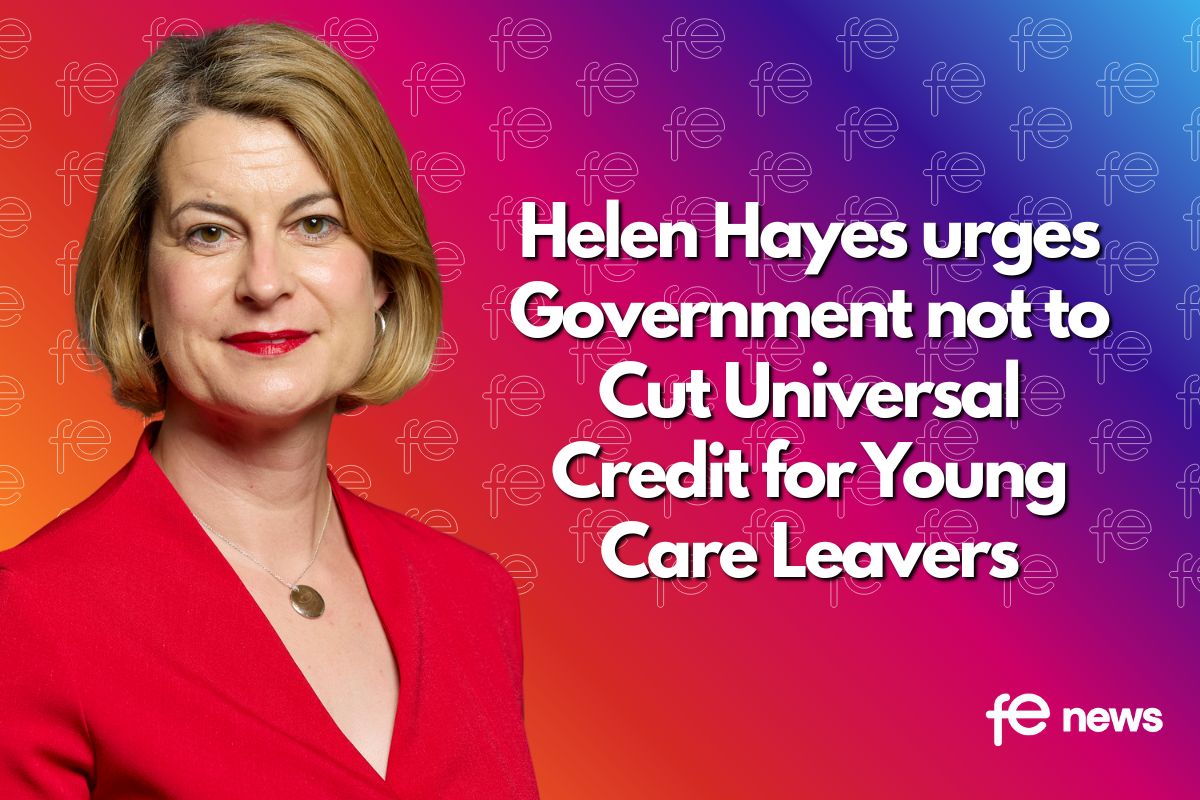
The Chair of the Education Committee has urged Ministers not to reduce Universal Credit support to care leavers who are aged under-22, after the Government said “no decisions have been made”.
The statement was made in the Department for Education’s (DfE’s) response to the cross-party Committee’s recent report on the children’s social care sector.
In response to a recommendation in the Committee’s report, that care leavers should be excluded from proposals to reduce Universal Credit support for people aged under 22, the Government said: “no decisions have been made yet, and the Government will consider consultation feedback before implementing any changes.”
Also in its response, which the Committee has published today (17 October), DfE said that money saved from the entitlement to the health element of Universal Credit for under 22s would instead be spent on the Government’s new Youth Guarantee scheme.
Another major recommendation in the Committee’s report was for the Government to consult with the Committee if it considers implementing a profit cap on companies that provide children’s services to local authorities. The Department wrote that the Secretary of State “will need to be in a position to assess the levels of profits being made by providers so that she can determine whether it is necessary to introduce a profit cap. We will also take account of the state of the market more generally”. It adds: “The Bill also requires the Secretary of State to consult before making regulations… We can commit to consulting specifically with the Committee as part of this process.”
The Government agreed with a recommendation that mental health services for looked after children could be improved by setting up co-located mental health services between councils’ children’s social care teams and NHS Child and Adolescent Mental Health Services. The response said there was potential for this approach to be piloted once it has assessed the outcomes of its South-East Regional Care Co-operative model.
The Committee’s recommendation for a ‘national fostering strategy’ was not explicitly agreed to, but DfE said £15m extra is being invested to support foster carers in 2025-26, and that it may develop a national foster care register after considering its potential costs and benefits.
The Department would not commit to providing financial support to kinship carers which equals that of foster carers, but said that in autumn 2025 it will pilot a new Kinship Allowance that aims to support up to 5,000 children in a number of local authorities.
Earlier this year, the Government announced the Timms Review into how it might reform Personal Independence Payments, following controversy over proposed cuts. In its response to the Committee, the Government agrees that it will be vital to consult with young people during the Timms Review.
The response rejects a number of recommendations made by the Committee, including recommendations regarding a National Care Offer; developing a national workforce strategy for the children’s social care sector; introducing a national sufficiency strategy to ensure enough placements for children in care; and reviewing the availability of care for disabled children.
The Committee also reiterated some of the recommendations made by the Independent Review of Children’s Social Care, which the Government has not committed to implementing, including developing universal standards of care for all children’s homes and introducing an opt-out model for independent advocacy.
Education Committee Chair Helen Hayes MP said:
“A central theme of our report was that the Government must do all it can to support young care leavers, whose prospects are sadly far worse than their peers. Any cut in the financial support they get would be unthinkable. Ministers should offer a cast iron guarantee that it will not cut Universal Credit to under 22s who have been in care.
“Elsewhere in this response, we welcome the fact that, through the Timms Review, the Government has said it will properly consult with young people on any potential reforms to PIP.
“We would also look forward to working with the Secretary of State, should they explore options for a profit cap on private providers. Many witnesses to our inquiry were adamant that excess profits are being made in the sector, to the detriment of local authorities and the taxpayer.
“Whilst there are some positive actions discussed in this response, my colleagues and I will keep pushing the Government for bigger ideas that will move the dial and help revive the children’s social care sector after its long struggle with stagnant funding and rising levels of need.”
Responses