
Education Secretary Announces Return of Maintenance Grants for Students from Low-Income Households

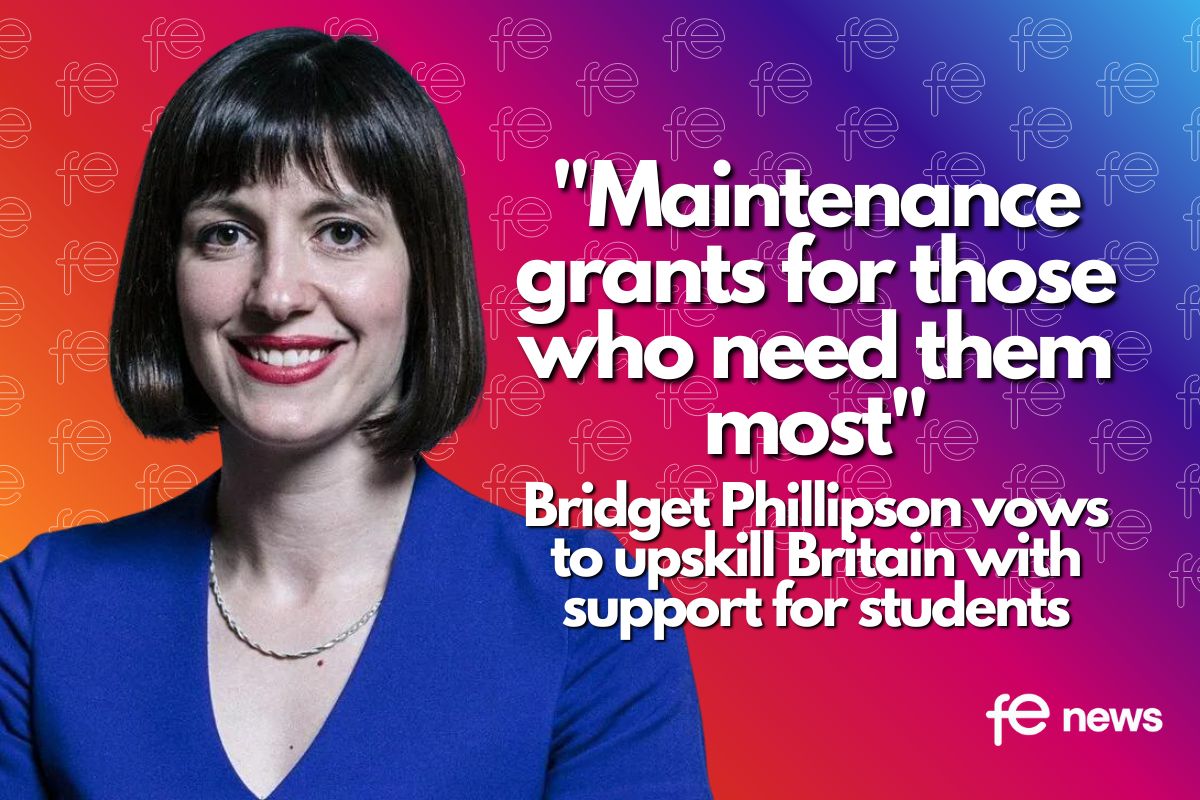
In her speech at the Labour Party Conference today, Education Secretary Bridget Phillipson pledged to introduce new targeted means-tested maintenance grants by the end of this Parliament, supporting students from the lowest income households to excel in higher education.
As part of the government’s Plan for Change and the Prime Minister’s promise of national renewal to build a fairer country and make working people better off, the reintroduction of these grants will help remove barriers to opportunity and ensure that disadvantaged students are better supported to succeed.
The move follows a 20% real-terms decline in the value of maintenance loans over the past five years, leaving many students struggling to meet the rising cost of living. Maintenance grants – abolished in 2016 – are now being reintroduced in a targeted, means-tested format.
The grants will support tens of thousands of students from low-income households studying on priority courses at Levels 4 to 6 under the Lifelong Learning Entitlement that align with the industrial strategy and the government’s wider mission to renew Britain. This includes Certificates of Higher Education (CertHEs), Diplomas of Higher Education (DipHEs), technical qualifications, and degrees.
The new maintenance grants will be fully funded by a new International Student Levy
The new maintenance grants will be fully funded by a new International Student Levy, ensuring that revenue from international students is used to benefit working-class domestic students, and support growth and opportunity. The levy will apply to England only, maintaining a competitive offer for international students while ensuring the benefits are shared more visibly at home.
Bridget Phillipson, Education Secretary, said:
“The Tories treated our universities as a political battleground, not a public good. Labour is putting them back in the service of working-class young people.
“Last year, I took the decisive steps we needed on university finances, so opportunity is there tomorrow, for all who want it. But I know, you know, that we must do more.
“So that is why today I’m announcing, that this Labour government will introduce new targeted maintenance grants for students who need them most.
“Conference, their time at college or university should be spent learning or training, not working every hour God sends. That is the difference a Labour government makes.”
The announcement comes on the second day of the Labour Party’s Annual Conference and follows Phillipson’s announcement of the full rollout of free breakfast clubs, delivering on a pledge made in Labour’s 2024 manifesto, helping to drive down numbers of children living in poverty and lifting educational attainment.
Phillipson, who chairs the government’s Child Poverty Taskforce, cited these commitments as part of a guarantee that child poverty would be lower at the end of the Parliament than at the start.
Bridget Phillipson, Education Secretary, said:
“Conference, all these changes, all this delivery — we do these things not simply to win elections, we do them because there are right. Because we believe in them. Because time and again, we turn our values into action.
“In education, across government, in our mayoralties and our councils. And nowhere is that more important than in bringing down child poverty, the moral mission of our time.
“For too long poverty has cascaded down the generations: a stain that scars and shames our country. It’s not inevitable: and tackling it is a choice. Labour chooses to drive it down, to end it. It is a scourge I grew up with, a scourge I want to end.
“That is why we launched the Child Poverty Taskforce, which I’m proud to chair. I am determined that child poverty will be lower at the end of this parliament, than at the start. More than that: I guarantee it.
“We will break the cycle that scars anew so many in each generation in our country. By giving every child the best start in life — my focus in government, my lodestar. And the driving moral purpose of our party.”
Further details on both targeted maintenance grants and the International Student Levy will be set out at the Autumn Budget. Further plans for higher education reform will be announced soon, as part of the Post 16 White Paper.
Sector Reaction
UCU general secretary Jo Grady said:
“Treating international students as cash cows to fund maintenance grants amounts to robbing Peter to pay Paul. This country is already charging international students through the roof to prop up our crumbling education infrastructure. Instead of attacking foreign students, the Labour Government should be fixing our colleges and universities through huge public investment.”
“The Education Secretary started her speech with a story about Alan, a further education teacher, the first father figure many of his students had ever known. Unfortunately, today the Alans of this world are leaving further education because pay is so low and workloads are so high.
“There is a recruitment crisis with college teachers earning around £10k less than their counterparts in schools. That’s why we are balloting over 70 colleges across England for strike action. If Bridget Phillipson wants to create more Alans, she needs to start by paying FE staff properly.”
Alex Stanley, NUS Vice President Higher Education, said:
“The government has announced the reintroduction of maintenance grants in HE in England. NUS and students’ unions have campaigned to bring grants back for over a decade, and today – we have won. Not only real money back in students’ pockets, but on the principles of grant funding in higher education. That the poorest students were ever given the highest debt was immoral, unfeasible and financially impossible. Today’s announcement is the first piece of tangible action that any UK government has taken to change course on this broken financial funding system since the introduction of £9k fees.
“This has to be the beginning of wholesale change in our broken education system. Let us be clear: we do not welcome the introduction of a levy on international students, and we will continue to push back on measures that impact our members. But, we are ecstatic that maintenance grant funding is back on the table and we know it has to be the first step of many. We are going to do everything in our power to continue what generations of student leaders started – it’s now in the government’s hands to keep moving.”
Vivienne Stern, Chief Executive of Universities UK said:
“Extra money to support students from diverse backgrounds to study courses critical to economic growth is the right idea – but this would be executing it in the wrong way.
“A levy on international students will not help disadvantaged students, it will hinder them. As emerging evidence already shows, it would reduce the number of places available for domestic students and mean universities have even less of their scant resource to invest into expanding access and supporting students.
“In the UK, less public money goes into higher education than in any other developed nation, with domestic and international students paying a higher share. Universities already contribute a huge amount to government priorities and if, after more than a decade of effectively freezing domestic fees the government wants them to do more, it’s time we had a debate about making a greater contribution from the public purse.”
Michael Lemin, Head of Policy at NCFE, said:
“The reintroduction of maintenance grants to support higher education students from the lowest income households is a welcome and encouraging step. Economically disadvantaged students face more barriers to learning, and it is great to see the Government recognise this and take targeted action.
“We hope that maintenance grants will be in place for the launch of the Lifelong Learning Entitlement (LLE) in January 2027, and will help to ensure that more people can access Higher Technical Qualifications (HTQs). We are also hopeful that allowing people to use the LLE to fund modules and not only full courses will deliver the flexibility that people need to engage in learning around their busy lives.
“Maintenance support is vital for many people to be able to access learning, and we believe that this is still an issue for learners who wish to study a course at Level 3. There is also demand for smaller, more modular courses at Level 3, and we hope the Government will consider whether the principles applied for learning at Levels 4-6 should also be applied to Level 3.”
Robbie Cruikshanks, Senior Researcher (Higher Education) at EPI, said:
“The government’s announcement of the reintroduction of targeted maintenance grants for students from low-income households is a positive step towards widening access to higher education, amid growing evidence that the cost of living is impacting the most disadvantaged students. Our analysis has shown stalled progress in narrowing the disadvantage access gap, alongside increasing numbers of students choosing to live either in their own property or with parents.
“However, the details of this policy will be crucial to its success. The government will need to carefully consider its list of ‘priority courses’ to avoid certain subjects becoming accessible only to the wealthiest students and further entrenching inequality. Similarly, eligibility criteria must be sufficient to make a real difference to the most disadvantaged, while ensuring that levy costs, and any knock-on changes to international student fees, do not risk the financial stability of the university sector.”
Responses