
From Piecemeal to Mainstream: Charlotte Bonner on Universalising the Green Mindset in FE

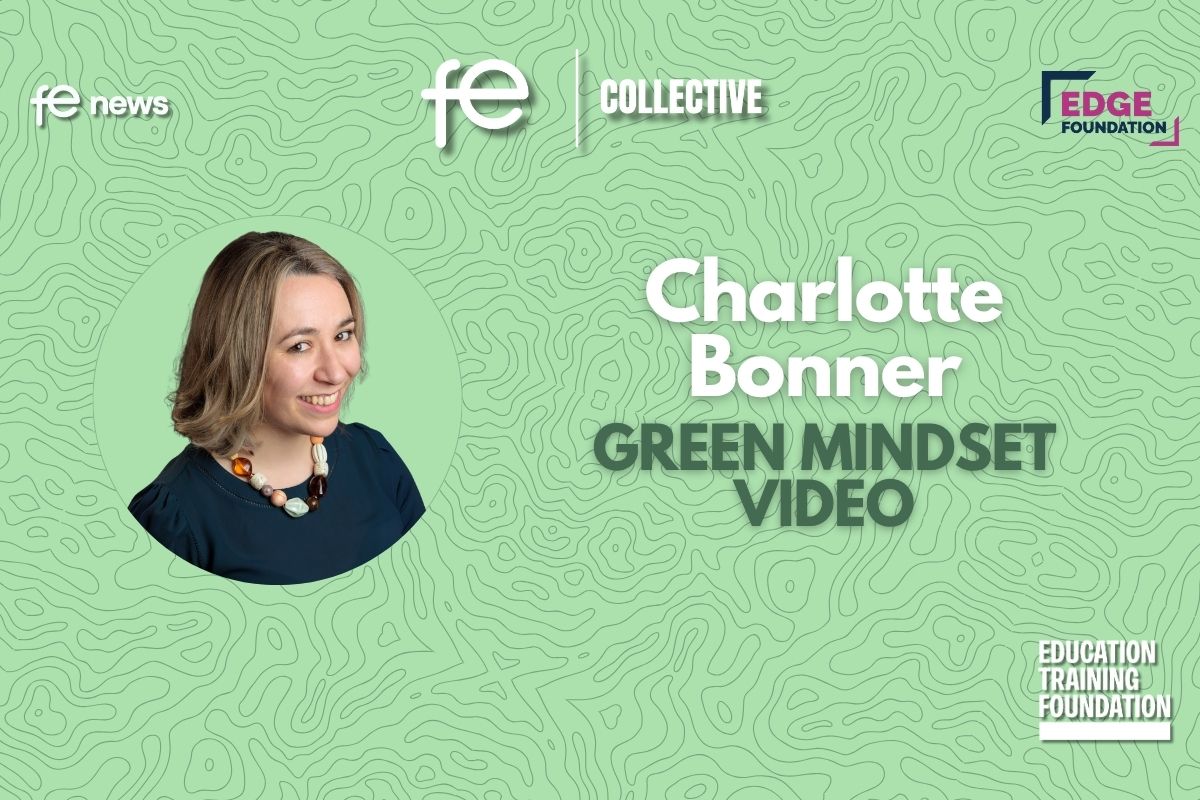
The FE sector already does a great job of equipping learners for their lives and helping communities thrive. But according to Charlotte Bonner, CEO of the Environmental Association for Universities and Colleges, that’s not completely universal. And the gap between pockets of great practice and sector-wide action represents a massive missed opportunity.
In an interview at the Green Mindset Micro-Collective event, Charlotte outlined why a green mindset matters and what needs to change to take sustainability “from piecemeal to mainstream.”
The Unrealised Potential
Charlotte is clear about FE’s current strengths. The sector equips learners, helps communities thrive, and acts responsibly in how it operates estates and facilities.
But there’s a problem. “There’s a lot of ways at the moment that we’re kind of working as business as usual or education as usual that isn’t really maximising the potential that we have to really contribute positively to the world we see around us.”
A green mindset matters because “it will help us take the sustainability work that the sector’s done from piecemeal to mainstream.” The goal isn’t just creating more examples of good practice. It’s raising the bar so the whole sector embraces its role in working within planetary boundaries and helping communities thrive.
Not All Small Changes Are Equal
When asked about small changes, Charlotte rejects a one-size-fits-all answer. What matters is identifying where you can make the biggest impact based on your role.
If you’re a teacher, that’s through your teaching practice. If you’re a leader, it’s about setting visibility and creating a culture of engagement. If you work in policymaking or funding, your role is different again.
“The question that we should be asking ourselves is not what small changes should we be making but what small changes should I be making in my roles so that we can progress this agenda at a much quicker pace.”
Recycling plastic bottles won’t help the education sector achieve its full potential. Understanding your sphere of influence will.
The Structural Barriers
Charlotte identifies clear systemic issues. Funding mechanisms encourage short-term thinking, with annual cycles “where actually we need longer-term funding cycles that enable us to invest in good sustainable impact.”
There’s also a tendency to chase “new shiny things” rather than investing in what already works.
But Charlotte’s most significant concern is about educator development. “We need great educators who are given the time and space to build sustainability meaningfully into their courses. And at the moment we don’t have a really strong universal way of equipping our educators to do that.”
Beyond Individual Enthusiasm
The sector currently relies on individual enthusiasm and passion. What’s needed is “decent access to some good CPD that gives people the time to reflect: what does this mean for me? How can I make sure that through my teaching and learning I’m doing my bit.”
Charlotte’s ask is a “good lifelong CPD entitlement to educators.” She acknowledges educators are already expected to be experts in pedagogy and their subject. “We can’t ask them to be experts in sustainability as well as a field.”
But that’s not what’s needed. “We really do need to make sure that educators know how their subject specialism contributes to the challenges we face and the solutions to those challenges so that they can help their learners navigate that in their career path too.”
Making the Implicit Explicit
Charlotte’s most interesting insight is that the green mindset already exists in FE. “People that work in FE and skills do so because they believe in social change. They believe in prosperity for communities.”
The problem isn’t the absence of sustainability values. It’s that they’re not always explicit. “Sustainability, that green mindset is already innate within FE. It’s just not always explicit.”
The solution is building that explicit culture into leadership programmes, CPD programmes, and frameworks. “Making it business as usual rather than making it dependent on one or two passionate people.”
The Path Forward
Charlotte’s vision is clear: move from pockets of excellence to universal practice. Stop relying on individual champions and instead embed sustainability explicitly into structures and everyday decision-making.
This requires longer funding cycles, proper CPD entitlement for educators, and policy consistency. But fundamentally, it requires the sector to make explicit what’s already implicit in why people choose to work in FE and skills.
The sector already has the values. The challenge is making them visible, systematic, and universal.
Watch the full interview with Charlotte Bonner:
Responses