
Start With Questions: Jodie Bailey-Ho on Making Sustainability a Core Competency

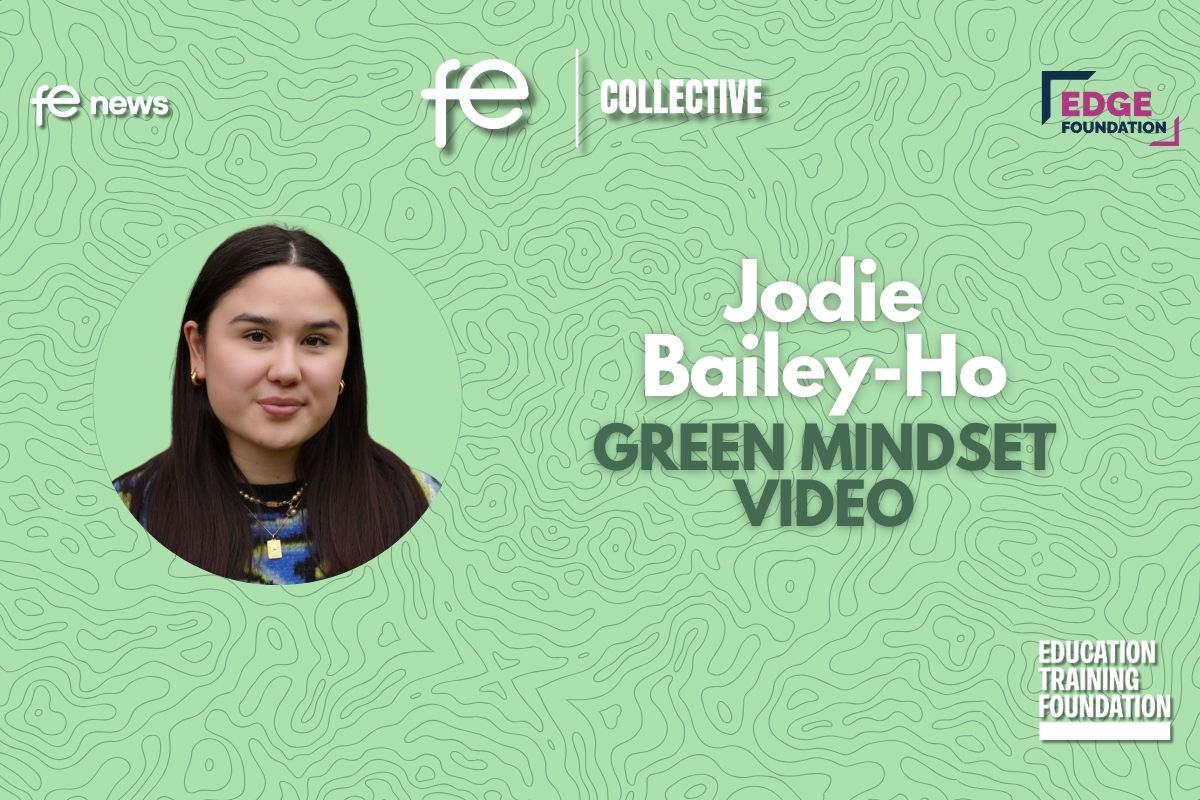
At 21, Jodie Bailey-Ho has already worked as a Department for Education youth focal point for sustainability and climate change, and currently serves as Student Trustee at Students Organizing for Sustainability. Her message to the FE sector is straightforward: if you want young people to thrive in the green economy, sustainability can’t just be something you talk about. It needs to be a core competency.
In an interview at the Green Mindset Micro-Collective event, Jodie outlined why the green mindset matters for young people and how the sector can genuinely prepare them for what’s coming.
Don’t Leave Anyone Behind
“The green mindset is so important because obviously we’re in this transition into a zero-carbon economy and with that it’s really important that we don’t leave anyone behind,” Jodie explains.
Making sure everyone is included means ensuring “everyone has this mindset of sustainability, that everyone is learning about sustainability, everyone knows what it means, so that it’s not just something that we say that we talk about, but it’s actually a core competency for every person moving forward into their career.”
This isn’t about environmental awareness as an optional extra. It’s about ensuring every young person understands “the exact role they have to play in the new green economy.” Without that understanding, people get left behind.
Start With Questions
When asked about small changes people can make, Jodie draws on her own experience. “When I was first looking into sort of volunteering in the movement, I was so overwhelmed by, you know, the complexity of the situation and didn’t know where to start.”
What helped? Asking questions. “How is my industry adapting to net zero? How am I helping young people adapt to net zero? How am I adapting to net zero, my team?”
For Jodie, “asking those questions, what can I do? What can the people around me do? How can I talk to these people so they know about sustainability? It was asking those questions that really helped me. And I think it’s asking those questions that can help other people, too.”
The most important small change isn’t a specific action. It’s starting conversations.
Embed It Everywhere
Jodie’s vision for systemic change is clear: “The main thing I would really like to see is sustainability being embedded into every subject in the curriculum for young people.”
But it doesn’t stop at education. She wants to see sustainability as “large parts of the professional bodies of institutions” and as “a core competency” with “measures within the system and within organisations so that it’s a core competency for every single employee.”
This represents a fundamental shift from treating sustainability as a separate topic to making it integral to every role and every qualification.
The Confidence Gap
Perhaps Jodie’s most striking contribution is her insight about what educators need. “Equipping leaders with the skills that they need comes from empowering and confidence building. I think that’s genuinely one of the main things.”
She illustrates this with a personal story. “When I was in sixth form, I was learning A-level chemistry and one of my teachers was a climate denier.”
Jodie doesn’t attribute this to malice. “I think that came from a lack of knowledge, a lack of education around, you know, what is climate change and how can I be empowered to teach my students about climate change? But instead I’m overwhelmed by the complexity of the situation. I don’t know what to teach my students. I’m worried that I’m going to say the wrong thing.”
The solution? “It really does come from education and training and empowering leaders and teachers to go on so they can then empower the next generation.”
A Young Person’s Challenge
Jodie’s perspective matters because she represents the generation that will inherit whatever system the sector builds now. Her message is that good intentions aren’t enough.
Young people need sustainability to be a genuine core competency, embedded in every subject and every professional body. They need educators who are confident enough to have these conversations, not overwhelmed by complexity or worried about saying the wrong thing.
Most importantly, they need the sector to move beyond talking about sustainability and actually equip every learner with the knowledge and skills to understand their role in the transition ahead.
As Jodie makes clear, the only way everyone comes on this journey is if everyone knows exactly what their role is. The sector’s job is making sure that knowledge is universal, not optional.
Watch the full interview with Jodie Bailey-Ho:
Responses