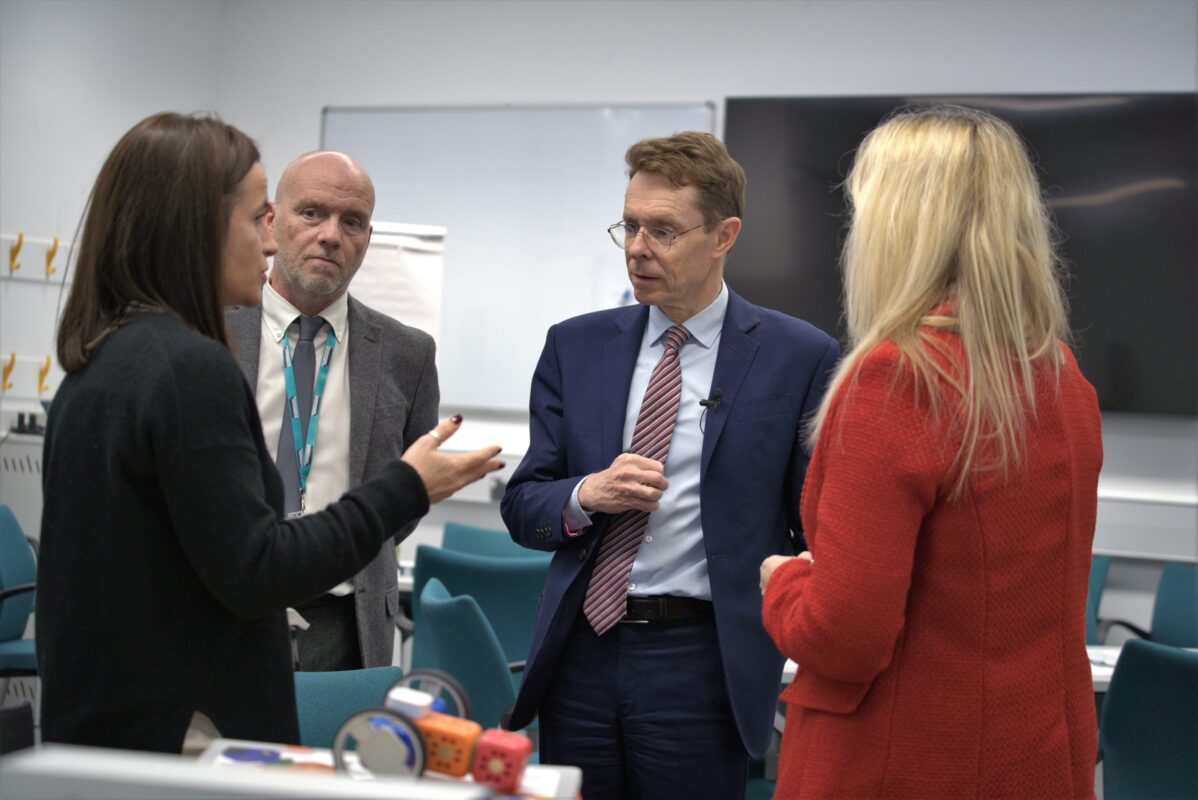
NAW: Ensuring part-time workers don’t get left behind
With major employers moving towards more flexible and part-time working, Sue explains that the apprenticeship system needs to adjust accordingly. National Apprenticeship Week (#NAW2023) is…
What is the Apprenticeship Levy
The Apprenticeship Levy is being replaced by the Growth and Skills Levy under the Labour party to provide greater flexibilities in Apprenticeship and skills development. Including the Foundation Apprenticeships for younger Apprentices at Level 2 and shorter duration Apprenticeships. Which was launched by Keir Starmer on the 24th September 2024 at the Labour Party Conference.
The Apprenticeship Levy
The Apprenticeship Levy was implemented at the onset of the 2017/18 tax year. Employers with an annual pay bill exceeding £3 million pay 0.5% of into their Apprenticeship Levy pot.
The levy’s primary objective is to bankroll apprenticeship training for all employers. Large Levy Paying employers can Levy transfer to smaller employers and if any Apprenticeship Levy funds are not used this is eventually paid back to the Treasury, so the Apprenticeship Levy has a use it or lose it facility. The money paid into the Levy funding pot by employers needs to be used within two years.
The levy is there to fund apprenticeship training for all employers. Smaller employers – those with a total annual pay bill of less than £3million – pay just 5% of the cost of their apprenticeship training and the Government pays the rest.
Who Can Tap into the Levy?
The levy stands as a financial backbone for apprenticeship training across the board. Smaller employers, grappling with an annual pay bill below £3 million, only foot 5% of their apprenticeship training expenses, with the government picking up the remaining tab.
Levy Transfers to SMEs have also gone through a recent change in March 2024 with greater access to help SMEs and particularly young people. The Levy reforms in March 2024 enabled large employers who pay the apprenticeship levy will be able to transfer up to 50% of their funds (which was previously 25%) to support other businesses to enable 20,000 more apprenticeships for young people and SMEs.
Apprenticeship Levy transfer changes for SMEs and Young People (March 2024)
0n 18th March 2024 new Apprenticeship Levy reforms were announced and rolled out from the 1st April 2024. Under the new plans, large employers who pay the apprenticeship levy will be able to transfer up to 50% of their funds to support other businesses to enable 20,000 more apprenticeships for young people and SMEs.
The reforms will see the removal of co-investment costs from non-levy paying employers from April 2024 for apprentices under the age of 22, fully funding this provision; an increase in the levy transfer cap from 25% to 50%; as well as the DfE budget for apprenticeships increasing to “over £2.7 billion” from next year.
The Government will fully fund apprenticeships in small businesses from 1st April by paying the full cost of training for anyone up to the age of 21.
Levy Transfer Dynamics
As per current regulations, unutilised levy funds find their way back to the Exchequer if employers fail to leverage them within a two-year window. For employers faced with this dilemma, the solution lies in a straightforward choice—transferring unspent levy in alignment with their priorities.
However, the catch is that employers can only transfer up to 50% levy pot. Consequently, any proportion within the remaining 50% that remains unspent is forfeited to the Treasury.
Research conducted by the London Progression Collaboration (LPC) unveils a staggering revelation: £3.3 billion has made its way back to the Treasury in three years. This equates to a whopping £95 million per week, underscoring the magnitude of the issue.
Levy Clawback: Use it or Lose it
The government’s use-it-or-lose-it approach to apprenticeship levy rules has seen over £3.3 billion returning to the Treasury in the last three years according to research from IPPR in 2022. This data underscores the critical importance of proactive management to optimise the impact of the levy.
The case for Apprenticeship Levy reform
Insights from LPC’s analysis during National Apprenticeship Week 2022 paint a concerning picture. Entry-level apprenticeships have plummeted by 72% since 2014/15, contrasting sharply with a 400% surge in higher-level apprenticeships. The demographic shift in apprenticeship raises questions about the levy’s alignment with its intended objectives.
The livestream series with NCFE in October 2022 delved into the broader landscape of apprenticeships, examining their ongoing efficacy and the role of the levy in shaping their future trajectory.
With major employers moving towards more flexible and part-time working, Sue explains that the apprenticeship system needs to adjust accordingly. National Apprenticeship Week (#NAW2023) is…
Jacobs Douwe Egberts (JDE Banbury) UK is supporting vital skills growth in Oxfordshire, unlocking talent through the apprenticeship levy transfer scheme. Following the pandemic, many employers…
@coopuk: £600 million wasted in Apprenticeship Levy funding, despite rising demand for paid training among young people However, because of the current Apprenticeship Levy rules…
Ahead of National Apprenticeship Week 2023, Jenny Taylor MBE, Leader of IBM’s Early Development Programme, reflects on her personal journey as an Apprenticeship Champion with…
New research from City & Guilds and the 5% Club called Levying Up, finds that the government’s apprenticeship levy is currently not working as many…
Sky has partnered with the tech start-up Multiverse to gift £1 million of its unspent apprenticeship levy to organisations looking to develop digital, data and…
In this article, Stuart discusses the benefits of micro-credentials for both employment and apprenticeships. 2023 outlook, A perfect storm for industry At the beginning of…
A scheme set up by the West Midlands Combined Authority (WMCA) to fund apprenticeship training for small and medium-sized enterprises (SMEs) has smashed the £40m…
Conference season is well underway, and the annual CBI event returned in person last week, with a new PM, a confident Leader of the Opposition,…
Despite the uncertain economic outlook and a recent decline in job postings, the total number of job vacancies currently in the UK labour market – 1.2…
Please confirm you want to block this member.
You will no longer be able to:
Please allow a few minutes for this process to complete.