
T Level Placements Reformed to open up new Qualification
More students will be able to access crucial T Level industry placements thanks to reforms designed to cut red tape and boost the number taking…

T Levels were launched in 2020 as a technical qualification for 16-18-year-olds which is the equivalent of three A Levels
These pioneering new qualifications offer students a mixture of classroom learning and ‘on-the-job’ experience during an industry placement of at least 9 weeks.
Here’s everything you need to know about T Levels.
They are technical qualifications – equivalent to three A Levels – that combine classroom study with industry placements so that students gain the skills and experience they need to progress into work, further study or an apprenticeship.
T Levels have been designed so that not only are they of the highest standards, but also so that they equip those who study them with the skills that will help them in the workplace, with content designed with over 250 employers including Fujitsu and Amazon.
T Level courses include the following elements:
T-Levels were introduced in September 2020, and the first set of students are now completing their studies before they spend the next few weeks eagerly anticipating results day in August 2022. The new qualifications are aimed at 16 – 19 year-olds and are equivalent to three A Levels. The difference being that the two year courses focus on vocational skills and incorporate a substantial industry placement with an 80/20 split between the classroom and workplace.
To ensure qualifying cohorts gain complete knowledge and relevant skills for their aspiring roles, awarding organisations work closely with employers and providers during development to understand and continually review sectors’ current and future needs.This means that at the end of their course, students are in a position to follow a variety of progression routes, including moving straight into skilled work, or applying for further study. This may be achieved through a higher level apprenticeship or a university degree.
The placement of approximately 45 days gives T-Levels an edge for both students and employers. While students benefit from real-world experience, applied learning and an opportunity to hone any skills they struggled with in the classroom, employers can engage in an extended recruitment drive with minimal costs. As well as this, throughout their engagement, employers will be in a position to gain insights to their industry’s future workforce. The extended length of the placement also means that, unlike one-week work placement options, students have sufficient time to establish themselves and add true value to their workplace.
Of course, T Levels don’t come without their fair share of challenges. Although an extensive placement presents clear advantages, it also means that for every student enrolled, a suitable appointment needs to be found. With over 5,000 students registered for a T Level course in 2021, there is a clear need for employer support across multiple industries throughout England. Having built their core knowledge of a subject, T Levels also allow students to develop a specialism. For example, the new Craft & Design T Level that will go live in September 2023 offers Ceramics Maker as an occupational specialism.
However, industry clusters in England mean such opportunities are concentrated around the Potteries in Staffordshire. Whether students come from Penzance or Penrith, all courses and their required placements must remain accessible to them. This relies on insights gained through employer and provider engagement, which awarding organisations heavily invest in facilitating.
This new approach to vocational study provides young people with options. University and academic routes have been the expected, unquestioned pathway for too long. I vividly remember sitting among my peers in my sixth form study centre while we were briefed on how to apply to university, application forms being passed around with no mention of any alternatives. That’s not to say that a university degree is not a truly valuable qualification. However, it’s value is limited if it doesn’t equip you with a technical foundation on which hundreds of young people hope to build a career.
Neither an academic nor vocational pathway is better than the other. They are just different. This difference is reflective of the endless opportunities across the employment landscape, and T-Levels provide a truly valuable opportunity for young people to support their learning with real-world experience.
T Levels are equivalent to 3 A Levels and Level 3, but students are not able to add or ‘mix and match’ additional qualifications like A Levels or other Level 3 qualifications like a B TEC.
For the 2025 A Level, T Level, VTQ and Level 3 Results day highlights:
T Levels had 11,909 students in 2025 compared with about 7,400 in 2024. The number of schools and colleges offering T Levels has grown by 57% in the past year, but, 11,909 T Level students is just 1.09% of all 1.1 Million Level 3 students! No wonder the National Audit Office recommended that DfE must increase T Level student numbers… it is literally 1% of all Level 3 students!
According to a March 2025 report from the National Audit Office (NAO), 25,508 students started a T Level course in September 2024. The Department for Education had previously estimated a higher number, aiming for up to 100,000 students starting T Levels by September 2025.
T Levels were launched in 2020, during the social distancing measures to combat the Covid-19 pandemic. Here is a podcast with the then Education Secretary Gillian Keegan on the launch of T Levels. Gillian chats about how the Covid pandemic has affected T Level delivery, particularly the industry placements and the measures put in place to help learners achieve their 315 hours of industry placements.
The Department For Education (DfE) has developed a list of Higher Education providers (Universities) that accept T Levels onto courses, including Degrees. Here is the DfE list of Universities that accept T Level qualifications for Higher Education courses.
More students will be able to access crucial T Level industry placements thanks to reforms designed to cut red tape and boost the number taking…

The Industry and Regulators Committee of the House of Lords has been taking evidence on the future skills that the country will need for growth…

The Joint Council for Qualifications (JCQ) congratulates students in England, Northern Ireland and Wales for results received today. These include AS/A level, Level 3 vocational…

The awarding organisations that will take seven prestigious T Levels to the next level have been unveiled. T Levels are high-quality two-year courses, for 16-…


Anne Nicholls explores the reasons why some young people are missing out on work experience. Unequal Access to Work Experience Only a third of teenagers…

Today (24th July 2024), Education Secretary, Bridgette Phillipson said: “I am pleased to announce that the department will undertake a short pause and review of…

Charlotte argues new ministers must prioritise home retrofitting for net zero, emphasising skill development through FE. She finds Local Skills Improvement Plans inadequately address retrofitting…


Tristan Arnison discusses the main UK parties’ education policies for the upcoming election. While specifics vary, common themes emerge around curriculum reform, skills training, and…
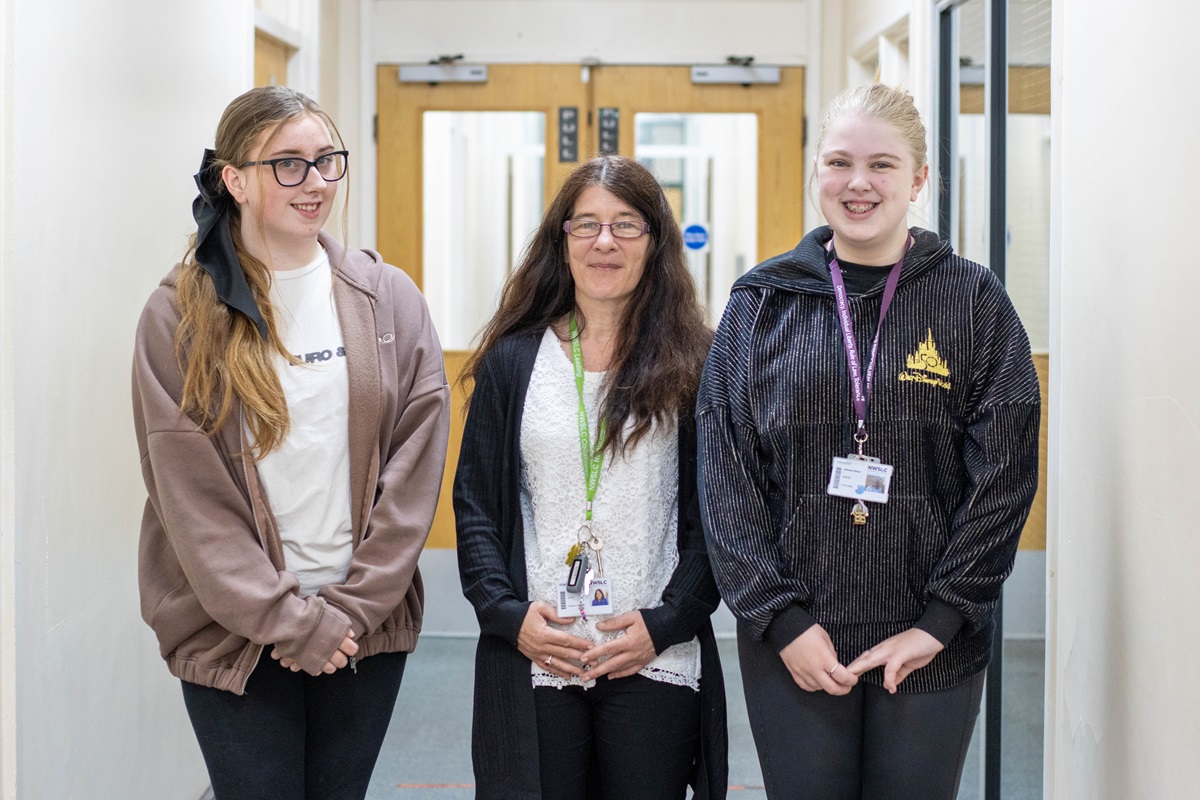
An assessor in childcare and an IT tutor from North Warwickshire and South Leicestershire College (NWSLC) have reached the shortlist of the national NCFE Aspiration…


In the fourth of five exclusive articles for FE News expanding on ‘Skills Means Growth’, AELP’s vision for a sustainable skills system, Dr Chihiro Kobayashi…

Please confirm you want to block this member.
You will no longer be able to:
Please allow a few minutes for this process to complete.