
New ‘DigiBot’ delivered via WhatsApp set to transform learning

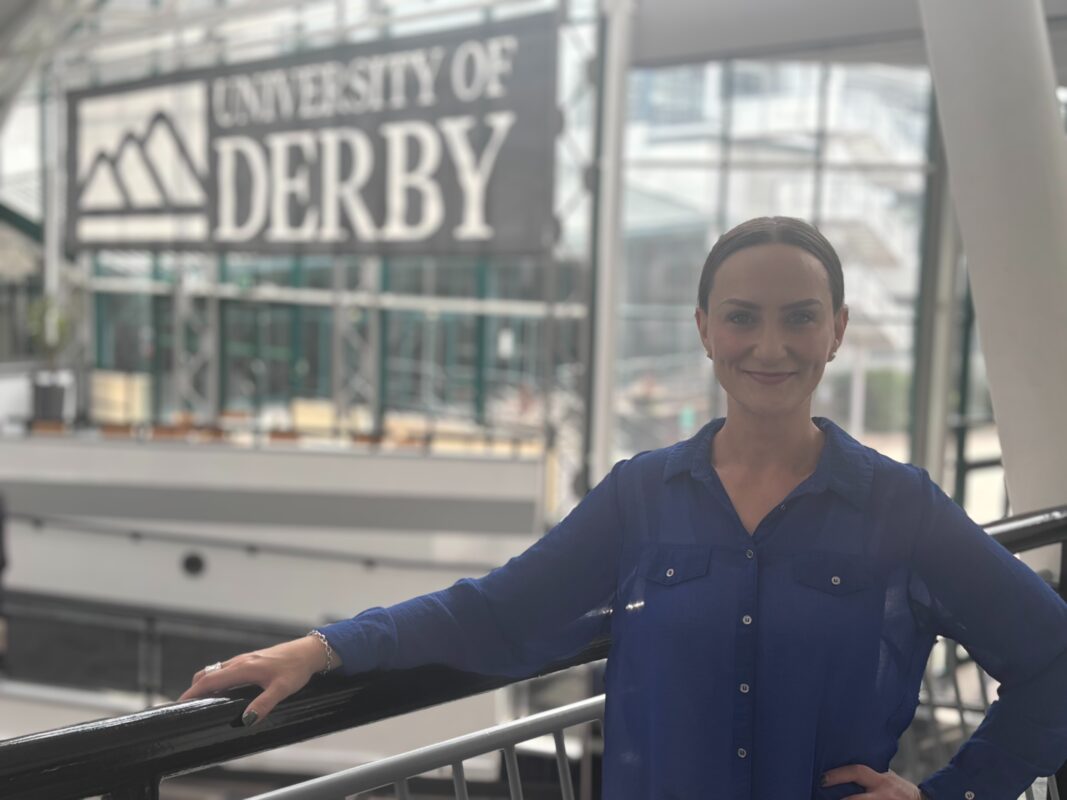
A free learning course delivered by an AI-powered Digibot on WhatsApp has been created by researchers to make learning more accessible and improve financial literacy.
Researchers at the University of Derby have worked alongside Digify Africa, a youth-led digital skills provider, to launch ‘Lwazi’ – an interactive mobile learning experience that uses WhatsApp to deliver financial literacy skills.
The project aims to upskill African entrepreneurs between the ages of 18-35 in sub-Saharan Africa who lack access to affordable, quality financial literacy education.
The DigiBot addresses accessibility issues among disadvantaged and rural communities by offering a mobile-first service that is free to use, utilising the fact that South Africa has a 95 per cent usage rate of WhatsApp.
The Lwazi financial literacy bot is funded by Nedbank, one of the largest financial services groups on the African continent, which strives to conduct business in way that is beneficial and uplifting for individuals, families, businesses and society.
Since its launch, the Lwazi Digibot has already reached hundreds of learners in South Africa, offering critical consumer education on both personal and business finance.
Lwazi follows the success of three previous DigiBots launched with the support of the University of Derby and funded by Meta. The individual WhatsApp learning bots are designed with relatable personalities to upskill young people in areas such as digital safety, digital literacy, and digital marketing.
Now, researchers at the University of Derby are hoping to bring DigiBots, an accessible and engaging way of learning, to the rest of the world.
Dr Elnerine Greeff, Senior Lecturer in Marketing at the University of Derby and lead researcher on the project, said:
“We are very excited about the potential scale this research could have across the globe. The preliminary results for our ‘Lwazi’ DigiBot are very promising, with some users finding the Bot so engaging they were unsure as to whether it was human or not.
“Financial literacy is a worldwide issue, and access to free learning should be available to everyone, which is why we hope we can now use the success of this technology in South Africa and bring it to the rest of the world.”
Dr Greeff explained how the series of DigiBot are designed to focus on different areas of entrepreneurship. She said:
“The previous DigiBot we have helped develop covered skills that are needed when owning a business, for example, digital marketing and digital literacy. As the programme develops, we hope to create Bots for all the key areas of entrepreneurship.”
Described as a more advanced version of a chatbot, a DigiBot simulates human conversation, using interactive, automated response programmes to guide users through learning content via a mobile phone.
Free to access, the DigiBot is designed to reach a wide audience to deliver micro-lessons to learners via dynamic menus, gamification, and keyword recognition while using minimal data.
During the course, learners can complete quizzes, see how they rank on leaderboards, and earn badges as they achieve their certificate of completion, all through the world’s most used messaging app, WhatsApp.
On why it is delivered through this channel, Dr Greeff said:
“Young people are more open to learning in this way. They see their phones as a platform to learn; it feels more natural to them compared to other online-based training models.
“Through the DigiBot, they can learn at their own pace without feeling judged, which then leads people to be more receptive and experimental in their approach to learning. Learning through WhatsApp is also free, which means access to education is not limited for those in disadvantaged and rural communities.”
Dr Hassam Waheed, Lecturer in Business, Economic and Social Policy at the University of Derby and a researcher on the project, explained how his expertise and research in financial literacy is being used to assess the impact of the DigiBot.
He said:
“Our role on the project at this stage is to now look at how effective the DigiBot is. We address two elements: whether it has improved users’ financial literacy and whether this has then made any improvements to their mental health as a result.
“As young people are gaining financial literacy skills, it is improving their quality of life as they are becoming financially empowered – the two elements are interlinked, which is why our analysis of the project is so important to informing the future of learning models.”
Business, Economic and Social Policy is one of the University of Derby’s six research themes. The project is one of many that are having real-world impact on business, economy, and society regionally, nationally, and internationally.
Responses