
16 Years Old and Earning more than Mum and Dad


There is a comforting myth in British education that entrepreneurship is an optional ‘nice-to-have’ that begins sometime after graduation, ideally once a young person has been gently marinated in employability skills, obtained a LinkedIn profile and established a mild sense of self-doubt. The idea that it might begin at 14 – or that it is already underway at 16 – tends to unsettle the timetable and raise a few fears about future security.
And yet, in a sixth form classroom in Farnborough, that myth unravelled rather quickly.
Invited to speak to a group of 16–18-year-olds about freelancing, I arrived armed with a jargon-free presentation, simplified slides and a cautious tone. The plan was to introduce the concept gently, to assume limited knowledge and build from first principles.
Within five minutes, the plan was out the window.
Of the students who had chosen to attend voluntarily, the majority (80% to be exact) had already earned money through some form of independent venture. Not pocket money. Genuine commercial activity.
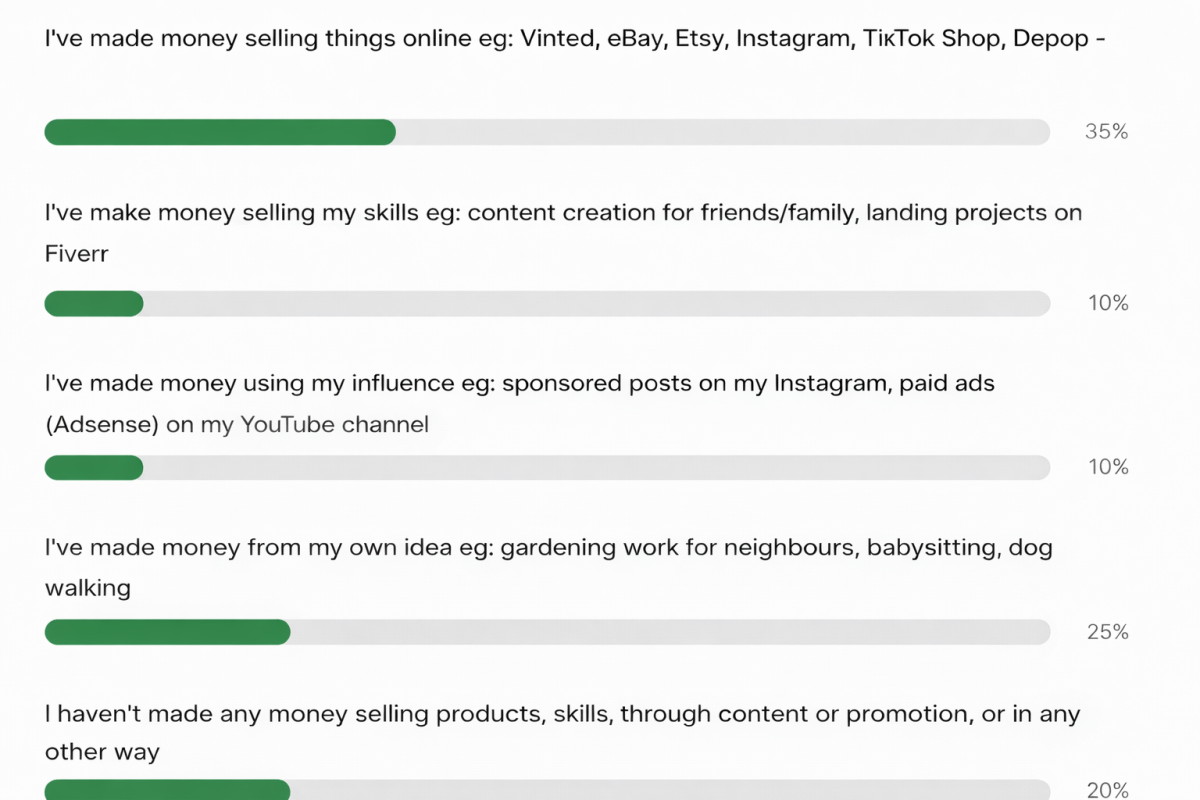
Clothes resold on Depop and eBay with sharper margin awareness than many high street retailers. Handmade jewellery brands with defined visual identities. A football coaching business with loyal local clients. One student quietly running AV services for corporate events, navigating client expectations and technical specifications between coursework deadlines. Another, conducting transactions through his mum’s bank account because no institution would open a business account in his own name, was worried as his income was pushing his parents into a higher tax bracket!
This was not precociousness. It was rational adaptation.
TikTok, it’s time for a change
A generation raised on platforms has absorbed, almost by osmosis, the mechanics of trade: audience, offer, transaction. Barriers to entry are lower than ever. The cultural narrative has shifted too. Where self-employment was once framed primarily as risk, it is now often presented as autonomy.
Strip away the more garish promises of overnight wealth that circulate on social media, and what remains is something more grounded: a cohort experimenting with commerce early, pragmatically and often quietly. Freelancing has become aspirational. It’s also become essential as workforces shirt from teams of full-timers to hybridised models and ‘workforce blending’ that combines flexible working with AI agent and freelancers at the heart.
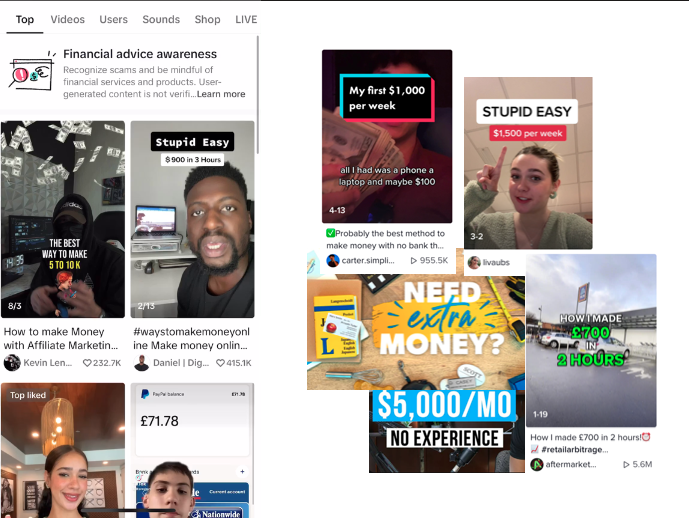
Research commissioned by the travel franchise company Travel Counsellors found that around 73% of 16–24-year-olds would be keen to start their own business. The mood, in other words, is less “if all else fails” and more “why not now?”
I digress. Back to Farnborough. What was striking during the workshop was not merely that these students were trading. It was the nature of their questions. Legal liability. Insurance. Tax thresholds. Business registration.
The students weren’t dazzled by the mythology of entrepreneurship, they were actively trying to do it properly – hungry for proper insight, support and expertise.
Mind the knowledge gap
Which brings us to the policy and pedagogical question for Further Education: how should colleges respond to students who are already operating as micro-businesses?
The gap between reality and recognition is striking. In many classrooms, entrepreneurship remains an enrichment activity. A club. A Dragon’s Den style competition. A module that sits at the edge of the timetable. Meanwhile, students are learning about pricing through trial and error, discovering tax thresholds via YouTube influencers, and drafting contracts based on templates of questionable origin.
The issue is not whether young people are interested in enterprise. Many clearly are. The issue is whether the curriculum acknowledges and supports the commercial activity already happening beyond it.
There are, inevitably, gaps that need addressing. Pricing is often intuitive rather than strategic. Marketing could collapse into “posting more on Instagram.” The allure of working for free in exchange for “exposure” needed gentle but firm interrogation. Confidence fluctuated wildly, especially when discussing difficult clients or late payments.
But these were refinements, not foundations. The foundations – initiative, commercial awareness, technical competence – were already in place.
If students are trading anyway, the curriculum faces a choice. Ignore it and allow mistakes to accumulate in private. Or treat these ventures as live case studies through which core skills can be taught more meaningfully.
Future freelancers
Integration need not mean turning every FE college into a start-up incubator. It can be pragmatic.
First, embed enterprise literacy into existing subjects. Business studies, media, sport, art and design – all lend themselves naturally to discussions about pricing, contracts, intellectual property and client management. Rather than hypothetical case studies, teachers can invite students to apply frameworks directly to their own ventures where appropriate.
Second, normalise conversations about self-employment as a legitimate pathway, not a fallback. Careers guidance often defaults to payroll employment as the primary destination. A more balanced narrative would present portfolio careers and freelance work as mainstream options within a modern, project-based economy.
Third, provide foundational knowledge early: how tax works, what insurance does, the basics of invoicing, the difference between revenue and profit. This is not about encouraging every student to start a business, but about equipping those who already have with guardrails.
Fourth, ensure that entrepreneurship support is not siloed. When enterprise becomes a bolt-on, it attracts only the already confident. When it is woven into curriculum and tutorial spaces, it reaches the quietly ambitious – the student reselling trainers between lessons who would never attend an after-school “start-up club”.
Finally, invest in staff confidence. Many teachers did not come through systems that acknowledged freelance work as a serious outcome. CPD that demystifies contemporary self-employment models can make a significant difference in how comfortably these conversations are facilitated.
None of this guarantees that every student venture will succeed. Nor should it. Early experimentation includes failure. But failure within a supported environment is an education; failure in isolation can be expensive and disheartening.
Further Education occupies a uniquely strategic position. Closer to families than universities. Closer to the early stirrings of commercial ambition. Close enough to intervene before avoidable mistakes harden into cautionary tales.
It would be naïve to assume that every cohort will arrive with the same level of commercial activity as that Farnborough group. But it would be equally naïve to assume that the appetite is marginal.
In common rooms and on smartphones, between revision sessions and part-time shifts, a generation is already testing ideas, building audiences and earning revenue.
The question is not whether entrepreneurship belongs in FE. It is whether FE is prepared to meet students where they already are – trading, experimenting and learning how to build something of their own.
By Matt Dowling, Founder and CEO of the Freelancer Club
Responses