
The 3% Solution: Dr Lou Mycroft on How FE Can Lead the Green Revolution

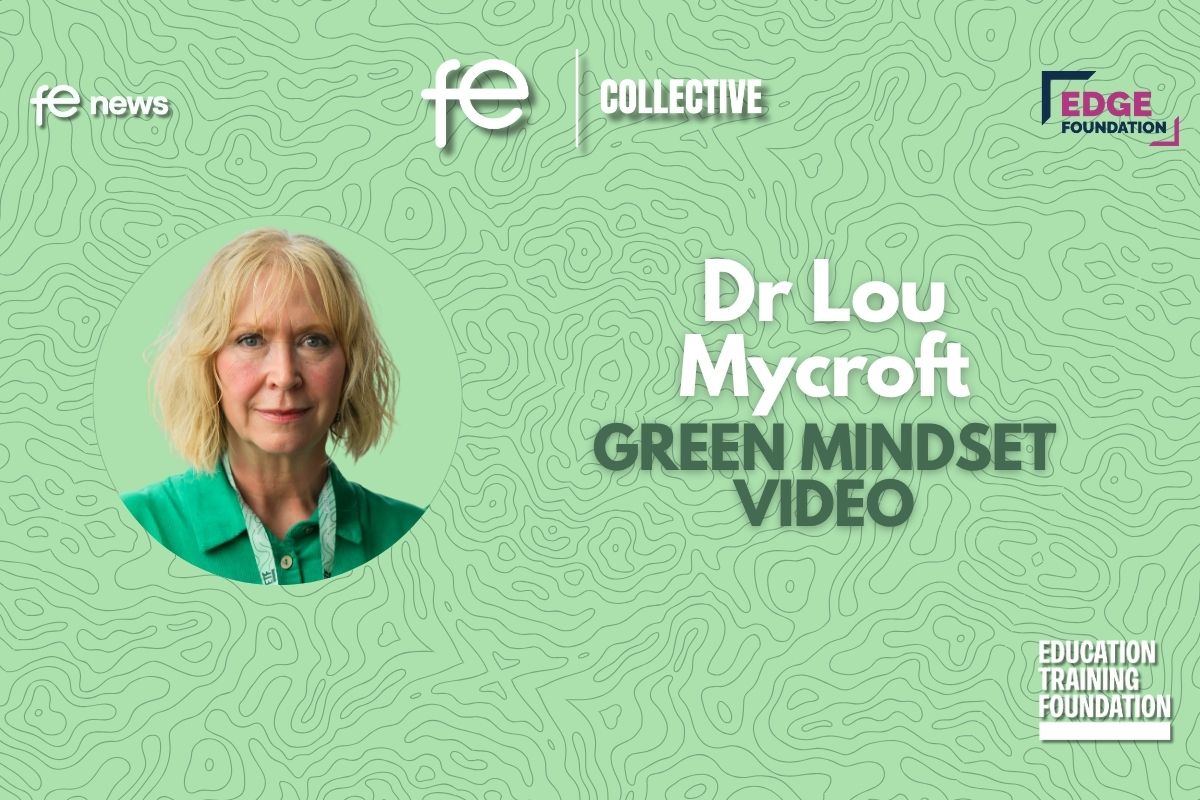
“Who is going to lead this green revolution if not FE and skills?” It’s a direct challenge from Dr Lou Mycroft, who works with Green Changemakers and runs a national program in partnership with Fircroft College. Her answer is equally direct: “We should be front and center, but I don’t think we quite believe that.”
In an interview at the Green Mindset Collective, Lou outlined why the sector’s reluctance to claim leadership on sustainability is both understandable and ultimately untenable, and what needs to change.
Beyond Governments and Corporations
Lou is clear about where real change originates. “Governments, corporations, they’re not going to change anything unless people get them to change,” she states. This isn’t cynicism, it’s realism about how transformation happens.
The sector’s role isn’t simply to respond to policy directives or employer demands for green skills. It’s to cultivate the people who will drive those demands in the first place. “That green mindset is needed in everybody to push for systems and culture change.”
Starting with Climate Joy
But how do you activate that mindset? Lou’s approach, developed through the Green Changemakers program, begins somewhere unexpected: not with doom and crisis, but with connection.
“How do we switch people on to their climate joy to why they care? Because we all do care,” she explains. “That’s the first thing creating the conditions where people think I really care about nature. I really care about how we treat people.”
This represents a fundamental shift from the sector’s typical approach. “It’s about not just thinking in terms of the technical which we tend to do in FE and skills,” Lou says. Instead, it requires addressing three interconnected questions: “How do we treat people? How do we challenge and change our systems? And how do we connect with nature?”
For Lou, that connection to nature is what gets “99% of people started with a green mindset.”
The Two Operating Systems
Lou introduces a framework that should resonate with FE leaders struggling to balance compliance with transformation. She talks about needing two operating systems to run simultaneously.
The first operating system is what institutions know well: “We have to do it. We have to account for the public money that we spend.” This is about delivery, compliance, and operational effectiveness.
But real change requires a second operating system: “We need the energy of community to be able to do the macro shifts in systems and culture that we really need to make this stick.”
Leadership’s role, Lou argues, is understanding “that the answers come from everybody” – not from the top-down alone.
The Mathematics of Change
Lou presents research that should galvanise FE leaders into action. “What we know is that 3% of the workforce can influence 85% of the workforce and that other 15 ain’t ever going to shift.”
The strategy is therefore clear: “How do we get that 3% together? Train them as green changemakers, train them in the skills of influence, of culture change, of systems change in order to reach that tipping point.”
That tipping point, according to Lou’s research, is 25% of staff. Reach that quarter of your workforce and the green mindset “takes over.”
From Theory to Action
Lou’s message is straightforward: “We’ve got the research and we just need to make a start.”
This means:
- Identifying your potential 3% of green change makers
- Training them not just in environmental content, but in influence and systems change
- Creating conditions where climate joy – personal connection to nature and people – can emerge
- Running two operating systems: delivering on compliance while enabling community-led transformation
- Moving beyond purely technical approaches to embrace culture and systems thinking
The Leadership Challenge
What Lou is describing isn’t another initiative to add to the list. It’s a fundamental shift in how FE institutions understand their role in the green transition.
The sector can continue to respond to external demands for green skills training, treating sustainability as one more compliance requirement. Or it can step into the leadership vacuum and actively cultivate the change makers who will drive transformation across communities, businesses, and ultimately policy.
As Lou puts it, if FE and skills won’t lead this revolution, who will? The sector has the reach, the community connections, and the practical focus to make it happen. What’s needed now is the belief that it should.
Watch the full interview with Dr Lou Mycroft:
Responses