
Further Education (FE) and Skills Was Centre Stage At The Labour Party Conference, Now Action Must Follow

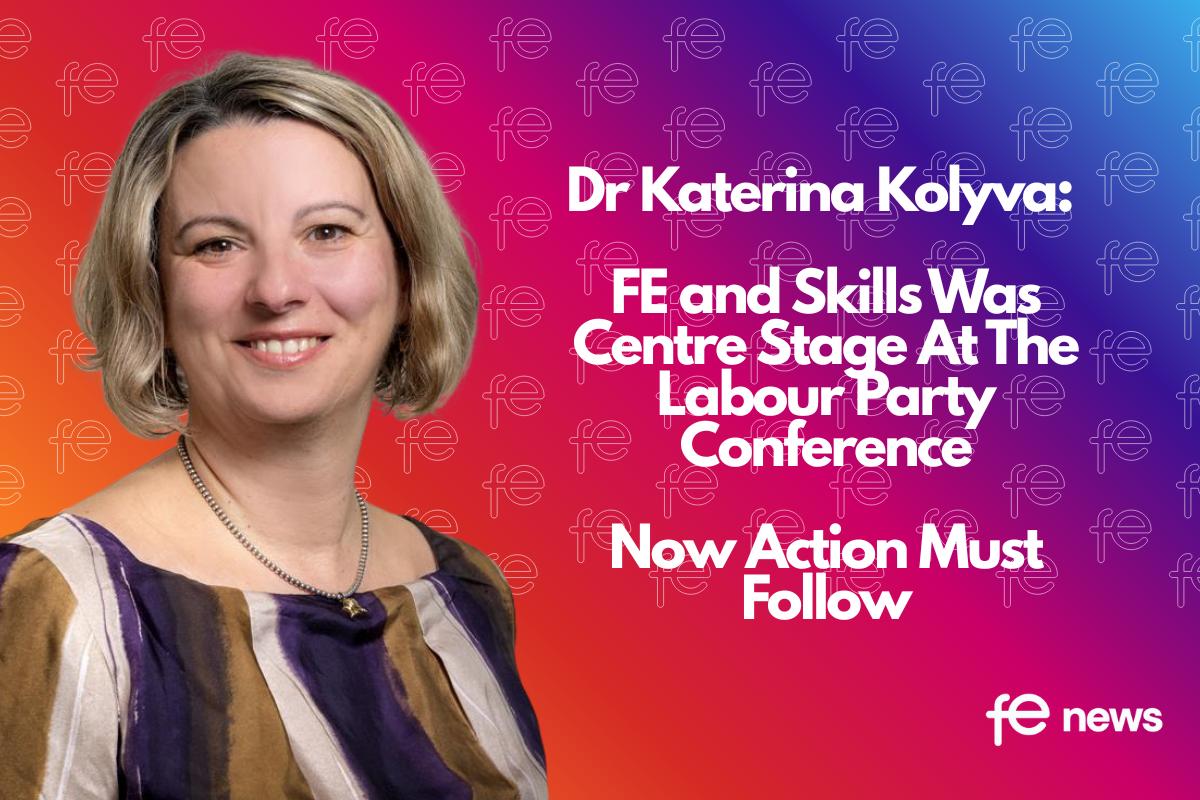
Attending this year’s Labour Party Conference, I was struck by a growing recognition: the further education (FE) and skills sector is no longer quietly supporting from the sidelines – it is stepping into the spotlight as a driving force behind every national mission. Whether we’re talking about building homes, delivering healthcare, or driving innovation, the FE and skills sector is the connective tissue powering the future workforce and national progress. This was evident to me both throughout the debates I joined and in the very welcomed strong presence of FE and skills leaders across the Conference floor.
The Sector’s Strength Lies In Its People
At the Education Training Foundation (ETF), we’ve long championed the idea that the sector’s strength lies in its people. This year, we made our focus clear across three strategic priorities:
- Every learner taught by professionals who are highly skilled, valued, and vocationally expert.
- Every teacher trained and supported to high, consistent standards.
- Every region equipped with the data, funding, and capacity to meet local skills needs.
For too long, these priorities have been under pressure from fragmented policy, constrained funding and uneven professional recognition. But at this Conference there were encouraging signs that policy makers now understand that investment in people – teachers, trainers, leaders – is essential if ambitions for growth and productivity are to land.
Evidence-Based Plan To Revitalise FE and Skills
ETF was proud to convene a roundtable with Helen Hayes MP, Chair of the Education Select Committee. The Education Select Committee’s latest report, following their inquiry, offers a clear, evidence-based plan to revitalise FE and skills: urgent investment to reverse years of underfunding and stagnant pay, deeper devolution of skills policy, reforming apprenticeships to simplify access and funding, boosting awareness and uptake of T Levels, and introducing a targeted student premium for disadvantaged learners. Critically, the report calls for a long-term workforce recruitment and retention strategy.
Our discussion concluded with a clear call for:
- greater flexibility in the qualification system and workforce planning
- a renewed focus on profiling FE and skills as aspirational places to learn and work
- clear, consistent communication about careers to all students and learners.
ETF also co-hosted a panel session with King’s College London, featuring Minister Baroness Jacqui Smith, exploring how HE and FE can work more effectively together.
Building A Coherent Tertiary System
Professor Bobby Duffy, Director of the Policy Institute at King’s College London, shared insights from his research on public perceptions of higher education. His work challenges widespread misconceptions, such as the belief that universities are disconnected from real-world skills or that they serve only a narrow demographic. These views distort both public debate and policy; demystifying them is key to building a coherent tertiary system. The conversation offered me the opportunity to reflect on the diversity of our learners, the breadth of subjects we cover, and the transformative impact the sector has on people’s lives.
When asked how FE and HE can collaborate more deeply, I offered two reflections:
- education and employment pathways are a natural area for alignment
- research bridging academia and applied practice offers exciting potential for joint innovation.
Collaboration Must Be Practical, Not Theoretical
These discussions reminded me that collaboration must be practical, not theoretical – joint curriculum design, co-developed professional development, and shared research all help create a truly joined-up tertiary system.
So, you can imagine how delighted we were to hear the Prime Minister champion the further education and skills sector and its workforce in his conference speech on Tuesday.
He pledged to make further education “a defining cause of this Labour government” – promising higher standards in colleges, raised teaching quality, more apprenticeships and technical excellence colleges, and qualifications rooted in jobs and communities. And he spoke powerfully about valuing every learner’s pathway, saying: “What I want is a Britain where people are treated with the dignity they deserve for making different choices – choices our country needs, choices we should value, choices that deserve our respect.”
The Sector’s Voice Is Not Just Being Heard, But Starting To Really Shape Policy
The past few days have shown that the sector’s voice is not just being heard but starting to really shape policy. For a workforce that has long felt invisible, that shift matters.
Now is the moment to convert recognition into action. ETF is ready to work with Government, providers and partners to deliver a bold, long-term workforce strategy to build coherent pathways from education to employment.
By Dr Katerina Kolyva, CEO of the Education and Training Foundation (ETF)
Responses