
Listening to the voice of employers is vital for the future of qualifications in Wales

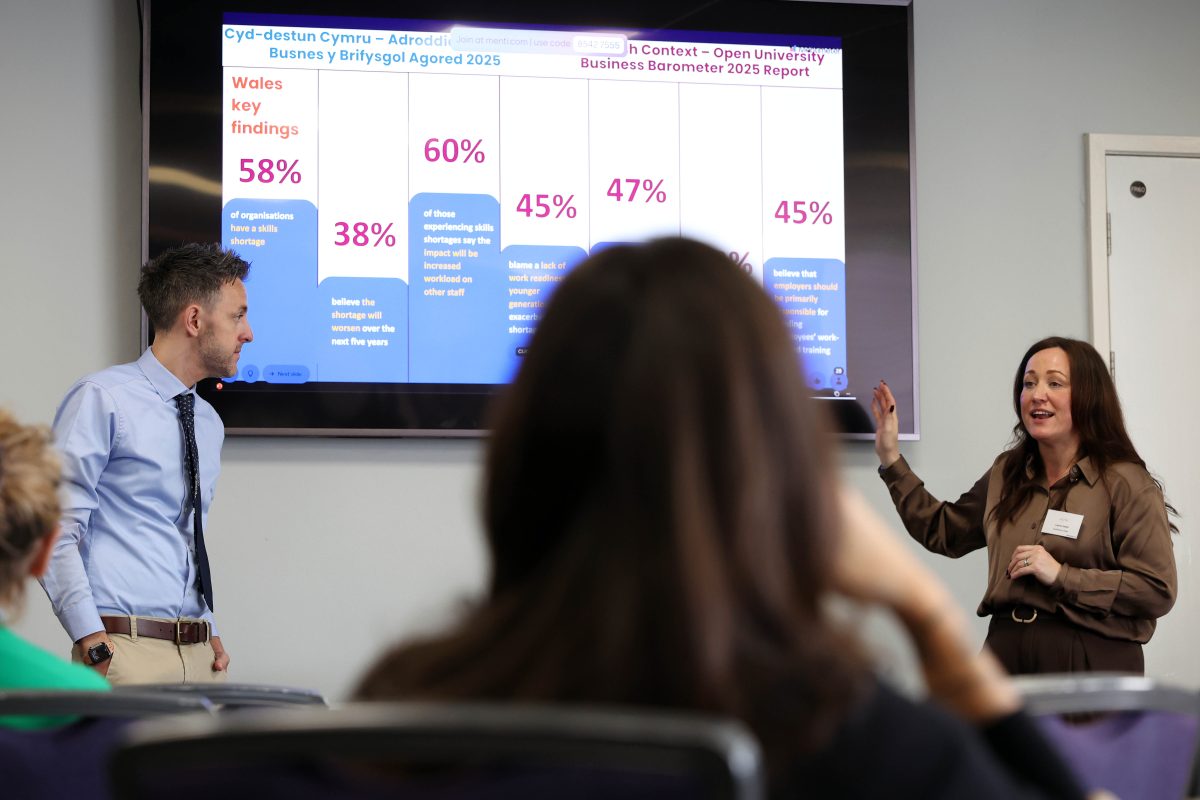
What’s stopping some employers from helping to shape the education of Wales’ future workforce? Leanne Hallett and Dean Seabrook from Qualifications Wales held a special workshop to discover the answers.
Listening to the opinions and ideas of employers in Wales is an important part of ensuring our qualifications system delivers education that supports a robust, healthy economy.
That’s why Senior Qualifications Managers Leanne Hallett and Dean Seabrook delivered a Qualifications Wales workshop to discuss effective approaches to employer engagement with the qualifications system at the recent National Training Federation for Wales conference.
The workshop session outlined the crucial role that employers’ voices play in shaping the qualifications system and Qualifications Wales’ commitment to capturing their views.
Leanne said: “Learning providers and awarding bodies told us about the value that employers offer to qualification and pathway development. They stressed that their participation is vital for ensuring qualifications are fit for purpose.”
The session also explored the key reasons why employers aren’t always able to engage as fully as they might like with the qualifications system.
Dean said: “Attendees told us that a significant blocker is simply having the time and capacity to contribute to discussions, and the difficulty of balancing this alongside their workloads, particular for small businesses. Attendees told us that further supporting employers’ understanding of the qualifications system would be helpful, as some employers don’t know the impacts their contributions could have.”
Leanne added: “Small businesses need to see a direct return on their investment from participating in research, because without clear incentives, they deprioritise engagement.”
The pair explained the four ways that Qualifications Wales is currently using to encourage employers to engage with the qualifications system:
- Have Your Say – engaging with Qualifications Wales consultation platform to find out the latest information and give feedback.
- Sector Qualification Groups – encouraging employers to play an active role in these dedicated groups which span all major business sectors.
- Qualifications in Wales – using this platform to find the latest qualifications and to inform discussions with local learning providers.
- The Qualifications Wales newsletter – encouraging employers to stay updated on the latest information by signing up for the monthly newsletter (employers can sign up via the Qualifications Wales homepage).
Dean added: “We concluded our session at the conference by workshopping ways to encourage and make it easier for employers to contribute.”
Stakeholders suggested that supporting employers to understand different aspects of the qualifications system would encourage closer involvement, especially:
- the typical stages for developing and introducing new qualifications
- the range and purposes of vocational qualifications for work-based learners in Wales
- how qualifications align with recognised sets of industry standards or defined occupational roles
- by giving examples of how the employer voice has shaped areas of the current qualifications system
Employers who are interested in finding out more can email [email protected] or [email protected].
Responses