
What Should an Engineering Open Day Really Show Students?

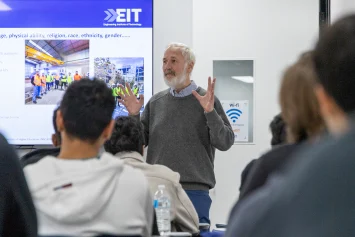
Campus and virtual events can help prospective students assess the practical demands of engineering education, provided institutions make room for questions about workload, access, and support.
For someone considering engineering study, a course title answers only part of the question. The harder decisions concern what learning will involve: how practical work is taught, when attendance is required, and whether study can fit alongside employment or family responsibilities.
An open day is an opportunity to make those demands visible. For higher education providers, the challenge is to give prospective students enough detail to judge whether a course and its delivery mode suit their circumstances.
That matters particularly for adults returning to education. A report by Associate Professor Kelly Linden for the Australian Centre for Student Equity and Success finds that part-time students represent 35 per cent of domestic Australian university students. It highlights competing work and caring responsibilities, and recommends clearer information about compulsory activities and timetabling at admission.
The implication for student recruitment is straightforward: conversations about flexibility need to explain what students will actually be expected to do.
Making Practical Learning Visible
Engineering provides a useful test of that approach. Prospective students need to understand how mathematical concepts, technical analysis and practical tasks connect within a course.
A laboratory demonstration can begin that conversation. Its educational value depends on whether visitors can understand the task, ask questions and see how it relates to learning and assessment.
The Engineering Institute of Technology (EIT) will hold its Perth Campus Open Day on 9 October 2026. Its published program includes surveying, concrete testing, programmable logic controller production lines, inverter technology and computer numerical control demonstrations, alongside student projects and conversations with academic staff.
These activities create opportunities to explain the decisions behind the equipment. What does a concrete test tell an engineer? How does a control system respond to a change in operating conditions? What would a student need to understand before completing a comparable task?
Providers should also explain how demonstrations relate to ordinary teaching. Visitors need to know which activities students undertake themselves, how often they practice and how their competence is assessed.
Explaining Online Study in Concrete Terms
Online events raise a related question: how can someone assess a learning environment without visiting it?
EIT’s Virtual Open Week, scheduled for 12–16 October 2026, includes discipline sessions combining remote laboratory demonstrations, student accounts and lecturer-led industry case studies. The programme also includes opportunities to ask about study modes, admissions and support.
For prospective online engineering students, seeing a remote laboratory operate can open a more specific discussion about practical learning. Institutions should explain what students control, how experiments are supervised, what technical access is required and how practical work is assessed.
Similar clarity is needed around time. A prospective student working shifts may need to know whether sessions require live attendance, whether recordings are available and how group assignments are organised. Someone returning after years away from formal education may need information about preparation and academic support.
An online event can make that initial conversation possible without travel. Institutions still need to consider session timing, internet access and how questions from people unable to attend live will be answered.
Giving Students Room to Ask Difficult Questions
Current students can contribute details that a course overview cannot easily convey: how they organise their week, which assignments they find demanding and how they seek help.
Their participation is most useful when prospective students can ask about challenges as well as achievements. Staff should be equally prepared to discuss entry requirements, costs, compulsory attendance and the limits of available flexibility.
The Perth and virtual events offer two settings in which those conversations can occur. Their educational value will depend on the clarity of the answers and the opportunities for follow-up.
For institutions, useful measures could include the questions left unresolved, requests for further guidance and whether attendees report a clearer understanding of workload and delivery. Those findings could help improve both recruitment information and student support.
Prospective students should leave an open day able to describe what they would study, how they would learn and what arrangements they would need to participate. That is a practical standard against which any campus or virtual event can be assessed.
Responses