
There’s One Million NEETs In The UK. Are We Doing Enough?
The Government’s announced another £1 billion of funding to reduce the number of young people not in education, employment or training (NEET). This comes on top of previous announcements…

Alan Milburn Review was announced in 2025 to gain a better understanding of what is causing the NEET crisis, and the number of NEETs remains at a persistent level.
The Milburn Review is a groundbreaking investigation into the causes of record unemployment and inactivity among 16 to 24 year olds with a call for young people and a range of experts to come forward with their views.
NEETs (young people 16-24 years old who are Not in Education, Employment or Training).
The Milburn Review was officially launched on the 16th December 2025, with evidence to be raised by the 30th January 2026.
The Call for Evidence is open until 30 January 2026 and gives young people and their stakeholders the opportunity to shape Mr Milburn’s report and suggest life-changing solutions the government can bring forward. He is keen to canvas the views of anyone with experience of the issue – from young people themselves to their parents, football coaches and teachers.
He will take a radical, system-wide approach that matches the urgency of the task at hand.
The Office for National Statistics (ONS) November 2025 NEETs data found 946,000 young people were currently classified as NEET, down from 948,000 in the previous quarter.
The November 2025 ONS NEETs figures show 946,000 young people aged 16-24 were not in education, employment, or training (NEET) in July to September 2025, down from 948,000 in April to June 2025. This represents 12.7% of all young people, down 0.1 percentage points on the quarter and 0.5 percentage points year-on-year from 13.2%.
Gavin Kelly – Chief Executive of the Nuffield Foundation and previous Chair of the Resolution Foundation.
Rachel Perkins – Clinical psychologist with over 30 years’ NHS experience and former Mind Champion of the Year
Ruth Owen OBE – CEO of Leonard Cheshire and disability rights advocate
Shuab Gamote – Co-author of ‘Inside the Mind of a 16-Year-Old’ and educational equality advocate
Sir Charlie Mayfield – Former Chairman of John Lewis Partnership and Chair of Keep Britain Working review
Tracy Brabin – Mayor of West Yorkshire
Andy Haldane – President-Elect of the British Chambers of Commerce and former Chief Economist at the Bank of England
Ravi Gurumurthy – Group Chief Executive Officer at Nesta
Lisa O’Loughlin – Principal and CEO of East Lancashire Learning Group
Dr Jennifer Dixon – Chief Executive of the Health Foundation
Dame Louise Casey DBE – Social welfare sector expert.
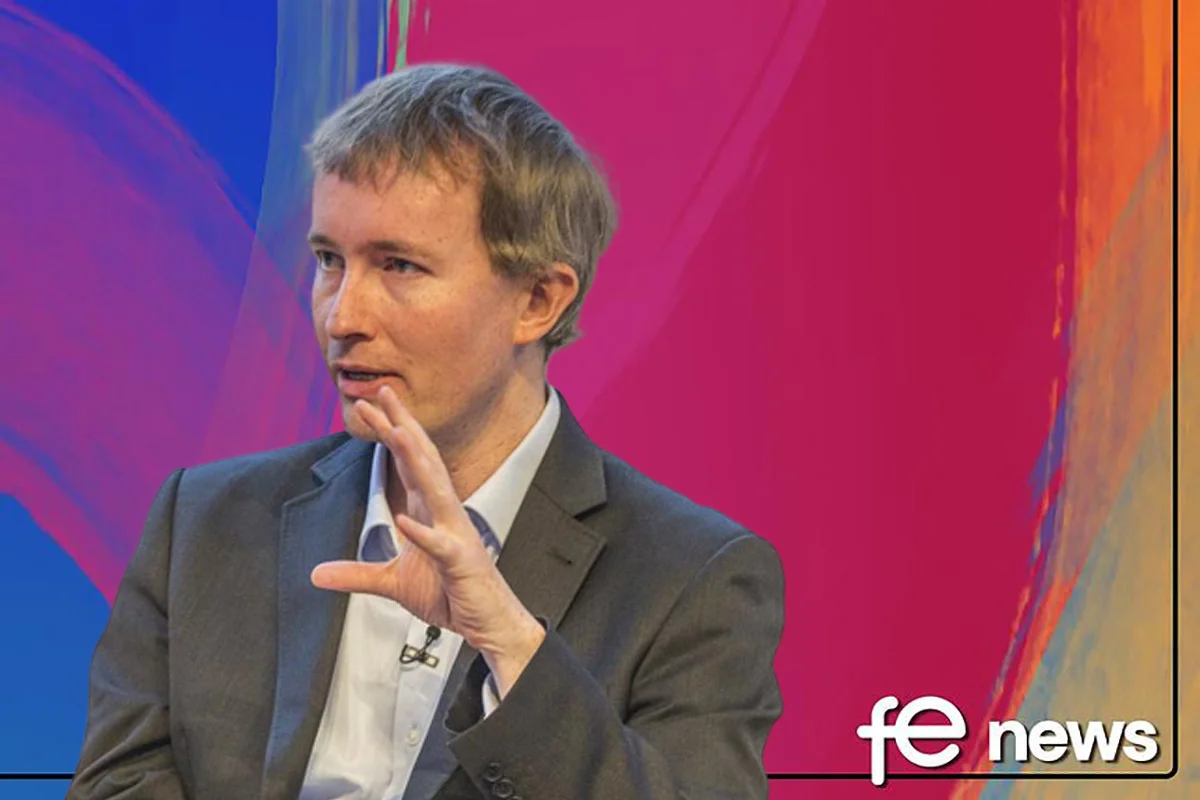
The Government’s announced another £1 billion of funding to reduce the number of young people not in education, employment or training (NEET). This comes on top of previous announcements…

The latest labour market figures from the ONS are pretty dismal reading for job seekers, particularly the young. While the overall unemployment rate is 5.2%,…


National Apprenticeship Week serves as a reminder of both the transformational impact that further and higher education can have on people’s lives and the acute…
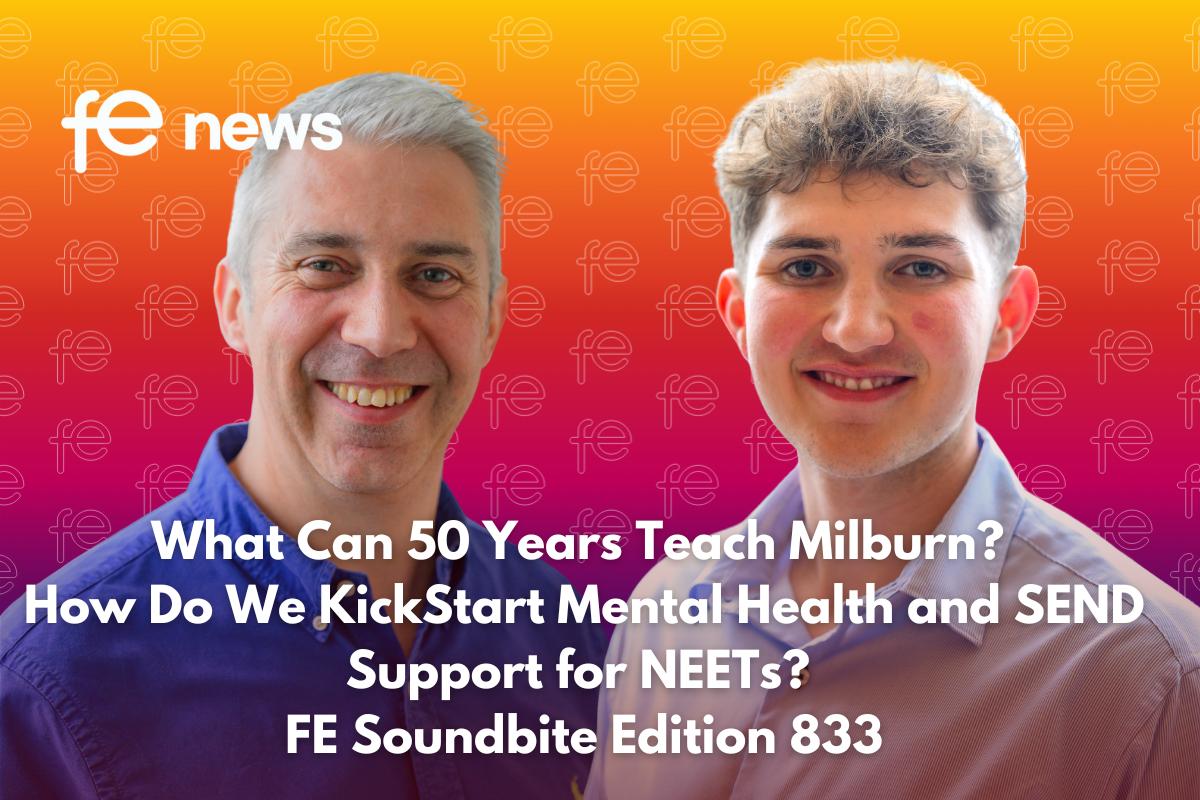
Welcome to FE Soundbite Edition 833: 7th February 2026. What Can 50 Years Teach Milburn? How Do We KickStart Mental Health and SEND Support for…


The UK has had no shortage of interventions to deal with youth unemployment. From the New Deal for Young People in the late 1990s, through…

Alan Milburn’s review offers a crucial opportunity to tackle rising youth inactivity, but early, targeted support for young people with social, emotional and mental health…

The rising number of young people not in education, employment or training (NEET) is one of the most urgent social and economic challenges facing the…


The Latest ONS Labour Market Figures came out today (Tuesday 20th January 2026). The data shows that vacancies are stable at 734,000, but… there are…


The final months of 2025 brought a flurry of government announcements across FE and skills, from the Post-16 White Paper and apprenticeship assessment reforms to…
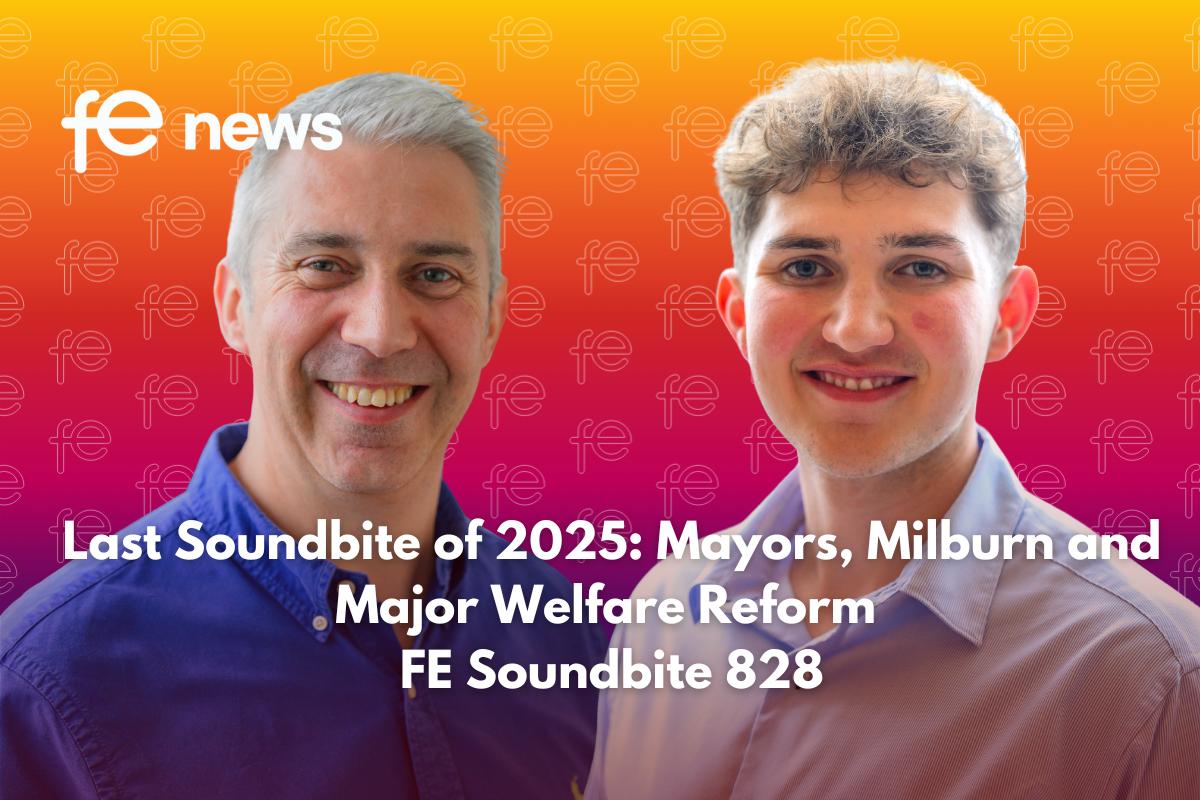
Welcome to FE Soundbite Edition 828: 20th December 2025. Last Soundbite of 2025: Mayors, Milburn and Major Welfare Reform This is the weekly e-newsletter and…
Please confirm you want to block this member.
You will no longer be able to:
Please allow a few minutes for this process to complete.