
Holding Boys Back a Year Doesn’t Work

CPRMB publishes second report from landmark review of boys’ education outcomes across high-income countries.
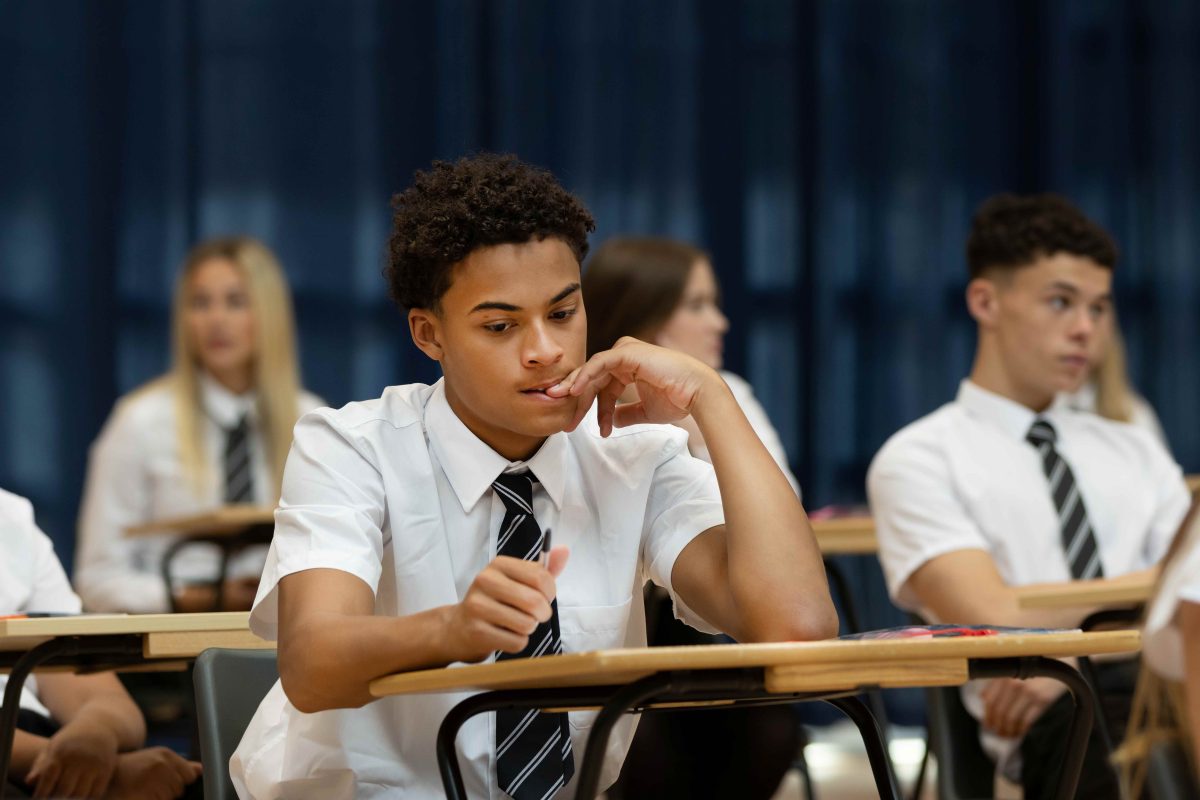
The Centre for Policy Research on Men and Boys (CPRMB) has published the second report in a major project investigating why education standards have fallen among boys across the developed world and how they lag behind girls as evidenced by the gender attainment gap. Among the conclusions drawn from the evidence is the revelation that holding back underachieving boys makes academic outcomes for those children even worse. Across high-income countries, boys are held back a year significantly more frequently than girls, and more often when achieving the same level of performance – i.e., there is a greater tendency to stop boys from progressing with their age group than for girls.
As the report says,
“Retention practice varies more between schools than pupil performance does. Alternatives with better evidence exist, among them multi-age grouping, looping, additional instructional time and remedial tutoring.”
Boys and girls arrive at school with modest average differences but leave with substantial gaps in achievement and attainment. The differences at the start are real but small, and the two groups overlap far more than they differ. The question is how to reduce the amplification of this gap over time.
The report is the second arising from a unique assessment and comparison of the international literature investigating where boys are struggling the most. Over the past ten years, average attainment among 15-year-olds across OECD (Organisation for Economic Co-operation and Development) countries has declined in reading, maths and science, and around a quarter of students are now described as low achievers, the majority of them boys.
The suggestion that so-called retention, the practice of holding back underachieving children, should be minimised, is one of nine recommendations the report makes. Among them, is that boys need to move around more to maintain their concentration, and that physical movement should be built into every school day; that where a system prescribes closely what and how reading and language are taught it will have a greater impact on boys; that accountability rules should be chosen knowing which students they direct attention towards and that vocational and technical routes should be a positive choice, not a default destination for struggling boys.
Nick Isles, CPRMB Director, says,
“This is the second of three reports arising from this groundbreaking research and already it is yielding some fascinating conclusions about how to help boys catch up with girls. We hope it will be the starting point for a significant new conversation about how we help boys to thrive in education, to be happier in it, to get more from it and to become more fulfilled people and more successful contributors to their own lives and those of their families and communities. The gender gap is far from small; at the bottom of the achievement spectrum the weakest 10% of boys are behind the weakest performing cohort of girls by a full year. We can’t allow this problem to continue unaddressed.”
The research project draws on peer-reviewed research, national assessment data and international large-scale student assessments across high-income economies around the world. It is the work of CPRMB Research Fellow, Jordan Hill, a former Education Policy Analyst at the OECD Directorate for Education and Skills in Paris.
Jordan says,
“Taken together, the recommendations from this second report could have a significant positive impact on the lives and futures of boys going through school now. The similarities between the dozens of different countries and the problems they are facing with helping boys to get the most from their education are really remarkable, so it may be that the solutions can be so too. What’s really important to understand is that we are not looking for ways to bring boys up to the detriment of girls. It’s really important for everyone that both genders flourish, the key thing to grasp is that they often benefit from different approaches and methods.”
The third release from the study will look at the drivers of student learning closest to boys’ day-to-day experience of schooling, including classroom environment, family and home, wellbeing and engagement, and crucially, what policy can do to influence them.
Running in parallel to the review is the CPRMB’s Boys’ Education Commission (BEC), chaired by political strategist, writer and former headteacher, Peter Hyman. The Commission is gathering evidence from experts on why boys are falling behind at so many levels of education. It’s hoped the BEC’s own recommendations will be strongly supported and influenced by the final outcome of Jordan’s research, which is expected to be released in the new year.
Responses