
HYDROGEN SAFE WELCOMES SOUTH AFRICAN TVET DELEGATION THROUGH THE BRITISH COUNCIL’S GOING GLOBAL PARTNERSHIPS PROGRAMME

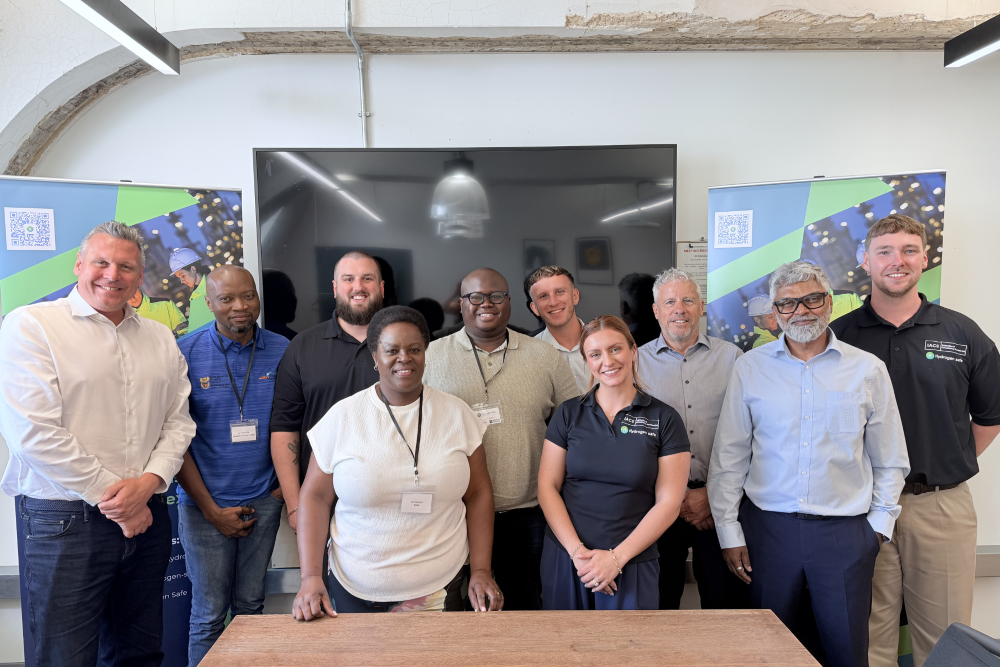
A partnership between Nkangala TVET College in South Africa and Hydrogen Safe, a Manchester-based hydrogen safety consultancy and training provider, facilitated through the British Council’s Going Global Partnerships programme, has brought a TVET and SASOL delegation to the UK.
The visit, which took place earlier this month, was delivered through the British Council’s Going Global Partnerships programme with funding from the International Skills Partnership (ISP), and saw delegates take a tour of the UK with activities planned in Kent, London and Manchester.
Going Global Partnerships supports international collaboration between UK and overseas education institutions to strengthen skills, research and innovation.
With a packed itinerary including roundtable discussions to include investors, corporate partners, academics and those in industry; visits with some of the most progressive clean energy companies in the UK; strategic stakeholder networking sessions; and tours of the Fuel Cell Innovation Centre in Manchester and INEOS Inovyn at Runcorn, the visit was a showcase of how collaboration and partnerships can benefit everyone involved.
Director of Partnerships for Hydrogen Safe, Elizabeth Simon, comments:
“It is really encouraging to see how the relationship with TVET College has developed thanks to the Going Global Partnership. When we visited South Africa earlier in the year, we learned so much.
“We very much hope that the contingent from South Africa did the same. While there was a lot to get through, we know that relationships were formed and that more will come of those introductions.
“It’s clear to us that as we develop this collaborative approach, we can become an example of best practice to others.”
Acting Deputy Principal Innovation and Development, Cyril Mazibuko at Nkangala TVET College, comments:
“We know that through the work that we are doing together with Hydrogen Safe we can all learn and develop our approach to hydrogen skills. This trip is a great example of how that can work in practice.
“Following the visit we hosted earlier in the year, we have seen what value we can gain from each other, and we look forward to the same as we hear more about the hydrogen partners, projects and programmes that are being developed in the UK.”
Dr Cynthia Malinga, FET and Graduate Technical Education Manager at Sasol, comments:
“This visit was an opportunity to share knowledge and explore the technical and theoretical applications of hydrogen.
“The focus was very much on making connections and identifying where we can all work more closely together as we facilitate the transition to clean energy across the world. It was a productive trip and one that will continue to deliver benefit as we develop the relationships made.”
Pertunia Mothiba from the British Council, comments:
“We are so pleased to see the partnership between TVET College and Hydrogen Safe building as they share expertise and build long-term collaboration.
“We know that the passion and enthusiasm from both partners is driving greater outcomes for everyone involved, and that these visits are the best way to facilitate that and to make it happen. We look forward to hearing more from both partners when the trip is over.”
Members of Hydrogen UK; the Hydrogen Energy Association; and the Net Zero Skills Advisory Board, Hydrogen Safe works with businesses, education providers and individuals to develop and provide tailored solutions that align with their training needs.
The Going Global Partnerships programme is the British Council’s international education programme that builds stronger, more inclusive and internationally connected higher education and technical and vocational education and training (TVET) systems. The programme supports partnerships between universities, colleges, education policy makers, civil society organisations and industry partners in the UK and around the world to strengthen institutional capacity, promote knowledge exchange, and support quality, inclusion and innovation in education.
Responses