
TCS study reveals higher education at a digital crossroads: 61% of universities lag in digital maturity

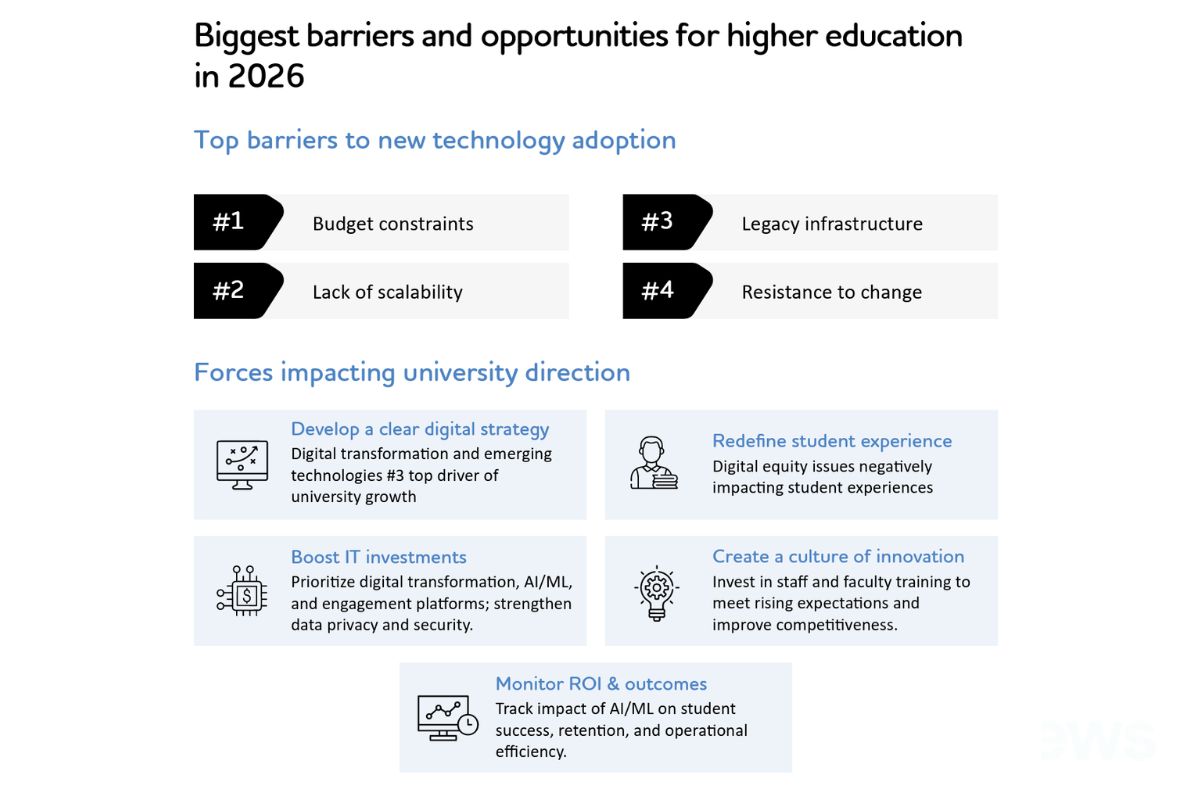
The survey highlights optimism for growth while revealing persistent gaps in technology adoption and student experience. Despite universities investing heavily in digital initiatives, they continue to grapple with integration, personalization, and legacy systems
Tata Consultancy Services (TCS) has released a new study on the digital readiness of higher education institutions, which finds that while universities are investing heavily in digital transformation and student engagement, most are yet to mature digitally. The study highlights a critical gap between ambition and execution in a sector that is rapidly moving toward intelligent and experience-led education models.
The study titled Digital Readiness and Student Experience in Higher Education provides a data-backed view of how universities are accelerating digital adoption to enhance student experience and institutional agility. It draws insights from 200 senior leaders, including chancellors, CIOs, provosts, and deans, from universities across the United States, United Kingdom, and Australia. The survey sheds light on challenges stemming from outdated legacy technology, fragmented digital ecosystems, and a widening equity gap, which are impacting modernization efforts. It explores institutional health, digital maturity, student experience, and strategic priorities in higher education sector. The report offers deep insights that will guide universities globally to accelerate transformation, enhance student success, and build resilient capabilities for the next era of higher education.
Key highlights from the study:
- Digital transformation is now a strategic imperative: 88% of universities view technology as supportive or a core enabler of innovation and adaptability, signalling that digital is no longer optional.
- Student experience ranks among top priorities: Alongside academics, research, and digital transformation, student experience is now a top strategic focus.
- Significant investment in digital initiatives: Institutions allocate 29% of IT budgets to digital student experience and 19% to digital transformation, with AI and machine learning, student engagement platforms, and cybersecurity topping future investment priorities.
- Optimism amid challenges: Despite financial constraints, low alumni engagement, and regulatory compliance challenges, nearly 80% of education leaders remain optimistic about future institutional growth.
Ankur Mathur, VP and Head, Education Unit, TCS, said,
“The higher education sector is built on knowledge, innovation, and the promise of transformation. Today, that foundation is being redefined by digital technologies, where AI, analytics, and cloud platforms enable institutions to deliver personalized experiences, improve operational agility, and make data-driven decisions at scale. At TCS, we see this as a defining moment to help universities become intelligent, resilient, and future-ready—empowering them to thrive in an era of experience-led learning and continuous digital evolution.”
The study shows that a paradigm shift is essential. According to the study, nearly 80% of education leaders are optimistic about growth, yet 57% describe their digital proficiency and 55% their digital student experience as “evolving,” demonstrating that there is significant room for improvement. By building integrated strategies and fostering cultural agility, universities can accelerate digital transformative experiences.
With deep expertise in AI, advanced analytics, and cloud-native platforms to deliver personalized student experiences, streamline operations, and enable data-driven decision-making, TCS has been a partner to global universities for several decades. This report builds on TCS’ existing sectoral knowledge and identifies the gaps that TCS can fill for higher education institutions and help make AI real for them.
Responses