
Young Innovators from 34 Countries Unite at Luxembourg International Science Expo 2026

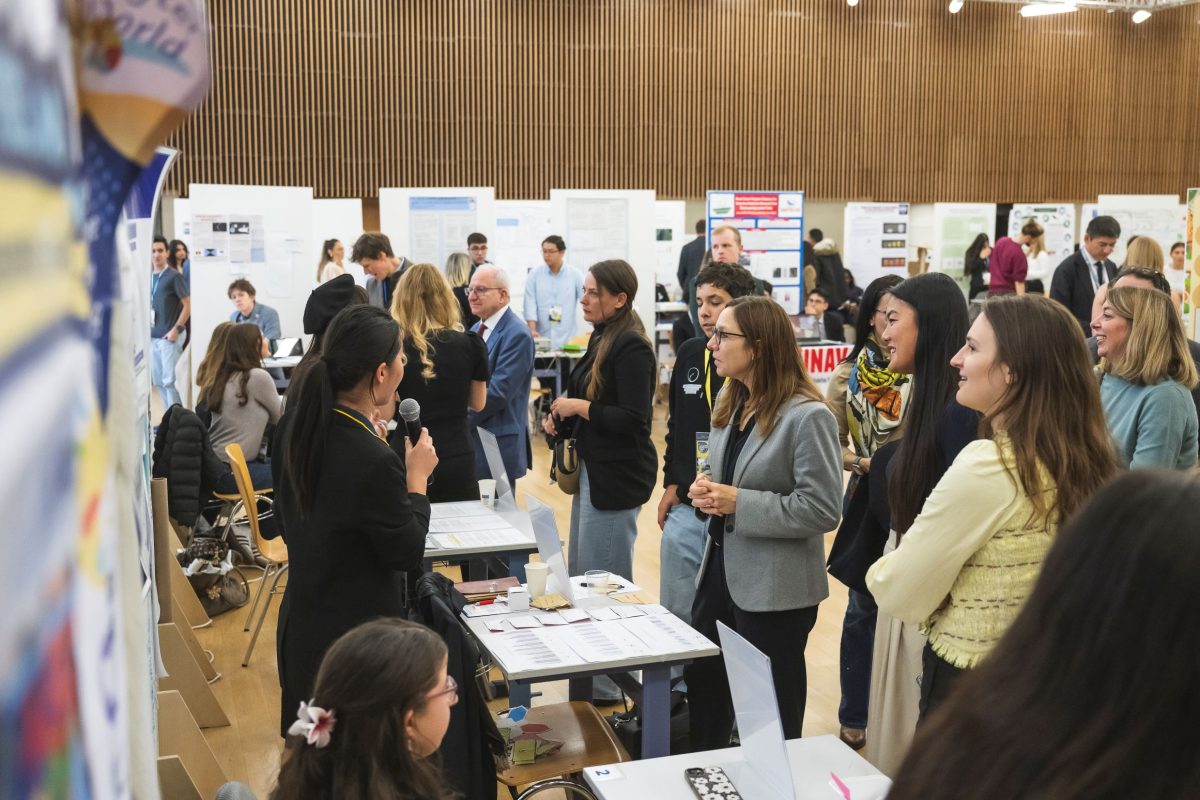
BIEA student representative showcases award-winning sustainable housing project as international science event highlights the importance of collaboration, creativity and global STEM education.
More than 120 young scientists from 34 countries came together at the 16th Luxembourg International Science Expo (LISE 2026), demonstrating the power of science, innovation and international collaboration to address some of the world’s most pressing challenges.
Organised by the Fondation Jeunes Scientifiques Luxembourg (FJSL), the event took place during the last week of October 2026. The annual international science expo brought together young researchers aged 11–25 to present their scientific discoveries, exchange ideas and build connections across cultures.
Unlike traditional science competitions, LISE is a non-competitive event that celebrates young people’s scientific achievements and encourages knowledge-sharing rather than ranking projects against one another.
From artificial intelligence to environmental sustainability
This year’s exhibition featured 78 innovative projects spanning a wide range of scientific disciplines and applications, including environmental science, engineering, artificial intelligence, health and medical research, sustainable technologies and accessibility.
Projects explored real-world challenges, from AI-powered wildfire detection and environmental monitoring to new approaches to sustainable materials and healthcare.
Beyond the scientific presentations, participants took part in educational visits, cultural activities and networking opportunities, developing international friendships and learning how different countries approach common challenges.
Sousana Eang, Director of the Fondation Jeunes Scientifiques Luxembourg, said:
“Science has the power to connect young people across countries, cultures and backgrounds. At LISE, we want students not only to share what they have discovered, but also to learn from one another, challenge their own thinking and build friendships that extend beyond the exhibition. Scientific knowledge matters, but curiosity, critical thinking, collaboration and the confidence to exchange ideas are equally important in preparing young people for the future.”
UK student presents award-winning sustainable housing innovation
Representing the United Kingdom through the British International Education Association (BIEA) was Christy, a student at Holyport College, who presented an award-winning project developed with fellow student Amelia through the BIEA International STEM Youth Innovation Competition.
Their project explored how existing residential buildings in Sofia, Bulgaria, could be transformed into more sustainable, low-carbon housing while preserving the city’s architectural character.
The proposed design incorporated renewable energy and energy-efficiency measures, including solar panels, heat pumps, improved insulation, water recycling and urban greenery.
The project demonstrated how young people can combine scientific research, environmental awareness and creative design to develop practical responses to challenges faced by communities around the world.
Presenting the project at LISE gave Christy the opportunity to explain her research to an international audience, exchange perspectives with young scientists from other countries and experience the wider scientific community beyond the classroom.
Why international STEM experiences matter
For organisations such as BIEA, participation in international science events is about much more than showcasing a completed project.
Students gain opportunities to practise public speaking, communicate complex ideas, develop confidence, engage with different cultures and learn how others apply scientific knowledge to solve problems.
Nikki Collins, CEO of the British International Education Association, said:
“Young people today are growing up in a world where many of the biggest challenges, from climate change to sustainable development, cannot be solved by one country or one discipline alone.
“Through the BIEA International STEM Competition, we encourage students to look beyond their classrooms, investigate real-world problems and develop innovative solutions. Seeing a student like Christy take her project from a competition into an international science exhibition is exactly the kind of progression we want to support.
“These experiences help young people recognise that their ideas have value, that their voices deserve to be heard and that they can contribute meaningfully to solving global challenges.”
The Luxembourg International Science Expo demonstrates the educational value of creating spaces where young researchers are recognised not simply for their technical achievements, but also for their willingness to share knowledge, communicate ideas and learn from others.
Inspiring the next generation through the BIEA STEM Competition
BIEA’s International STEM Youth Innovation Competition provides opportunities for students aged 6–18, as well as university undergraduates, to investigate important global challenges and develop creative solutions using science, technology, engineering and mathematics.
The competition encourages teamwork, research, experimentation, problem-solving and effective communication, helping students build skills that extend beyond academic achievement.
The 2027 BIEA International STEM Youth Innovation Competition is now open under the theme:
“Ocean Balance, Fish Forward – Innovating to End Overfishing”
Students are invited to explore sustainable solutions to overfishing, including reducing bycatch, tackling illegal fishing, developing sustainable aquaculture and improving fishing technologies.
The competition will culminate in an International Final and Showcase in London on 6 July 2027, followed by the BIEA Youth Voice Forum on 7 July 2027.
Responses