
Education Secretary Pledges to Remove College Funding Barriers at AoC 2026

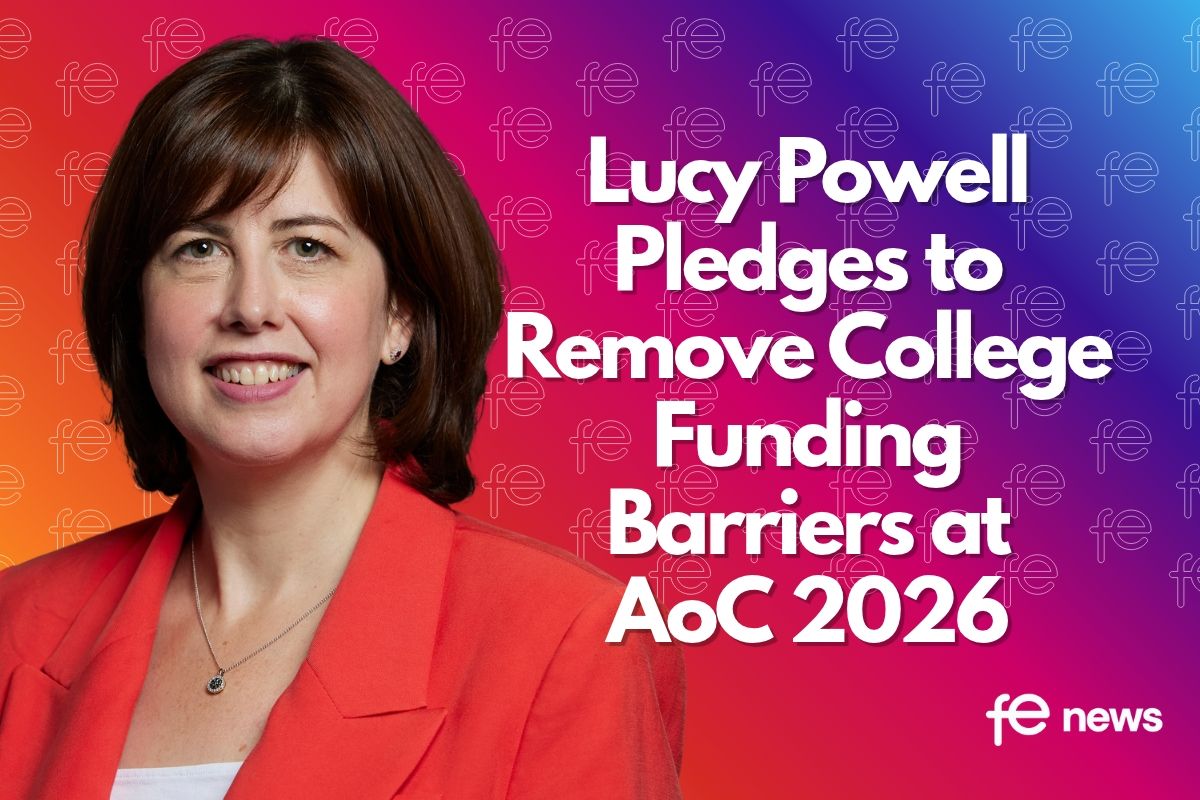
Education Secretary Lucy Powell has pledged to relax English and maths requirements for young people who are NEET and returning to college, and to give colleges more funding certainty for enrolling them, as part of what the Department for Education called an urgent national drive to tackle the NEET crisis.
Speaking at the Association of Colleges annual conference, ahead of Alan Milburn’s final report on the NEET crisis, due later this month, Powell said almost 150,000 16 to 18 year olds are currently NEET, which she called unforgivable. She asked colleges to bring forward ideas and plans, to connect with employers and to offer young people meaningful work experience.
In return, the DfE said Powell pledged to work with the sector to break down the barriers that make it harder or riskier for colleges to take these young people on. This includes:
Significantly more flexibility on the hours of English and maths required of NEET young people returning to education, with the remaining hours delivered through one to one and small group support.
Changing how schools, colleges and others are measured, recognised and rewarded, including better recognition of progress in English and maths and discouraging premature exam entries.
Funding certainty for enrolling young NEETs, so colleges are not disincentivised from giving students a second chance.
Under current rules, 16 to 19 year olds who have not achieved a grade 4 in GCSE English and/or maths are generally required to keep studying them as a condition of funding. The DfE said the change will significantly flex the hours expected of re-engaged NEET young people, and that its response to a consultation on 16 to 19 performance measures will be published shortly. No timescale or funding details were given for the changes.
In her speech, Powell also named the lack of a funding guarantee for students who enrol during the year, and late notice of the following year’s funding rate, as barriers colleges had raised with her.
“My promise to you is to put colleges not at the back of the queue but at the heart of that new mission,” she said. The release said the response to Milburn’s review should be big and immediate. It follows figures showing almost one million young people are NEET.
She also announced that the Department for Education has launched consultations on proposed content for four more V Levels, covering health, social care and science, for teaching from September 2028. The health and care consultation covers V Levels in health and social care, a Foundation Certificate in health and care services, and Occupational Certificates for adult care worker and healthcare support worker. The science consultation covers V Levels in science research and technology and healthcare science and technology, plus a Foundation Certificate in science. Both close on 23 December, with final subject content due in February 2027. Consultations on construction, engineering and manufacturing, enterprise and professional services, and sport and leisure open later this month.
Powell said rules of combination will not apply, so courses can be designed to teach V Levels together. She said she wants the new science V Levels to adequately fill the gap left by applied science, and that skills minister Jacqui Smith will host a roundtable with college leaders, including qualification pioneers, on the next phase.
Other reforms she pointed to included a new national curriculum, new Level 1 qualifications to end the cycle of repeated English and maths GCSE resits, vocational GCSEs for 14 to 16 year olds, devolved funding to mayors, and changes to Ofsted and SEND.
In a Q&A led by ITV’s Sameena Ali-Khan, Powell was asked how colleges will be strategic partners in devolution rather than simply delivery bodies. She said she was a firm believer in devolution and had held a summit at No 10 North with AoC chief executive David Hughes, college leaders, mayors and business leaders.
Asked how colleges will be protected from funding squeezes, she acknowledged the government is operating in difficult financial times, but said the issue was not only the overall amount and that funding flexibilities, measures and incentives were also on the table.
On the 2027 spending review, Powell said the new preventative departmental expenditure limit, known as PDEL, lets government pool investment and the later rewards of early intervention. She said colleges and government could use the next few months to show the approach reduces the number of 16 to 18 year olds who are NEET, which would strengthen the case for funding at the review.
Her comments follow a guarantee of funding for in year growth in young people, introduced before the start of this academic year, which AoC says has helped colleges enrol thousands of extra students who would otherwise have become NEET.
David Hughes, Chief Executive, Association of Colleges, said:
“I was delighted to welcome Lucy Powell to the AoC Conference and to hear her speak so positively about the vital role of colleges in delivering the government’s priorities.
“She clearly recognises that colleges need certainty of funding to be able to reach out and engage young people who are not in education, employment or training (NEET). The guarantee of funding in-year growth for young people she made before the start of this academic year has helped colleges enrol thousands of extra young people who would otherwise have become NEET. Making that a permanent feature of the system would be a game-changer.
“She reinforced the message I gave to conference yesterday, that both the Milburn report, due soon, and the devolution changes are opportunities for colleges to step in as systems leaders. I was so pleased that she values the role of colleges as strategic partners to her department and to elected mayors.
“We’re looking forward to working with her and officials to improve policies pre and post-16 to help more young people achieve good English and maths skills and to ensure Ofsted judges colleges fairly for their inclusive learning approach.
“Her speech showed college leaders that not only does she understand and value the role of colleges, she will be a big advocate and champion. That’s because colleges are vital to reduce NEET numbers, improve outcomes, engage more learners with SEND and improve community cohesion. Our role in the college sector is to step up and help the Education Secretary on these agendas and to design the place-based, collaborative post-14 education and skills systems that will deliver better outcomes.”
Responses