
Apprentices Take Centre Stage in Parliament as Make UK Pushes for Skills Reform
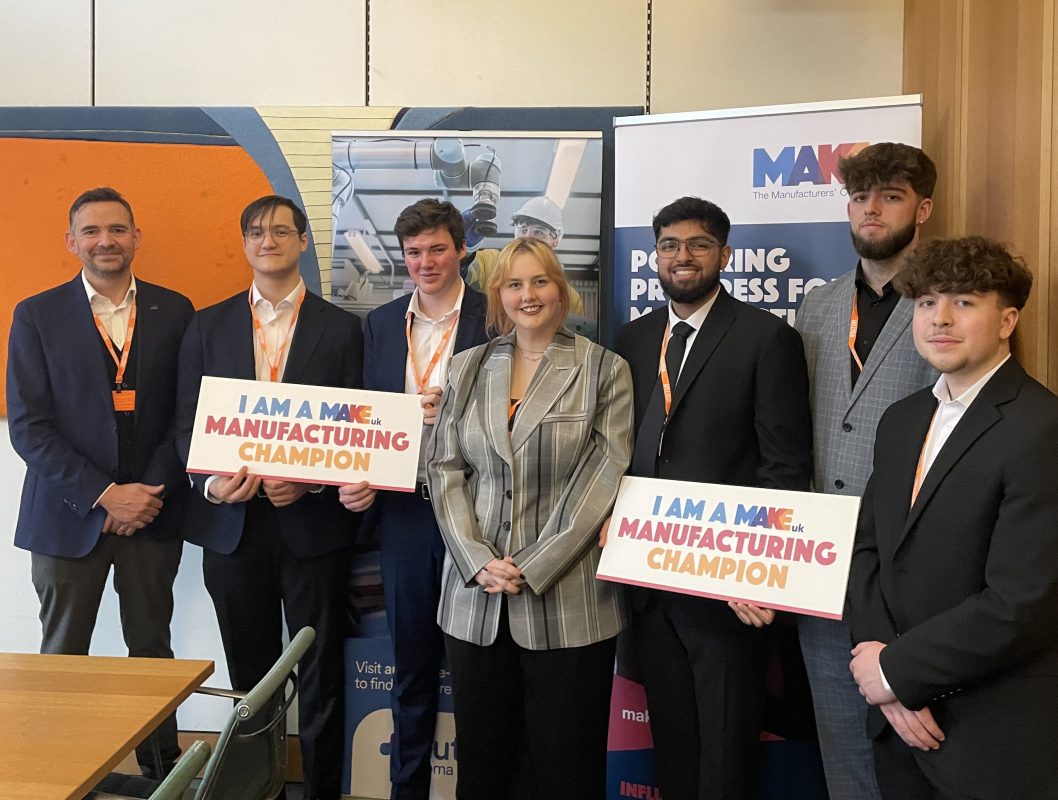
During this year’s National Apprenticeship Week, Make UK brought together parliamentarians, industry leaders and award-winning apprentices to learn about the opportunities that apprenticeships can bring.
Apprentices from Automate BEST (Business, Education, Skills and Training), a network promoting apprenticeships across engineering, manufacturing, robotics and machine learning, visited Parliament to speak with members from across the political spectrum.
They told MPs about the real value of apprenticeships in building a robust, high-quality skills pipeline, as well as the reforms urgently needed to better support the makers of the future. The apprentices also talked about their award-winning machine designs, developed as part of Automate BEST’s apprenticeship cluster programme.
Crucially, the wider discussion highlighted both the need for a more responsive skills system and the scale of the challenges facing the sector. As manufacturing undergoes rapid change driven by digitalisation, automation and the green transition, employers need greater flexibility in how training is delivered and funded.
Apprenticeships must sit within a broader, agile skills ecosystem that supports progression, upskilling and lifelong learning, enabling both new entrants and existing workers to adapt to evolving roles and technologies.
This is made more urgent by a declining pipeline of talent. Apprenticeship starts in manufacturing and engineering have fallen by more than 40% since the introduction of the Apprenticeship Levy in 2017, while more than £1 billion raised annually from employers through skills levies is not being reinvested into training.
At the same time, 946,000 young people were not in education, employment or training (NEET) as of September 2025.
This drop-in session reinforced that apprenticeships in manufacturing are a direct pipeline into skilled, well-paid employment within a sector that is fundamental to the UK’s economic strength.
Manufacturing supports 2.6 million jobs, contributes £220 billion in output, and plays a critical role in driving exports, investment and innovation across every region of the country.
Make UK also used the event to outline our call for a Skills Investment Pledge, ensuring that every pound raised through skills levies is spent on developing the workforce of the future.
Calls were also made for targeted incentives for smaller employers and greater flexibility in training provision to better reflect the diverse and evolving needs of modern manufacturing businesses.
At a time when skills shortages continue to constrain growth, productivity and competitiveness, National Apprenticeship Week provided a timely opportunity to celebrate the achievements of apprentices and the employers – including many Make UK members – who are actively investing in developing the talent pipeline.
Their success underlines what is possible, but also reinforces the need for sustained, fully funded investment in skills to secure the workforce our economy depends on.
Responses