
Empower Local Partnerships to Remove Barriers to Social Mobility says Lords Committee

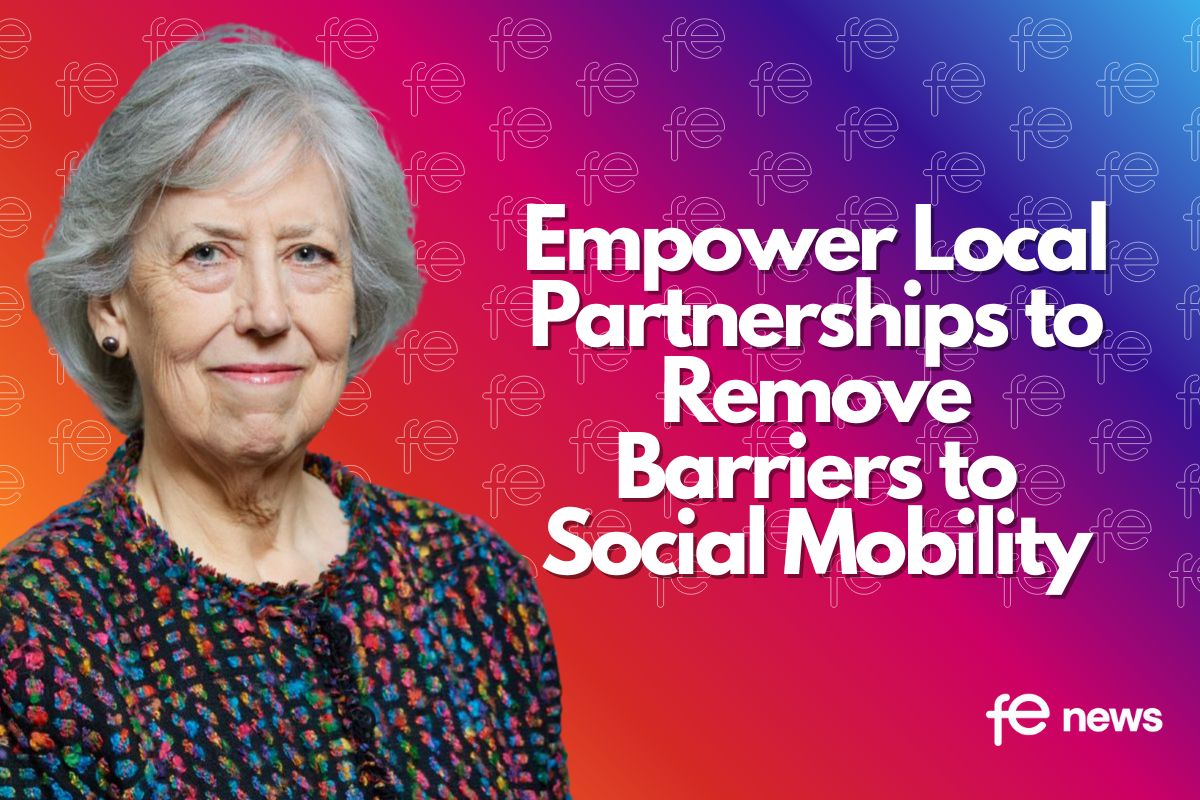
“There are almost one million young people not in education, employment or training. This is shocking. We need educational reform and the devolution of power and support to all parts of the country. Only local partnerships will create job opportunities and remove some of the barriers to social mobility.”
Baroness Manningham-Buller, Chair of the House of Lords Social Mobility Policy Committee.
A cross-party House of Lords Committee is calling on the Government to devolve more power and resources to local authorities, metro mayors, education providers, employers and other relevant agencies. This will enable them to use their local knowledge and expertise to reduce the “shocking” number of young people not in education, training or employment (NEETs) and help remove barriers to social mobility.
In its report ‘Social mobility: Local roots, lasting change’ published today (Tuesday 18 November), the Social Mobility Policy Committee found that coastal, post-industrial and rural areas, as well as towns and cities, all have their own particular challenges and needs which require local strategies to create jobs and opportunities for socio-economic advancement.
After hearing from a range of witnesses including students, employers, education and training providers, universities, local agencies, academics and Government Ministers, the committee is also urging the Government to:
- build on the eight existing Youth Trailblazers by expanding their remit to become pilots on social mobility, and increase the number so that they are led by a mix of strategic authorities and local authorities from post-industrial, coastal, rural and urban areas;
- increase the household income threshold at which a student can get the maximum maintenance loan during their time at university, to match inflationary rises;
- continue to site the Minister for Skills role in both the Department for Work and Pensions (DWP) and Department for Education (DfE) with the Minister taking the lead responsibility for social mobility, possibly supported by an advisory expert body;
- work with local and combined authorities to improve the collection and sharing of data on NEETs at the local level and develop and implement an adaptable framework approach to initiatives which move NEETs back towards the world of education and work;
- urgently work to find a solution that helps young care leavers into work without a threat to their accommodation;
- closely monitor the effectiveness of the new Growth and Skills Levy to deliver more entry level apprenticeships and consider the extension of the levy at a reduced rate to SMEs;
- implement a dataset that covers the analysis of the relationship between parental income and educational outcomes for a wider section of the population rather than just those claiming certain benefits.
Whilst the committee welcomes many of the Government’s proposals in its ‘Post-16 Education and Skills’ White Paper and Curriculum and Assessment Review it is also calling for additional education reforms to reduce barriers to social mobility.
These include introducing alternative qualifications in functional Maths and English, which are genuinely distinct from English and Maths GCSEs, ensuring consistent careers advice and delivering a GCSE curriculum which values creative, technical and vocational training.
Baroness Manningham-Buller, Chair of the Social Mobility Policy Committee, said:
“There are almost one million young people not in education, employment or training. This is shocking and deeply concerning both for the young people involved and society as a whole.
“It is clear from the evidence we have received and the witnesses we have met during our inquiry that the passion and knowledge of agencies, education providers, employers and individuals in driving local partnerships is fundamental to reducing the number of NEETs and delivering wider social mobility policies.
“We need educational reform and the devolution of power and support to all parts of the country. Only local partnerships will create job opportunities and remove some of the barriers to social mobility.”
Although not a focus of the committee’s inquiry, the report also acknowledges the role that the benefits system, early years care education and the impact of Covid, social media and mental health needs play in developing and implementing effective social mobility policy.
Sector reaction
Emma Meredith, Director of Skills Policy and Global Engagement, Association of Colleges, said:
“I welcome the report from the House of Lords on social mobility and was pleased to give oral evidence to the committee earlier this year. The recommendations are well-thought out and forward-looking, and I agree absolutely that we need a national approach to NEET prevention and intervention.
“Social mobility is a collective responsibility. Colleges are anchor institutions in their communities across the country and are already doing incredible work to reduce the numbers of NEET young people. Colleges offer this group so much more than courses and qualifications; they offer them the support and guidance they need to take the step into education and training, stay there and then go on to have positive and productive futures in whatever route they choose. Tackling NEET numbers will not be a one-size-fits-all approach, and colleges are able to tailor their offering to meet local needs, utilising the organisations and partners on their doorsteps.
“We particularly welcome the recommendations for more local data sharing, system join up with the DfE and DWP working together for collective good, and ensuring there is consistent careers education, information, advice and guidance threaded through the education system.”
Responses