
Improving Social Mobility in Apprenticeships Through Cross-Sector Collaboration

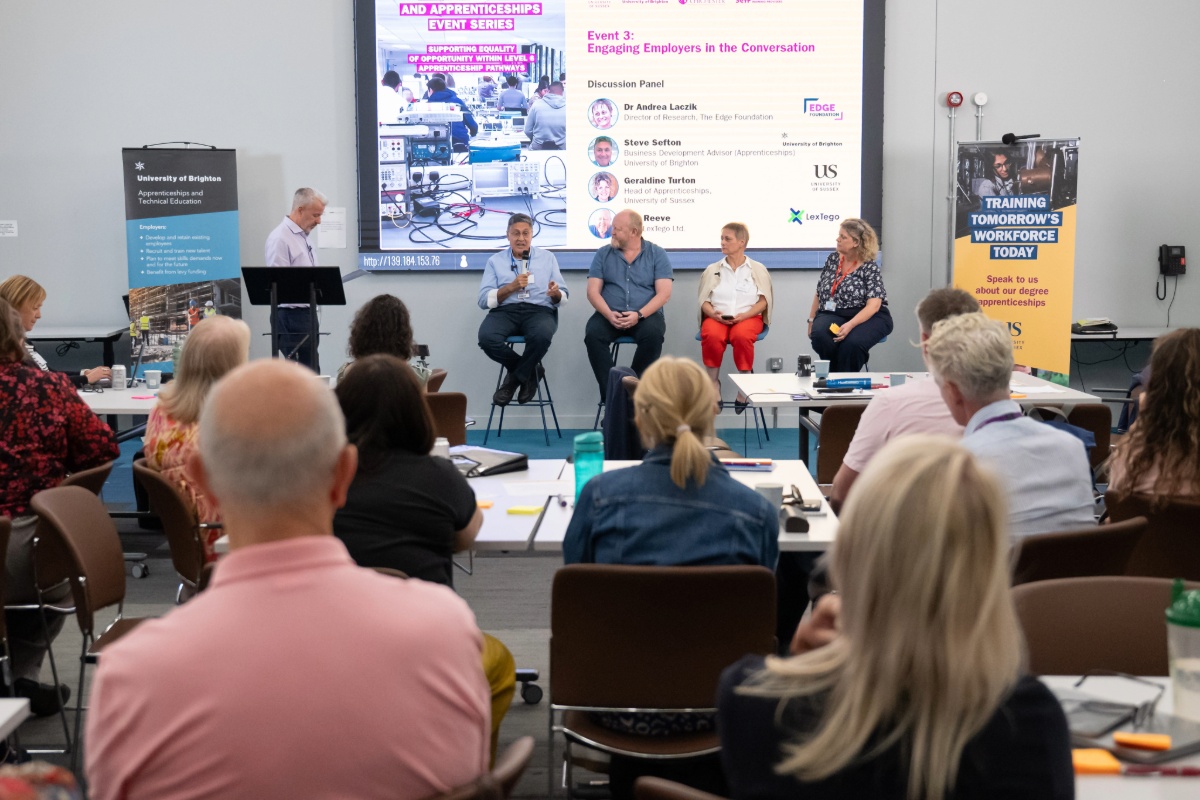
A shared commitment to expanding access and success in degree apprenticeships brought together universities, training providers, careers professionals and employers in Sussex for a powerful three-part event series.
The events, hosted by the University of Sussex in partnership with the Sussex Council of Training Providers, brought together a wide range of stakeholders from the further education ecosystem all united by a shared mission: to increase access, opportunity, and success within degree apprenticeships.
Over the course of the series, participants explored practical approaches to widening participation and dismantling barriers that hinder social mobility. From research-led presentations to interactive workshops, the focus was on creating clearer and accessible pathways from Level 2 through to Level 6, particularly for underrepresented and marginalised learners.
Experts highlighted key challenges faced by prospective apprentices including limited visibility of available roles and difficulty navigating complex application processes and by employers seeking candidates with the right skills and work readiness. A recurring theme was the need to reframe apprenticeships as aspirational and not second-tier options, especially among young learners and their influencers.
The events encouraged cross sector dialogue and enabled the sharing of successful practices, such as replacing traditional interviews with workshop-style assessments to improve accessibility and giving potential learners the opportunity to experience the workplace before committing to a career path. Discussions also tackled sensitive issues like the disclosure of learning support needs, emphasising the importance of building environments that foster trust and transparency.
Geraldine Turton, Head of Apprenticeships at the University of Sussex reflected on the impact
“These issues are bigger than any one of us can solve alone and these events reinforced the need for coordinated efforts across the education and careers ecosystem. Everyone left with ambitions for a regional collaborative approach to increasing apprenticeship opportunities for all.”
Four core messages emerged:
- Challenge perceptions: Apprenticeships must be seen as aspirational routes, not second-tier options.
- Champion progression: Clear pathways and visible employer engagement are essential for learner success.
- Centre the learner: Support structures should be designed around individual needs not institutional systems with careers professionals playing a pivotal enabling role at an early stage.
- Simplify for employers: Providers must offer flexible, tailored delivery models that align with real-world business needs.
This series functioned as both a strategic framework and a call to collective action for professionals across the further education sector. It illustrates how collaborative interventions can drive systemic improvements, fostering a more inclusive and accessible apprenticeship ecosystem. By championing practical solutions, the series equipped educators, providers, and employers with the insights needed to build pathways that benefit all learners regardless of background or circumstance.
Responses