
Defunded, Not Derailed: Mixed Study Programmes for 2026 | Episode Five

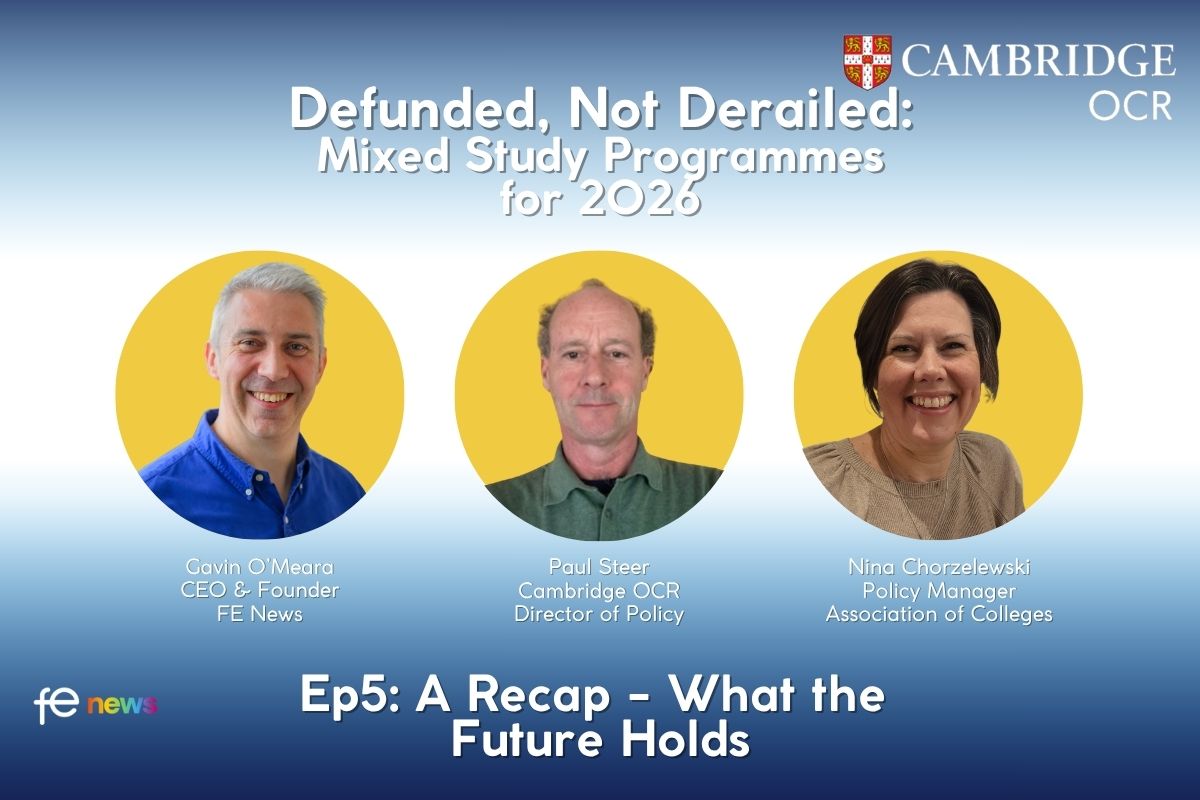
After five episodes tracking one of the most significant periods of reform Level 3 has seen in a generation, the Cambridge OCR x FE News Live Show came to a close with a session built around a single question: what happens next?
The final episode brought together Cambridge OCR Director of Policy Paul Steer and FE News CEO Gavin O’Meara alongside Nina Chorzelewski from the Association of Colleges to take stock of where post 16 qualification reform now sits, and what the next two to three years might look like for colleges, awarding organisations and learners.
Where we now stand
With V Levels confirmed and defunding decisions landing in sequence, the sector has moved from a long period of speculation into something closer to a defined direction of travel. The shape of Level 3 in England is becoming clearer, with A Levels, T Levels, AAQs and V Levels each expected to play a distinct role in an increasingly mixed landscape.
Whether that produces a stable system or another wave of refinement was a question the panel returned to throughout the session. The honest answer is that colleges are being asked to plan and deliver against a system that is still being built around them.
What the episode covered
The session pulled together the threads from across the series, defunding, AAQs, V Levels, curriculum planning and subject specific reform, and asked what the emerging Level 3 landscape now looks like in practice.
Discussion focused on the rise of mixed study programmes as a likely long term model, the policy view from colleges, and the unintended consequences the sector should be watching for as reform moves from announcement into delivery. Nina set out where colleges still want more clarity, particularly around funding rates, awarding organisation readiness and how progression routes will be communicated to learners and parents.
The panel also reflected on what success should look like by 2028. A stable funding picture, genuine partnership between colleges and awarding organisations on delivery, learners who can articulate why they are on a particular programme and where it leads, and a clearer public understanding of how the qualification types relate to each other.
Building on the series
Episode Five brought together the themes explored across the previous four instalments, which covered the broader qualification reform landscape, curriculum planning approaches, science provision, and computing and digital pathways. The closing message from the panel was that reform of this scale only delivers if the people it is designed for, learners, parents and employers, understand it.
Watch the episode
You can watch the full episode back now. This is the final instalment in a five part series produced in partnership with Cambridge OCR, examining how colleges can navigate qualification reform across the post 16 landscape. Look out for future episodes from Cambridge OCR on this topic.
Responses