
Winchester among first universities to adopt Orange Button suicide prevention scheme

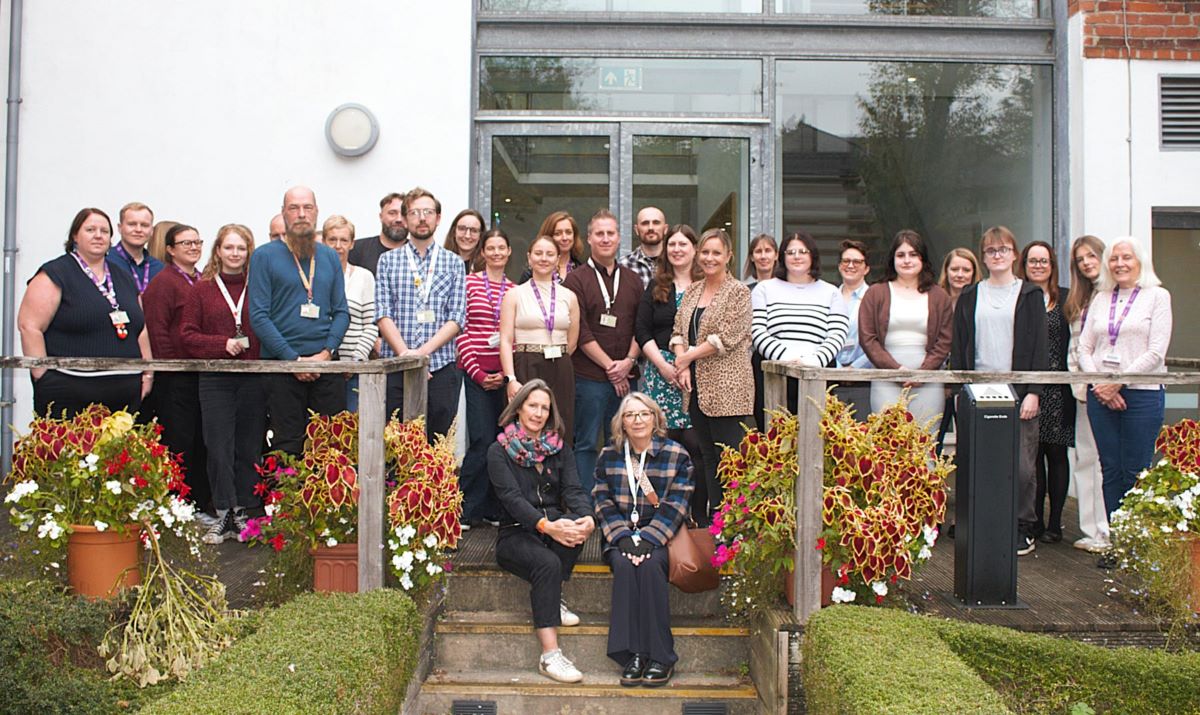
The first group of staff and students at the University of Winchester, who have completed Suicide First Aid training (pictured above) can now wear their orange buttons with pride and confidence.
The Orange Button scheme, a suicide prevention initiative launched in Lancashire and South Cumbria, is now expanding across the UK. Winchester is one of the first universities to take part.
Participants earn the right to wear an orange button after completing recognised suicide prevention training and while button holders are not counsellors, they are trained to listen without judgement, talk openly about suicide, and guide individuals to appropriate services.
There are posters up around campus advertising the orange button scheme and information is circulating via social media.
Around 30 staff members and 10 students were in the first cohort at Winchester to receive their orange buttons this week. An additional 50 staff members who have undertaken the training but were unable to attend the launch event can also opt to wear an orange button.
They were congratulated on their achievements by Dr Lesley Black, Director of Student Support and Success, at an informal ceremony at the University.
Dr Black said: “Taking part in the Orange Button scheme builds community and confidence. It also shows the commitment of this University to the issue of suicide awareness.”
“Many orange button schemes are already in place via local councils, but we are among the first universities in the UK to have one and we should be proud of that – it’s a visible demonstration of our commitment to supporting wellbeing and good mental health. Being willing to check in with people, being curious about how someone really is, actively listening and creating that safe space to talk about what can be challenging topics, such as suicide, are important and powerful acts.”
After receiving her button, Susie Coughlan, an Academic Success Tutor, who specialises in working with students with dyslexia, said: “Although I speak primarily to students about their work, we do hear about their anxieties and difficulties, and these can lead to them having more dangerous thoughts. This training has given me the confidence to listen to their stories.”
Paul Watson, Head of Disability and Inclusion at the University, said: “We work closely with students who have difficulties and having these buttons is a good visible sign that ‘we get it’ and that we can offer support.”
Third Year student Jess Duniplace, who is the Welfare team leader at Winchester Students’ Union, said the training had proved very useful.
“I had a friend who attempted suicide, and I had no idea what to do. Luckily, another friend was there who could help.
“Now I feel more confident that I could deal with a similar situation in the future. I’m really glad I did the training and I want more students to do it. The more people that do the training, the more lives that can be saved and more family and friends who can be saved from experiencing grief.”
Training involved:
- Recognising warning signs – verbal, behavioural, and situational indicators that someone may be at risk.
- Safe conversations – learning how to talk about suicide directly and sensitively, without judgment or fear
- Active listening – Developing empathetic listening skills
- Safety planning – Helping someone create a short-term plan to stay safe and access further support
- Signposting – Knowing how and where to refer individuals for professional help, including NHS services and helplines
Responses