
BMet hosts global experts to debate the Future of Vocational Education

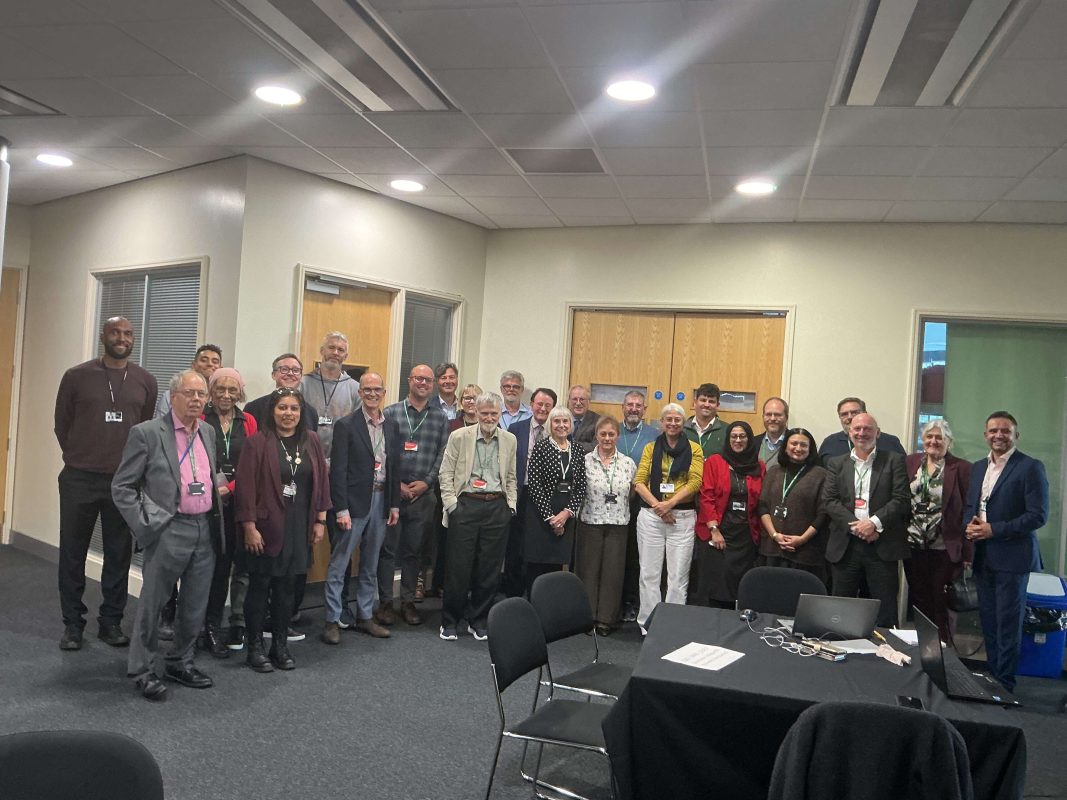
BMet welcomed leading policymakers, sector leaders and prominent academics to its Matthew Boulton College last week, to host the Eighth Debate on the Principles of Vocational Education.
The forward-thinking event, delivered in partnership with the Edge Foundation, focused on the critical theme of Vocational Education and Training (VET) and Social Partnership.
A diverse lineup of national and international speakers attended, including representatives from the universities of Oxford, Warwick and UCL, the Trades Union Congress and the West Midlands Combined Authority. Delegates also explored global perspectives with insights shared by experts from Canada and Denmark.
Jan Myatt, Vice Principal at BMet College, welcomed attendees alongside host Olly Newton, Executive Director of the Edge Foundation. The sessions were chaired by Professor Chris Winch of King’s College London.
The debate challenged attendees to look beyond everyday policy details and address how colleges, employers, trade unions and community groups can collaboratively transform the UK skills landscape. Key members of BMet’s Corporation Board, Afzal Hussain, Chairman of the Corporation and Prue Huddlestone, Staff Governor, led debates on “What is social partnership?” and “Social Partnership, VET and Community Initiatives” respectively.
Jan Myatt said:
“We were absolutely delighted to welcome colleagues and experts from across the nation and overseas to our Matthew Boulton College for this vital debate. As a regional anchor institution, BMet is deeply committed to driving grassroots co-operation and ensuring that vocational education directly meets the needs of our community.
“By strengthening social partnerships with local charities, faith groups, and employers, we can create meaningful opportunities that re-engage young people and the long-term unemployed, ultimately transforming the skills landscape across the West Midlands.”
Discussions highlighted the role regional anchor institutions, including colleges, can play in bringing employers, trade unions, government and community partners together to address challenges facing vocational education and training. This included how to re-engage young people who are not in education, employment or training (NEET) and the long-term unemployed. Perspectives from Denmark and Canada, alongside the example of Wales, showed how social partnership can build shared responsibility. A key challenge identified was how to make collaboration an ordinary part of the system, rather than relying on individual champions.
Olly Newton said:
“Too often in our day jobs – whether as policy makers, researchers or practitioners, we are too busy getting on with things to zoom out and consider the bigger picture. These debates about the principles of vocational education give us a chance to do just that, gathering a wide range of different perspectives on key issues for Vocational Education and Training.
“Today’s debate focused around social partnership in its broadest sense – not just the role that Trade Unions and employers play in skills but the role of colleges in connecting with all their partners including the voluntary and community sector. It was all the more powerful to host this discussion in an FE setting and we’re really grateful to BMet for making us feel so welcome and to their staff and governors for playing such an active role in the debate.”
Organisations participating in the landmark debate included the Department for Education, the Association of Colleges, the Gatsby Foundation, the Careers and Enterprise Company, Skills Development Scotland, and Medr.
By hosting this special event, BMet continues to cement its role as a leading organisation for regional skills, community cohesion and educational innovation across the West Midlands.
Responses