
Beyond Routine: The Role of Skills, Education, and Technology in Middle-Skill Occupations

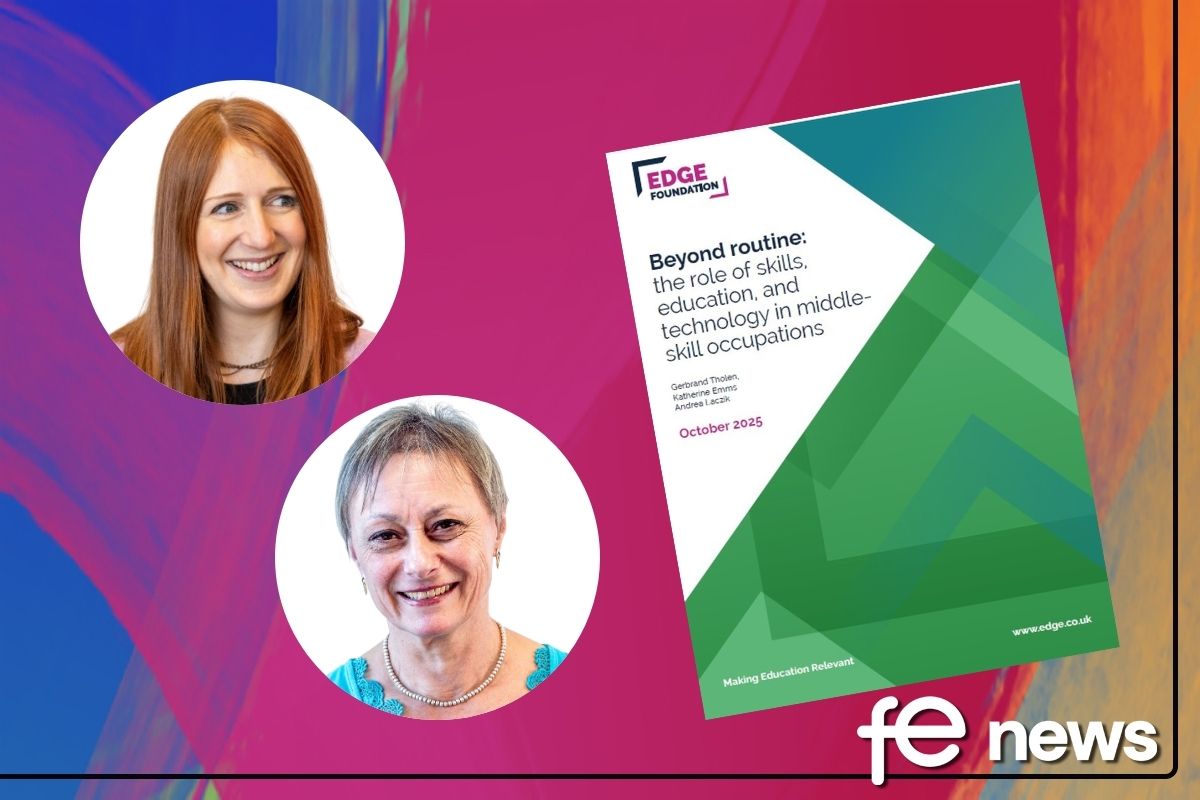
From administrative assistants to skilled trades workers, so-called ‘middle-skill occupations’ account for about a fifth of the UK workforce. However, in the face of artificial intelligence and automation, the narrative around these roles has increasingly become one of resignation and decline. They are often dismissed as obsolete or soon to be.
A new report from City St George’s, University of London and the Edge Foundation challenges this assumption, revealing a nuanced picture in which middle-skill roles adapt and continue their vital contribution to the UK labour market. Through data analysis and interviews, we focused on three key areas of administrative work: legal, medical, and human resources, exploring how skills, education, and technology are reshaping the nature and organisation of these roles.
Identifying the skills that matter
Throughout the research, administrators highlighted the importance of transferable over technical skills. While digital skills are inevitably important, traits such as attention to detail, reliability, responsibility, responsiveness, and time management are the true essential prerequisites for effectively performing these administrative roles.
Social skills are also overlooked in discussions about automation. Alongside routine tasks, administrators deal with everyone from team members to clients, often in highly emotional contexts such as those involving redundancies or legal difficulties. As such, effective communication and empathy are essential for the job. As one HR administrator explained:
“In our role, where we’re dealing with people that are bereaved, or we’re dealing with people that are vulnerable, you really need to have patience and kindness.” Another spoke of the ability to navigate and dissolve conflict between colleagues.”
The very fact these skills are so often overlooked challenges the idea of middle-skill roles as routine or easily automated. Indeed, administration tasks often broaden over time, with responsibilities ranging from funding coordination to safety protocol management – tasks that typically require a level of human autonomy to manage. Roles can also change drastically and quickly as a result of internal disruptions like personnel changes or reorganisation – unpredictable ‘wildcards’ requiring adaptability that cannot easily be replicated by AI.
The education question
Education also plays an increasingly nuanced role in middle-skill occupations. Since 2011, the proportion of graduates in administrative roles has grown from 18% to 33%. Despite working in sectors like medicine and law, however, administrators insisted that formal qualifications were not strictly necessary for effective performance. They cited work experience, interpersonal communication and cultural fit as more important during recruitment and for job success.
While some interviewees felt graduate qualifications in areas like psychology or business were helpful in their roles, the overall message was that formal education increasingly functions as a gatekeeper – a box-ticking exercise on application forms rather than a genuine predictor of capability. One interviewee said:
“They want a law degree, but then ask: Do you have admin experience? Have you worked in an office before?”
Crucially, interviewees spoke positively about non-traditional routes – apprenticeships, placements, and on-the-job learning – as entryways into their profession. As digital technology and AI play greater roles, this suggests work-based pathways may become increasingly valuable.
Technology as partner, not replacement
While aware of the existence of AI, administrators had varying levels of experience using it. Many primarily considered AI a pragmatic tool for handling repetitive or time-consuming tasks. Several had used tools like ChatGPT or Microsoft Copilot for tasks like proofreading or generating contracts. But as one participant explained:
“AI can only do so much. It can speed up the efficiency of your role, but it can’t replace it”.
Again, administrators frequently noted AI’s lack of emotional understanding and human connection, arguing it is not yet capable – and perhaps never will be – of replicating the nuanced human touch essential to these roles. Rather than mass job losses, administrators anticipated evolution. Technology may eliminate document production roles or automate routine data entry. But coordination, oversight, relationship management – the core of contemporary administrative work – are firmly human domains:
“The boring work goes away but the person who’s coordinating all that remains essential.”
Implications for policy and practice
This research carries essential insights for policymakers, educators, and employers. Firstly, middle-skill occupations deserve far greater recognition for their diversity, adaptability and continued relevance. While many organisations have already streamlined their administrative departments, resulting in smaller teams, dismissing these roles outright misunderstands their nature and resilience.
Secondly, educational policy must account for multiple pathways. Despite a rise in graduates entering administrative roles, university education does not dominate the field. Vocational training and apprenticeships are essential, often providing practical skills and experience that formal education lacks.
Finally, even as AI automation increases, workplaces must invest in personal development and adapt to individuals’ strengths – especially as middle-skill occupations often develop sector-specific expertise that ties them to a single sector. Without supportive environments, this can limit career progression.
Ultimately, understanding how technology transforms rather than replaces middle-skill work is essential for understanding the future labour market. Middle-skill roles have always evolved. The only difference now is that they are demonstrating precisely the human capabilities that remain irreplaceable.
By Katherine Emms, Education and Policy Senior Researcher at the Edge Foundation and Dr Andrea Laczik, Director of Research at the Edge Foundation
This research was led by Gerbrand Tholen from City St George’s, University of London, with support from Andrea Laczik and Kat Emms from the Edge Foundation.
Responses