
Applications open for fully funded PhDs to shape the future of sound, noise and sustainability

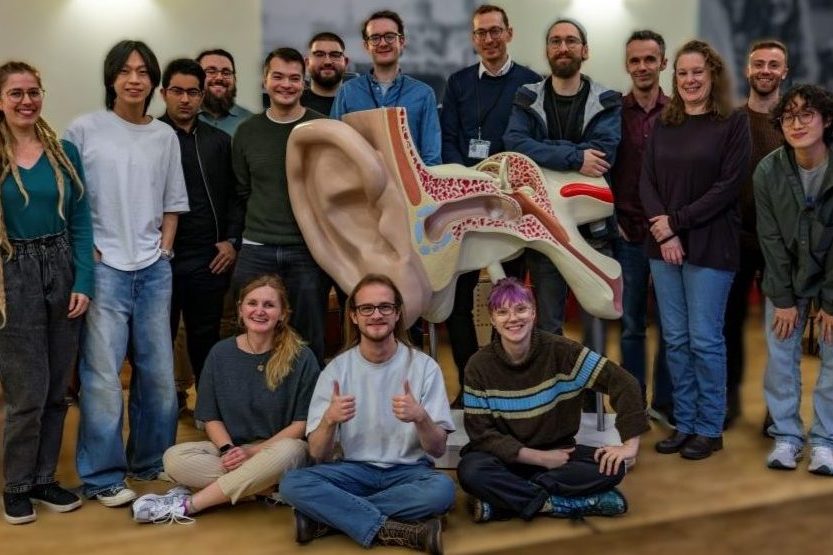
The Centre for Doctoral Training in Sustainable Sound Futures is inviting applications for 16 fully funded PhD opportunities in acoustics, as it prepares to welcome a third cohort of researchers in September 2027.
Led by the University of Salford in collaboration with the Universities of Bristol, Sheffield and Southampton, the EPSRC Centre for Doctoral Training (CDT) brings together academic expertise and more than 50 project partners to develop the next generation of acoustics researchers.
Now entering its third year of recruitment, the programme aims to tackle challenges surrounding noise, sound technology and sustainability, exploring how sound can be better understood, managed and used to improve everyday life.
The four-year studentships offer full tuition fee funding, a tax-free living stipend and financial support for research activities. Successful applicants will also benefit from specialist facilities, training programmes and opportunities to collaborate with industry, government and third-sector organisations.
A range of research projects is available for 2027, covering areas including artificial intelligence, transport noise, environmental acoustics and accessibility.
Projects based at Salford include investigating how sound and vibration could improve prosthetic devices, exploring ways to assess the impact of environmental noise, and improving acoustic comfort in educational buildings as the climate changes.
Professor Trevor Cox, Director of the Centre for Doctoral Training in Sustainable Sound Futures at the University of Salford, said:
“One of the greatest strengths of the Centre for Doctoral Training is the opportunity to learn as part of a wider community. Surrounded by researchers exploring diverse areas of acoustics and supported by leading academics and project partners, our PhD students gain deep expertise in their field as well as the broader skills, knowledge and connections that can shape their future career.
“We’re really looking forward to recruiting our next cohort of aspiring researchers through our funded PhD opportunities.”
The programme builds on the University’s longstanding expertise in acoustics. Through its Acoustics Innovation Institute, Salford has been at the forefront of acoustic research and innovation for more than 60 years.
Current CDT funded students are already undertaking research with external partners, demonstrating the opportunities available through the programme.
Among them is Edward Jackson, who completed an MSc in Acoustics at Salford before joining the CDT. Working alongside Jaguar Land Rover, his PhD explores how specially engineered materials could reduce noise inside electric vehicles without adding unnecessary weight.
Another student, Rebecca Hutt previously studied Electroacoustics at Salford before pursuing a career in acoustics consultancy and government research. Now working in partnership with the Department for Environment, Food and Rural Affairs (Defra), her PhD investigates how neighbour noise affects people in their homes, exploring the factors that influence how individuals perceive and respond to unwanted sound.
Applications are welcomed from candidates with relevant academic backgrounds, including acoustics, engineering, physics, mathematics, computer science, psychology and environmental science.
Responses