
University of Salford inspires future sustainable engineers in communities hardest hit by inequality

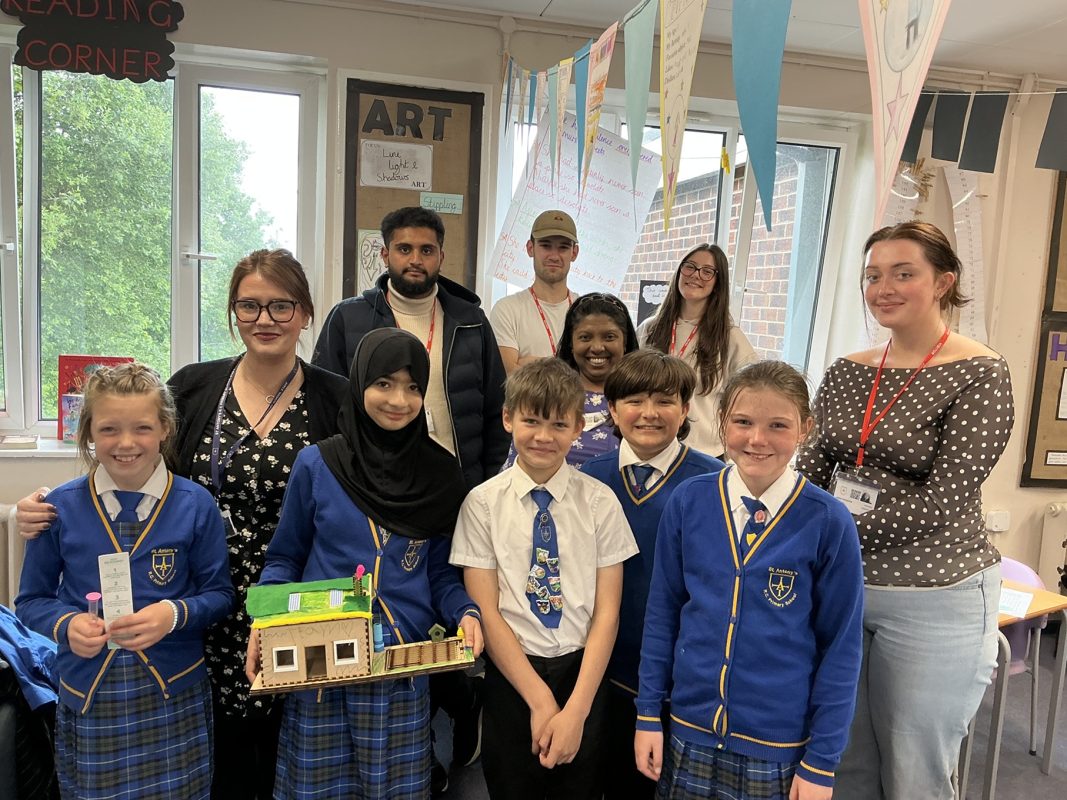
Children from some of the North West’s most disadvantaged communities are discovering how they could help tackle climate change, thanks to a University of Salford programme aimed at inspiring the next generation of sustainable engineers.
More than 200 Year five pupils from primary schools across Salford and Blackburn have taken part in an interactive programme, introducing them to sustainable engineering, green construction and the vital role engineers play in creating low-carbon homes and communities.
Of the 200 children who attended, more than two-thirds said they had developed a better understanding of how engineering improves people’s lives, while half said they were now more interested in learning about engineering in the future. 85% also reported they had learnt more about what engineers do during the programme.
Delivered by the University’s Centre for Sustainable Innovation (CSI), in partnership with The Making Rooms CIC, the Ingenious programme combines curriculum-linked learning with practical engineering challenges, helping children explore how engineering can improve lives while protecting the environment.
Funded by the Royal Academy of Engineering, the programme comes at a critical time. The built environment contributes 40% of global carbon emissions, while the country is expected to face a shortage of around one million engineers by 2030. By engaging pupils from communities with traditionally lower participation in STEM (science, technology, engineering and mathematics) subjects, the University is helping to build a more diverse and sustainable engineering workforce for the future.
James Browning, Science Lead at The Friars Primary School, commented:
“It was wonderful seeing how much thought the children put into their material choices. By stepping into real-world roles like project managers and budget controllers, the children gained a practical understanding of green construction and the careers they may wish to pursue in the future.”
Tanya Harvey, Year Five Teacher at The Friars Primary School, added:
“Watching the children collaborate in roles like design leads and finance controllers gave them a genuine taste of green engineering. Working alongside the University of Salford ambassadors helped them understand how sustainable construction can tackle everyday environmental challenges. Both the day in school and the visit to the University were incredible for the class, days they kept talking about over and over again.”
Dr Silvia Tedesco, Associate Professor of Sustainability at the University of Salford’s Centre for Sustainable Innovation, who led the project, said:
“The transition to a net zero future depends on developing the next generation of engineers, innovators and problem-solvers.
“We know that many young people, particularly those from disadvantaged communities, have limited opportunities to engage with engineering in a meaningful way. By introducing children to sustainable engineering through practical, hands-on experiences, we’re showing them that engineering isn’t just about buildings or machines, it’s about creating healthier, more sustainable communities and improving people’s everyday lives.”
The programme reached pupils aged nine and ten from The Friars Primary School, Clifton Primary School, Hilton Lane Primary School and St Joseph’s RC Primary School in Salford, alongside Longshaw Community Junior School and St Antony’s RC Primary School in Blackburn.
Throughout the project, pupils explored the environmental impact of different construction materials, investigated energy and water-saving technologies, learned about biodiversity, and worked collaboratively to design and build miniature eco-friendly homes.
The experience concluded with a visit to the University’s world-leading Energy House 2.0 research facility and Morson Makerspace, where pupils saw first-hand how engineers are developing the low-carbon homes of the future.
Silvia continued:
“What’s particularly powerful about this programme is that our Engineering Ambassadors, who helped deliver the workshops, became relatable role models. When the pupils met experts with a passion for solving real-world challenges, engineering suddenly felt accessible and achievable.”
The programme forms part of the University of Salford’s commitment to widening participation in STEM education and supporting regional prosperity through innovation and sustainability.
Silvia concluded:
“This project successfully increased pupils’ knowledge of engineering and sustainability. The activities encouraged pupils to think about their own behaviours and future aspirations, with many expressing an interest in learning more about sustainability, climate change and green careers.
“While they’re only nine and ten years old, these early experiences can have a lasting impact. Today’s classroom activities could inspire tomorrow’s engineers, innovators and climate leaders who will design the low-carbon homes and communities of the future.”
The Ingenious programme was funded by the Royal Academy of Engineering, the Department for Science, Innovation and Technology, and the Friends of Energy House 2.0 Impact Fund.
Responses