
College Degree Graduates Feel Better Prepared Than University Graduates, Research Suggests

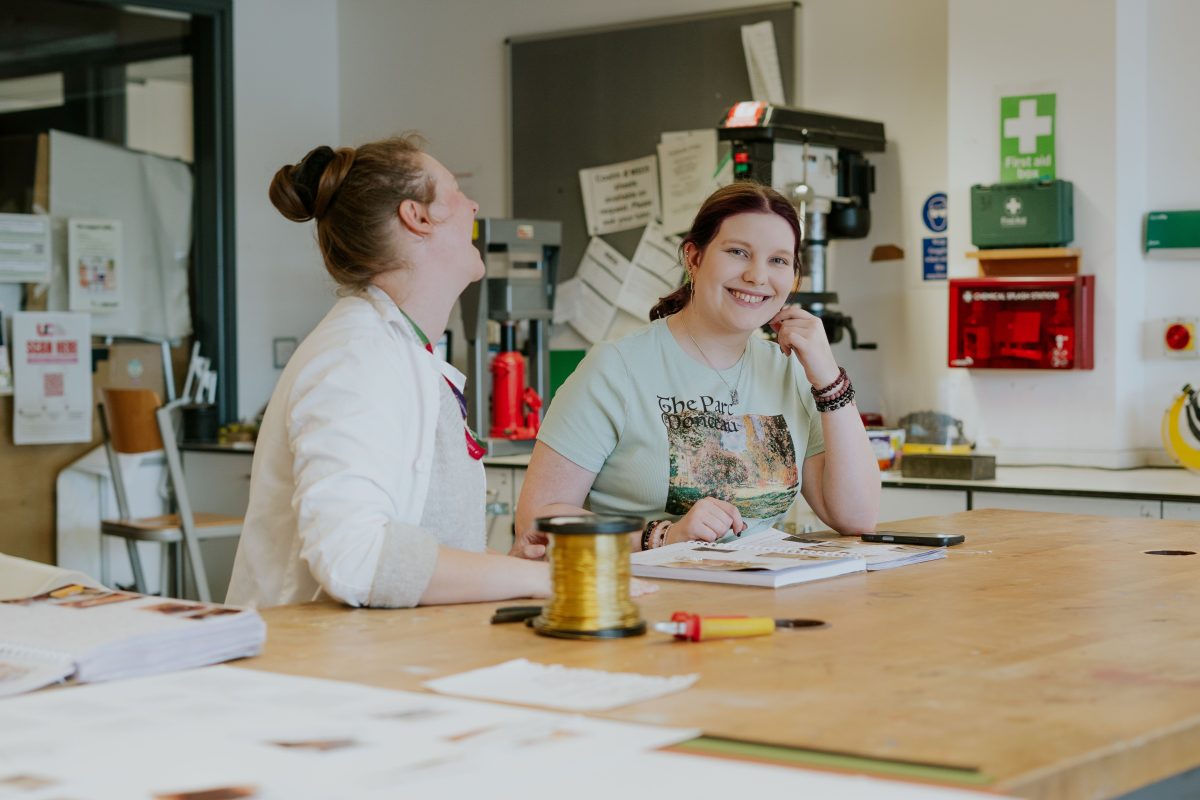
As questions continue over the value of university, new research suggests graduates who study higher education in colleges feel better prepared for life after graduation. The experiences of three East Sussex College students help explain why.
Every few weeks there seems to be another story questioning the value of higher education.
Universities announcing financial pressures. Rising tuition fees. Student debt. Graduate employment. It’s become a familiar conversation, and one that’s influencing how people think about higher education.
Around the same time, though, another piece of research quietly appeared.
Towards the end of March, the Office for Students found that graduates who completed higher education courses at further education colleges were more likely to feel prepared for life after study than graduates from universities. 69% said they felt ready for what came next, compared with 50% of university graduates.
The figures don’t tell us why, but the experiences of the people behind them do.
“The college helped change my life”
When Cally Blackford talks about studying a music degree at East Sussex College, she doesn’t begin with modules or assignments.
What she remembers most is the confidence she gained.
“The support I got during my music degree shaped me into a better person,” she says. “The lecturers genuinely cared about my success, both academically and personally. I can honestly say the college helped change my life.”
Today, Cally works as a Vocational Skills Practitioner at East Sussex College after building a career that included touring as a professional sound engineer.
Looking back, she remembers the people who encouraged her, challenged her and expected her to succeed.
Those experiences aren’t unusual.
Students studying higher education in colleges often describe learning environments where tutors know them personally, support is easy to access and confidence grows alongside academic knowledge.
Victoria Collins arrived at higher education from a different direction.
She was already running three businesses and raising a family when she enrolled on East Sussex College’s BA (Hons) Business degree, validated by the University of East Anglia.
Moving away to study was never part of the plan.
“It allowed me to continue developing my businesses while gaining the knowledge and confidence that comes with a degree,” she says. “It showed me that education doesn’t have to follow one traditional route.”
Since beginning the course, Victoria’s businesses have continued to grow, earning recognition through awards from both the Federation of Master Builders and the South East Construction Awards.
For Victoria, studying locally was simply the right choice.
It meant she could continue building her businesses while working towards a degree, rather than putting one ambition on hold to achieve another.
Felicia Kahin’s journey back into education came later in life.
Originally trained as a teacher in Malaysia, she later worked as an ESOL tutor in the UK before taking time away from work to raise her children.
When she decided to retrain as a counsellor, she needed a course that could fit around the life she already had.
“I was able to keep my full-time job throughout the Foundation Degree,” she says. “The only costs I really had to think about were tuition fees and travelling to college. I didn’t have accommodation costs and I didn’t lose my income.”
She understands why people question the cost of higher education. But she also knows there’s more than one way to earn a degree.
“The headlines aren’t wrong,” she says. “They’re describing the most expensive way to get a degree, not the only way. For me, the value came from being able to keep working, stay close to my family and qualify for the career I wanted.”
What she talks about just as often, though, is the support she received once she started.
“Most of us hadn’t written an academic essay for years,” she says. “The tutors understood that. They didn’t expect us to know everything already, and they were always there when we needed them.”
Her placement became just as important as the classroom.
“You can learn theory from books,” she says, “but working with real clients changes how you understand the profession.”
A different experience of higher education
Although their stories begin in different places, there are clear similarities.
Flexibility mattered to all three students, but none of them describes it as the defining part of their experience.
Instead, they come back to the same things.
Knowing their tutors.
Studying in smaller groups.
Feeling supported.
Leaving with the confidence to take the next step.
The latest National Student Survey paints a similar picture.
For the third consecutive year, East Sussex College was ranked the highest-performing higher education provider in Sussex for overall student satisfaction.
Every area of the student experience scored above the national average, with 95.3% of students rating the quality of teaching highly and 94.5% praising the academic support they received.
For Meg Sullivan, Director of Higher Education at East Sussex College, those results reflect something that’s sometimes lost in the national conversation.
“People come to higher education at very different stages in their lives and for very different reasons,” she says. “Some are leaving college and looking for a university experience close to home. Others are changing careers, returning to education after raising a family, or looking for a way to study alongside work. There isn’t one route that’s right for everyone.
“What matters is that people understand the choices available to them and find the environment where they’re most likely to thrive. College-based higher education gives people another way to achieve a university-level qualification.
“Students still benefit from high academic standards, experienced lecturers and strong links with employers, but they do so in a setting where smaller classes and personal support are simply part of the experience.”
Looking beyond the headlines
The debate around higher education isn’t going away.
Questions about funding, graduate outcomes and value for money deserve serious discussion.
But they don’t tell every student’s story.
For Cally, Victoria and Felicia, the value of higher education wasn’t defined by the headlines.
It was shaped by the opportunities it created, the confidence it built and the careers it helped them pursue.
The Office for Students’ research suggests their experiences are more common than many people realise.
Higher education has never been one experience. For some people, moving away to university will always be the right choice. For others, studying closer to home, alongside work or family life, offers a different path to the same goal.
As more people explore different routes into degree-level study, perhaps the real question isn’t whether higher education is worth it. It’s whether we’ve become too used to thinking there’s only one way to experience it.
Responses