
NPTC Group’s AI partnership with Atheni featured in new Financial Times “Working it” film
NEATH, 25 August 2026: NPTC Group of Colleges’ work with AI adoption company Atheni features in a new Financial Times Working It film, “Are graduates prepared for the AI era?”, examining how AI is changing education, employment and the choices facing young people.
Presented by Isabel Berwick, who leads the FT’s ‘Working It’ coverage, the film examines how education is responding to AI and what young people need to become employable and ready for work. It also asks where responsibility lies for preparing them, from schools, colleges and universities to employers and policymakers.
The film features contributions from NPTC Group of Colleges and the University of Southampton, alongside a Google-backed AI skills programme in London and a degree apprenticeship run with Newcastle University and PwC.
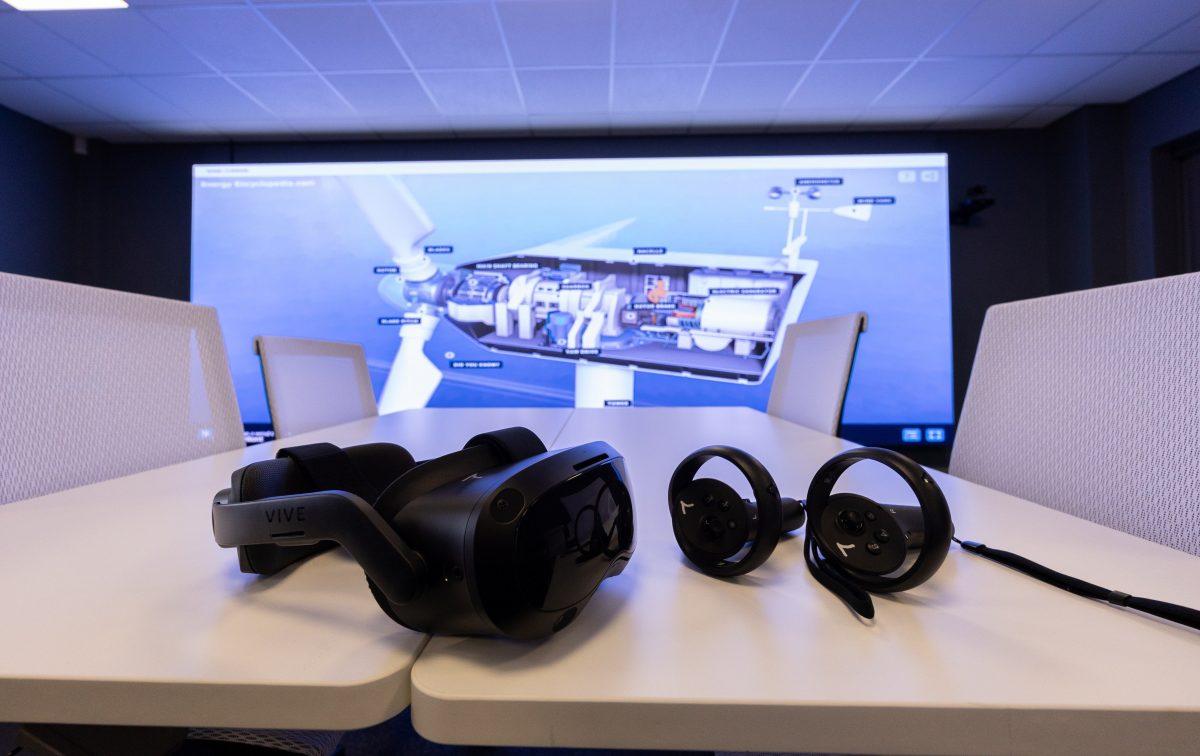
The FT visited NPTC’s Neath College campus, filming in its Immersive Lab and speaking to sixth-form learner Sebastian; Mark Dacey, Chief Executive; Nicola Brandon, Director of Digital Innovation in Teaching and Learning; and Louise Ballard, co-founder of Atheni.
The partnership between NPTC and Atheni began in February 2026 with a structured pilot across HR, marketing and the college’s Sixth Form and A-level programme. Rather than simply rolling out AI tools, the two organisations developed workshops, personalised coaching and hands-on projects designed to build practical AI capability among staff and learners.
Early examples include learners creating tailored revision resources and support teams using AI to reduce the time spent preparing case notes and learner plans, while retaining human oversight throughout.
Mark Dacey, Chief Executive of NPTC Group of Colleges, said:
“AI in education is about sharpening education, not replacing critical thinking. Our responsibility is to prepare learners for the world they are entering, not the world we entered. With major employment opportunities developing around the Celtic Freeport and floating offshore wind in Port Talbot, AI is going to be a huge part of their future. We did not begin with a technology rollout. We began by asking how AI could improve teaching, support staff and give learners the skills to take advantage of those opportunities.”
The partnership comes as Wales develops its wider approach to AI in further education. Estyn’s March 2026 Spring report, Exploring the Potential: Artificial Intelligence in Further Education, found clear momentum across the sector, but said practice remained at an early stage and uneven, with opportunities to develop critical AI literacy still limited.
NPTC’s partnership with Atheni responds directly to that need by involving learners, teachers, support teams and leaders across the college. It treats AI as a capability relevant across subjects, roles and future careers, rather than as a standalone technical specialism.
Louise Ballard, co-founder of Atheni, who has worked directly with NPTC throughout the pilot, said:
“AI is deceptively easy to use. It can produce polished slop in seconds, which is precisely why teaching young people to keep hold of their judgement matters. The real skill is not generating an answer. It is knowing what to ask, what to trust, what to challenge and when to do the thinking yourself. Used badly, AI can replace learning, but used well, it can deepen it. We believe every young person should have the opportunity to learn how to make AI work for them, and NPTC is showing what that looks like in practice.”
The Financial Times film, “Are graduates prepared for the AI era?” from FT Working It, is available at
NPTC’s section runs from approximately 2 minutes 30 seconds to 6 minutes 50 seconds.
Responses