
Chair of Social Mobility Commission warns “generic support from a jobcentre” won’t solve NEET crisis

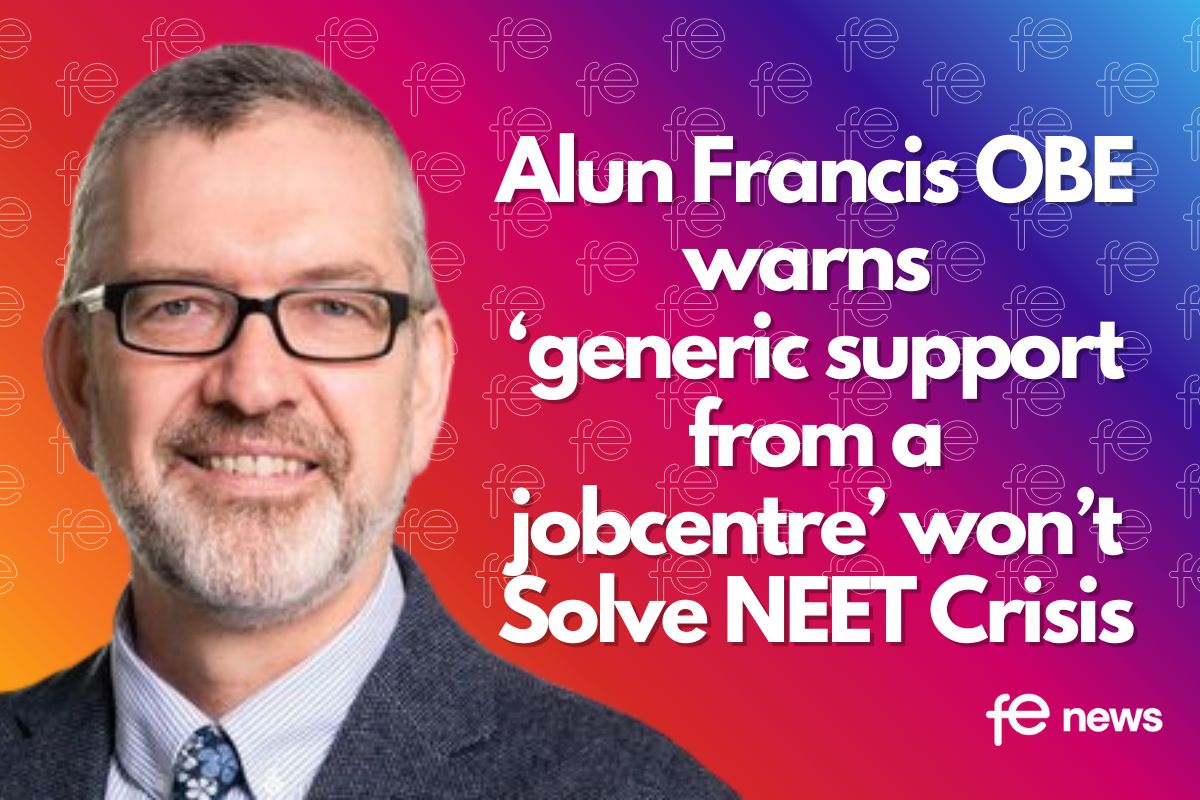
- Alun Francis, Chair of the Commission, will emphasise the need for a “fundamental shift in strategy” to address the “unequal burden” of becoming NEET
- The speech will open the Commission’s Symposium examining the critical relationship between Welfare, NEETs and Social Mobility, being held on Tuesday
- Angela Rayner, Helen Whately and Lord Blunkett will also give keynotes on the day
The Social Mobility Commission will host its annual Symposium tomorrow (Tuesday 23 June), bringing together policymakers, cross-party voices and experts, to focus on young NEETs, the welfare system and the impact on social mobility.
Social mobility conversations have too often focussed on getting a minority of young people from disadvantaged backgrounds into elite occupations – but this has ignored the deep-rooted problems of the most disadvantaged.
The Commission is devoting the day to the over one million young people Not in Education, Employment or Training (NEET). This growing group of young people, whose opportunities for social mobility across every metric are limited, have not had their voices sufficiently heard by policymakers for decades.
On the day, the Chair of the Commission will also share interim findings from the Commission’s new qualitative study in Blackpool, an area with one of the highest rates of young people who are NEET.
In his opening address, Alun Francis OBE, Chair of the Social Mobility Commission is expected to say:
“We have argued for some time that too many social mobility champions are focussed on the wrong problems.
“There are different ways of defining and measuring social mobility, and the traditional Dick Whittington idea of long upward mobility, from the bottom to the top, is one – but what if not everyone wants to live in London? What matters to most young people, who are living with limited opportunities, is how they can realistically improve their current situation, even by just a bit.
“We need to end the traditional London-centric thinking of Whitehall policymakers and prioritise designing programmes and interventions which help young people most disconnected from the labour market, geographically and aspirationally, access all the benefits work, skills and careers have to offer.
“We have consistently seen from our analysis there is a strong crossover between the most disadvantaged in society and the places they grow up. Coastal and post industrial towns have a disproportionate number of people whose outcomes in employment, education, health and wealth, are behind the rest of the country.
“That’s why at the Commission, we are doing place-based research, starting in Blackpool, talking directly to young NEETs.They have told us they don’t want generic support from a jobcentre. They want earlier, personalised career advice and alternative pathways to give them a clear route to a secure future.
“We are calling for a fundamental shift in strategy. We need place-based solutions, including local NEET partnerships, stronger economic opportunity and participation across the country and joined-up working with educational, community and family policies to support this.
“We expect today to be an opportunity to debate how this can best be achieved.”
The event, hosted by the Social Mobility Commission at the Royal Society of Arts, and available to live stream here, on Tuesday 23rd of June, will feature three keynote speeches from:
- Angela Rayner, MP for Ashton-under-Lyne, previous Deputy Prime Minister, Secretary of State for Housing, Communities and Local Government and Deputy Labour Leader
- Helen Whately, MP for Faversham and Mid Kent and Shadow Minister for Work and Pensions
- Lord Blunkett, Former Secretary of State for Work and Pensions, Education and Home Office
Over 20 cross-sector experts will join panels to discuss the reasons behind the stark statistics on young people, and how to turn the tide on this concerning trend across:
- Pathways for NEETs – Exploring different routes to sustained education or employment across Further Education, apprenticeships, Technical and Vocational levels and how to assess their effectiveness.
- Place-based approaches – Exploring how more regionalised approaches can support young people into work or education and the vital role local authorities can play.
- Welfare policies and how these currently influence NEETs – Exploring current welfare policies across Universal Credit, conditionality and sanctions, and the interrelation with pathways into work or education.
- Breaking down barriers for economically inactive NEETs – Exploring the barriers affecting NEETs that are economically inactive, which is currently around 60% of NEETs, and how these barriers can be removed.
Responses