
Milburn Review sets out plan to move from a Welfare State to a Working State for the next generation

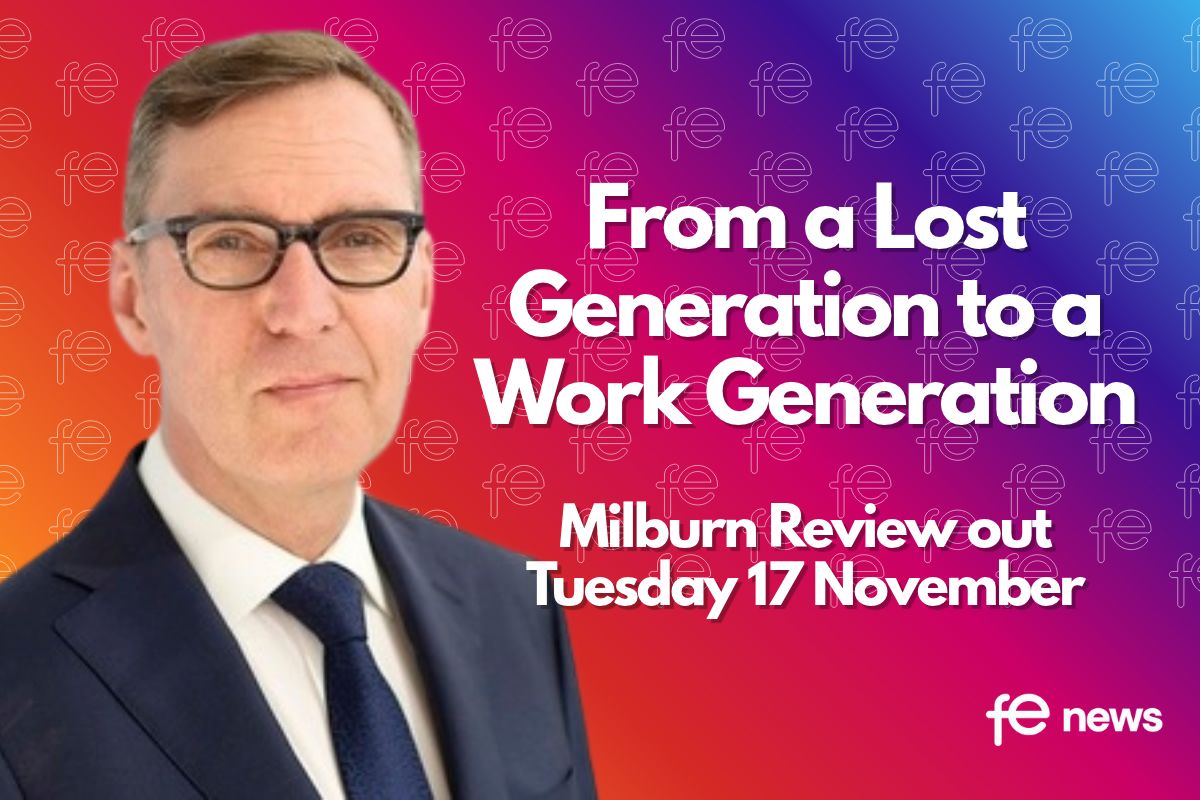
- Alan Milburn’s final report is a blueprint for ending Britain’s NEET crisis and a complete rewrite of how public services support young people.
- A national ambition to take the NEET rate from 13% to around 5% by 2036, making the UK one of Europe’s best performers on youth participation.
- A new Youth Opportunity Service in every part of England, backed by new legal entitlements, so that every NEET young person has a route back.
Alan Milburn published ‘From a Welfare State to a Working State: A new settlement for the next generation’ at 11:30 am 17th November 2026, setting out a bold new deal between young people and the state.
Milburn says the report is a choice moment for the country and sets a ten-year ambition to end long term youth unemployment and ensure every young person has the chance to earn or learn.
At its heart is a new local Youth Opportunity Service (YOS), the ‘engine room of a Working State’. It would bring together employment, careers, health and practical support around a young person, with a personalised participation plan and a named adviser.
Two new guarantees in law would underpin it. An Opportunity Guarantee would give a route into education, training or work. A Support Guarantee would give the health, employment and practical help to take it up.
Strategic authorities and mayors would be accountable for delivery through multi-year Participation Agreements, with a YOS in every area by 2029.
Nearly one million young people, one in eight, are not in education, employment or training. Six in ten have never had a job. Across Europe, only Romania had a higher NEET rate than the UK in 2025. On current policy the rate could reach 16.3%, around 1.27 million young people, by 2031. Youth disengagement already costs the country about £125 billion a year.
Alan Milburn said:
“Britain has had a youth NEET problem for 25 years and never a plan to end it.
“We are at a fork in the road and half measures will not do. A complete system reset is needed.
“A lost generation is not inevitable. A work generation is possible.
“This is not simply a cause for young people. It is a cause for the country. We have to make the next generation a national priority. Youth participation has to run through public policy like a stick of rock.”
The report proposes reforms across government and public services:
- Early years and schools: more support for parents, a school-ready target of 90% of children by age five and a curriculum rebalanced towards the skills young people need for work.
- Colleges and apprenticeships: a doubling of the number of young people achieving an apprenticeship over the decade, so that apprenticeships rival university as a mainstream route for school leavers.
- Health: instant access to needs-based mental health support without waiting for a diagnosis and fast-track help for young people who are NEET.
- Welfare: a new benefits system for under-25s that moves from writing a cheque to creating an opportunity, backed by major new investment in support, training and jobs before any benefit changes.
- Employers: a new bargain in which employers create more first chances and government makes it cheaper, simpler and less risky to hire a young person.
- Whole system: a statutory Youth Opportunity Test so that major tax, spending and regulatory decisions are assessed on their effect on the next generation before they are made.
Milburn is clear that crude benefit cuts will not work and that reform will need upfront investment. Savings start early and build over the decade.
For every £25 spent on youth benefits only £1 went on helping young people into work or education
In 2024 to 2025, for every £25 spent on youth benefits only £1 went on helping young people into work or education. The report aims to rebalance that to £2 to £1, amongst the best in Europe.
The reforms are also expected to help around 440,000 young people into work by 2036 and reduce relative poverty after housing costs by 50,000 people.
The report argues that the NEET crisis is a choice and that other countries have made a different one. The Netherlands has a NEET rate of 4.8%
At the press conference, Alan Milburn said:
“A lost generation is not a fact of life. It is a choice. And I believe it is the wrong one.
“Not just because it is a fiscal crisis or an economic crisis. But because it is a moral one.
“We are failing as a nation to gift the next generation the opportunities they need to succeed.
“It is time for a new settlement that makes work not welfare the future for the next generation.
“Demographic change makes getting young people into work a necessity. Britain’s future relies on us backing young people.”
Sector Reaction
FE and Skills
David Hughes, Chief Executive, Association of Colleges, said:
“Alan Milburn’s report is a whole system, collaborative approach to do a lot more to support young people on their paths to being adults and being able to find good jobs and participate fully in society. It is a grand and radical vision which builds on the evidence, learns from what is working in this country and overseas and requires the government to invest ahead of longer term savings.
“Alan rightly sets this out as a moral, economic and fiscal priority and a watershed moment for the country. The vision recommends a new ambition to have every young person learning, earning or actively participating by 2036. The report makes detailed recommendations which encompass the role of employers, education, health, employment support and welfare benefits. In the education space, there are good plans on how schools, colleges, universities and the apprenticeship programme should align in a collaborative effort to ensure every child and young person is supported better towards work.
“The prominence of colleges in the report is very welcome and is a true reflection of work they are already doing to tackle the NEET crisis, and their potential to do so much more with the proper investment and resource.
“Three key recommendations stand out – to guarantee the funding for every 16 to 19 year olds enrolled in colleges, to fund 150,000 extra places for 18 to 24 year olds and to introduce a ‘participation and work-readiness’ premium for NEET students in colleges. Those three alone are a game-changer in unleashing colleges to help more young people gain the skills and confidence to find work. On top of those headlines are a number of other recommendations which will help. There is an understanding that pay in colleges is insufficient to attract and retain the high quality college workforce needed, a re-focusing of apprenticeships on younger people, a pre-apprenticeship programme run by colleges and an emphasis on colleges scaling up their delivery of Level 4 and 5 qualifications.
“Across 266 pages, there is a lot more to digest. The overall package is powerful and with the introduction of the Youth Opportunity Service, led by elected mayors where they exist, this should help bring together the key partners and stakeholders at local level to lead a transformation of the offer and prospects of young people.
“However, as recognised by Milburn, and indeed by the government, these recommendations need significant, and sustained investment. While we await the government’s full response, it was good to see Pat McFadden show an immediate commitment to bring forward legislation to deliver on the recommendations. I look forward to hearing from the Education Secretary later in the week and I am hopeful that there will be positive news for colleges on this in the days to come.
“It’s clear that with the right investment and collaboration at national and local levels over the coming years, hundreds of thousands more children and young people will be able to get the support they need as they grow up to be able to enter adulthood with good jobs and prospects for the future.
“What we need now is for every leader of colleges, schools, universities, local government, health trusts and others to commit to working together in every place to deliver a better system. With the investment and the will, we can develop a new culture as well as a new system which means no young people are left behind, none can drop out and more can realise their talents and aspirations by finding good jobs.”
Ben Rowland, Chief Executive of AELP, said:
“AELP is pleased to have had the opportunity to feed into Alan Milburn’s pivotal report on youth opportunities and is glad many of its proposals are found in today’s recommendations. Our members are already helping young adults become ready for work, but the crucial test will be whether there are enough jobs and apprenticeships for them to move into.
“That means giving more employers the confidence and support to take on young people. The proposed hiring payment and incentive for providers are welcome, but Government will need to go further to stimulate employer demand. It should look at the wider costs and perceived risks of recruitment, including employer National Insurance contributions, and make sure employers have the support to recruit and develop the next generation of workers.
“We also look forward to seeing how the government considers today’s recommendations alongside their plans to devolve more powers from Whitehall to local communities.”
Simon Ashworth, AELP Deputy CEO and Director of Policy, said:
“Taken together, these proposals offer a strong package to widen young people’s routes into skilled work: removing the Treasury top-slice, fully funding apprenticeships for under-25s from Levy receipts, rewarding employers and providers that create opportunities, and removing the English and maths Level 2 exit requirement. A pre-apprenticeship programme would also help more young people bridge the gap between education and work.
“Making these ambitions work will be a considerable challenge and therefore depends on recognising the full breadth of the skills system. Independent training providers bring considerable experience in study programmes, SEND provision, supported internships, apprenticeships, employability support and employer-led training.
“Government should draw on the different strengths of providers across the sector, including by enabling any provider on the APAR to deliver pre-apprenticeships, and ensure they can all contribute to the ambition of guaranteed participation in further education for 16- to 19-year-olds.”
Andy Moss, Interim CEO at City & Guilds, said:
“At City & Guilds, an organisation with nearly 150 years of experience helping people develop the skills they need to thrive, we welcome this strong recognition of the vital role that vocational education, technical training and apprenticeships play in supporting young people to build meaningful and sustainable careers.
“For too long, the conversation around youth employment has focused on what young people lack, rather than the opportunities, skills and pathways that can help them succeed. This review rightly recognises that skills must be at the heart of the solution.
“While we are continuing to examine the detail of this landmark report, our own Employability Report highlighted earlier this year that the confidence, capabilities and technical expertise developed through vocational learning provide a proven route into employment and help people progress throughout their careers. These benefits are felt not only by young people, but by learners of all ages looking to adapt and succeed in a changing labour market.
“We look forward to engaging further with the review’s recommendations and the Government’s response. Alongside employers, educators and partners, City & Guilds stands ready to help turn ambition into action, ensuring more people have the confidence, skills and opportunities they need to thrive.”
Pepe Di’Iasio, General Secretary of the Association of School and College Leaders, said:
“We fully support a greater focus on vocational and technical education alongside the existing high academic standards in our schools and colleges, and with the importance of great work experience opportunities and careers guidance. We also agree with the crucial significance of good attendance. It is important to understand that schools and colleges already strive to provide their pupils and students with the best possible preparation for life and often have to do so within the context of lack of funding, staffing, time, and an accountability system which penalises rather than supports them. We also agree with the vital importance of literacy and numeracy as the foundational skills which are crucial to education and life opportunities.
“However, it is disappointing to see how quickly the report defaults to the usual mishmash of targets, tests, and new accountability measures which are a hallmark of many other reports over recent years. Adding a new ready-for-work standard into school performance measures and Ofsted inspections will create yet more pressure on a system which is already overwhelmed with expectations and which is simply not resourced to deliver a whole new tier of requirements. If the government intends to do this then it must come up with a realistic plan and the funding to enable schools to deliver this expectation.
“A new statutory key stage 3 writing, numeracy, and oracy check also creates another set of requirements which will detract from curriculum time in already overcrowded timetables. We would question what purpose is served by introducing more assessment. Substantially raising targets for school preparedness and the proportion of 11-year-olds reaching the expected standard is laudable and it is right to be ambitious. But we do need a practical plan of how we are going to actually do this given that many of the factors which affect educational development lie in wider socio-economic challenges.
“We are pleased to see the recognition that colleges need additional investment. They have been treated as a Cinderella service for far too long despite their critical role in providing the technical skills base for the nation. We welcome the specific funding proposals made in the report, including the extension of funding for care-experienced young people, but we would like to see this taken further with the creation of a 16-19 student premium to provide additional support for all disadvantaged learners. We are also concerned about the proposal to create a new work readiness performance measure for colleges. Similarly to schools, they already face a huge number of expectations, and if anything, have even less funding with which to deliver them.
“We look forward to discussing the detail of these proposals with the government and will be calling on ministers to ensure that the implementation of any new changes is assessed against the funding and workforce capacity required to deliver them.”
Paul Whiteman, general secretary at school leaders’ union NAHT, said:
“It is positive that this review has recognised that issues which lead to young people disengaging in education, training and work do not appear overnight. The factors which can place children at risk often emerge much earlier and require support long before they reach the point of leaving school.
“Helping children thrive starts well before children enter the classroom, and schools alone cannot address the social, economic and health challenges that can affect attendance, engagement and achievement. It is therefore encouraging to see a recognition that improving outcomes for young people requires coordinated action across government and public services.
“Setting children on the right path starts in the earliest years. The experiences, routines and learning children develop at home, in early years settings and throughout primary school, lay the foundations for their confidence, wellbeing and future success.
“Since the pandemic, school leaders have noticed increasing issues with children’s school readiness, including around speech and language development, and the aim of addressing this is welcome. NAHT has been vocal on the need for more investment in tackling challenges facing families and their children so they do not harm young people’s ability to attend and flourish in school, and the review’s call for more support for parents should be heeded.
“We welcome the recognition that young people should have an education system which prepares them not only for exams, but for adult life, further study and employment. NAHT has long supported a broad and balanced curriculum, alongside greater parity of esteem between academic, vocational and technical pathways, so that every young person can pursue a route that reflects their talents, strengths and aspirations. The government’s plans to offer greater choice when it comes to vocational and technical education, and truly recognise their value, will be vital in helping to create high-quality pathways for young people.
“The proposed Youth Opportunity Service could play an important role in bringing together support across education, employment, health and wider services, but it must provide additional capacity and coordination, rather than simply creating new expectations or responsibilities for schools.
“As ministers consider the recommendations in this review, they must ensure that schools and colleges have the time, capacity and funding needed to deliver change successfully, especially given the sheer amount of reform they are already contending with. Any new expectations must be matched by the support necessary to make them achievable.”
Daniel Kebede, general secretary of the National Education Union, said:
“Successive governments have failed young people with the deepest school funding cuts in 40 years, an exam factory system and insecure, low-paid jobs.
“Alan Milburn is right that our exam-heavy system fails a third of pupils, drives many to disengage and squeezes out creativity and problem-solving skills employers value. We welcome fewer, less intense GCSE exams and freeing 10 per cent of key stage 3 from the national curriculum.
“But Milburn’s prescriptions for schools contradict his diagnosis, with more tests and targets: a statutory key stage 3 check on top of the Year 8 reading test, and a ready-for-work rate and destination measure for Ofsted to inspect. These would completely contradict Lucy Powell’s pledge to stop ‘early exam factories’, and the NEU opposes them. Whatever Milburn intends, statutory tests become high stakes: schools chase the metric, not learning, and more pupils disengage.
“Schools cannot be held to account for poverty or inequality; ending them is the government’s job. If schools must provide work experience by law, large employers should have to offer placements.
“We welcome his call for investment in sixth forms and colleges, cut even harder than schools since 2010, so technical education can stand equal with academic.
“His plan would put £2.1 billion a year into education by 2036, but almost none would reach schools. Young people with SEND are far more likely to become NEET, yet inclusion plans are underfunded. Schools are running on empty, £4.5 billion a year below 2010 spending power, with Europe’s largest primary classes. We welcome early years investment and early intervention, but a 90 per cent school-ready target is unhelpful and fails to address the fact that the poorest children miss out on the extra hours of early education and care that working families get.
“His sums rely on £3.6 billion a year of benefit savings. Young people need positive structural reform, not coercion. The NEU will oppose cuts to their benefits, especially for disabled young people. Britain is not poor; its wealth is unfairly shared.
“Young people are not the problem. They have faced austerity at home and at school, lost learning to Covid with no proper recovery funding from the Conservatives and seen council youth services cut by three quarters. Social media giants feed them hate for profit, and AI will reshape the jobs they enter. Without a broad and balanced curriculum and a long-term funding settlement for schools and colleges, no reform will end their disengagement.”
Fiona Aldridge, Chief Executive of Skills Federation, said:
“The Milburn Review is right to recognise that tackling youth unemployment requires more than preparing young people for work. It requires employers to create the jobs and opportunities that allow them to take their first steps into employment. We welcome the Review’s ambition to expand apprenticeships, strengthen technical education and improve routes into work. Its proposals to reduce employers’ National Insurance costs for younger workers and provide greater incentives for recruitment are also welcome recognition that employers need the right conditions to create opportunities.
“We cannot create opportunities for the next generation by limiting opportunities for the existing workforce. Employers need to bring new talent into their industries, but they also need to invest in the skills and progression of those already in work. These priorities go hand in hand, and employers must retain the flexibility to use their Growth and Skills Levy funding to meet the needs of their whole workforce.
“An apprenticeship is a job, not simply a training course or a place in a college. It requires an employer being willing and able to recruit, train and support someone into skilled employment. If we want more apprenticeships and opportunities for young people, we need to create the conditions for employers to offer them.
“Employers must be partners in shaping the solutions, not simply expected to deliver them. Different industries face different workforce challenges, which is why employer-led sector-skills bodies are so important. Skills Federation’s members work with employers across the economy to develop clear pathways into skilled employment and support progression throughout people’s careers. Government must draw on that collective expertise to ensure the Review’s ambitions translate into real opportunities for young people and a stronger workforce for the whole economy.”
Chris Claydon, Chief Executive of JTL, said:
“The Milburn Review is right to put apprenticeships at the heart of its plan for young people. One in eight young people are not in education, employment or training, and apprenticeship starts among 16 to 24 year olds have fallen by around 40% in the last decade. Since 2018, the electrical workforce has shrunk by over 26%. Young people need routes into work, and the electrical and plumbing trades in particular need young people if we are to meet net zero and housing targets and develop the essential infrastructure needed for the country’s growth. Apprenticeships are the gold standard route into these trades, and increasing total annual under-25 apprenticeship starts from around 172,000 to around 270,000 over the next decade would go a long way towards meeting young people and employer needs.
“Three in four of our employer partners are small and medium-sized businesses, so the new Opportunity Guarantee will only work if it works for them. The proposed £2,500 for employers taking on a young person, and £2,000 for the training provider, recognise that both carry the cost of training, which we welcome.
“However, the only way to get more young people into work is to support employers to take them on. There must be greater acknowledgement that for employers, particularly SMEs, taking on young learners for a demanding four-year apprenticeship is not without risks. The new support set out is a start, but it is critical that more is introduced.
“As mayors take on a greater role in brokering apprenticeships, it is essential that they also make sure young people are matched with high-quality providers, and that the providers are able to take them on.”
Charlotte Bosworth, CEO of Lifetime Training, said:
“Milburn’s report is right to focus on giving young people a genuine first chance. But the real test will not be how many schemes we create or even how many young people start them. It will be how many secure sustained employment, build valuable skills and progress into lasting careers.
“That means starting with employer demand. The report’s focus on first jobs, apprenticeships and meaningful work experience is welcome, because young people need genuine routes into real vacancies, not training in isolation. At Lifetime, our work with large national employers shows that the strongest programmes combine high-quality learning with workplace experience, ongoing employer involvement and clear progression opportunities.
“The opportunity is to combine that national reach with strong local coordination, working with devolved authorities to ensure provision remains connected to the needs of young people and local labour markets.
“The renewed focus on apprenticeships is particularly significant. Apprenticeships give young people the chance to earn, learn and build the experience employers are looking for at the same time. But starts alone are not enough. We need to focus just as closely on completion, retention and progression.
“That is why the proposal to reward employers for retention as well as recruitment is particularly welcome. Providing support with the upfront cost of taking a young person on, while retaining an incentive to help them stay in work, recognises that creating a first opportunity is only part of the challenge.
“The proposal to reduce the National Insurance burden for employers taking on 21 to 24-year-olds is a positive step. But government should consider whether the more generous approach already applied to under-21s could provide a better model. If the ambition is to significantly increase youth employment, a stronger incentive could give employers greater confidence to create opportunities at scale.
“Furthermore, getting someone into their first role must not be the end of the support. Careers advice, work readiness, onboarding, mentoring and continued development are essential if a first opportunity is going to become a lasting career.”
Sarah Beale, Chief Executive at AAT said:
“There’s a lot to welcome in the Milburn report. I hope government acts on the issues he raises, especially the need for more work experience for everyone, and careers guidance that explains all the routes into work.
“Milburn is right that work experience should be available to all teenagers, not just those with well-connected friends and family. Over 8,000 school students have joined AAT’s virtual work experience scheme since it launched last year. We know young people have the ambition and want these opportunities. We need to make them well understood and easier to access because that first taste of working life matters.
“The commitment to careers guidance that covers all options is also essential. Someone’s demographics shouldn’t drive the advice they are given. For too long university has been prescribed for certain people, and vocational routes to others. In fact, they both offer different routes into nearly every career.
“But the proposals to change apprenticeship funding makes me pause. Making it more expensive to train people over 25 might seem a straightforward way to support young people, but it creates new pressures on how employers develop talent and help people progress. The system has already been through major changes. I worry that these proposals could put employers off at a time when we need them involved most.”
Nichola Hay MBE, Director of Skills Strategy and Policy at BPP said:
“The Milburn Report is right to focus attention on the growing disconnect between education and employment. The scale of youth unemployment and the number of young people not in education, employment or training shows that our current approach is not working well enough. But one size does not fit all. Young people within the NEET population are at very different stages of their journey, and many are close to the labour market, want to work and need the right opportunity to get started.
“Apprenticeships must be central to this. Too often, they are still viewed as an alternative route, when they should be seen as an equally valuable way into skilled employment and long-term careers. Working across apprenticeships, skills and workforce development, we have seen first-hand how high-quality apprenticeships can help bridge the gap between education and employment, while giving employers access to the talent they need. Now, they have rightly been identified as a pathway that should sit alongside university, with the same status and opportunity, so that every learner can choose the route that best suits them.
“At the same time, work readiness should be seen as a core outcome of education. Employers tell us they are struggling to find young people who can demonstrate the behaviours, attributes they are looking for. That does not mean young people lack potential or motivation. The routes into work are changing rapidly, particularly as technology and AI reshape entry level roles, and many young people need more support to understand and articulate what employers are looking for.
“Seeing the Government’s positive response to the review brings additional momentum to tackle the challenge. The priority now is turning that ambition into clear progression pathways for young people and support for employers to invest in their workforce.”
Rob May, Managing Director at Innovate Awarding, said:
“Having reflected on what I’ve seen and read over the past couple of hours, my initial position is that greater flexibility and accessibility in the vocational education system is welcome, but it must not come at the expense of assessment rigour, consistency or employer confidence.
“Milburn’s ambitions for participation, progression and achievement, including doubling young apprenticeships by 2036, will only succeed if the qualifications underpinning them remain credible. It is also important to recognise the scale of the delivery challenge this creates. The awarding and assessment sector is already undertaking a major programme of reform, reconfiguring apprenticeship assessments for the new model. A substantial increase in apprenticeship numbers will inevitably mean a substantial increase in assessment capacity that is needed too.
“The review’s support for modular assessment, practical demonstrations and potentially greater employer involvement in assessment aligns with the direction of apprenticeship reform, and Innovate’s ‘Blended Assessment’ proposition and modular pathways such as our Care Standard Plus offer. As assessment volumes grow, we will need to think differently about how colleges, training providers, employers and technology can support delivery while awarding organisations retain oversight of moderation, standardisation and quality. This also reflects Innovate’s existing approach to blended assessment, where elements of assessment can be delivered during training with external quality assurance and oversight retained.
“But flexibility creates an important challenge: how do we ensure apprentices are consistently judged against the same standard and assessed against the same outcomes? Assessment can be flexible in its delivery, but it must remain consistent in its expectations. If flexibility results in people being assessed against different expectations or under significantly different conditions, we risk undermining public confidence and, crucially, employer trust in what an apprenticeship achievement actually represents.
“Milburn’s ambition to double youth apprenticeship achievements is substantial. It will inevitably place pressure on the system to deliver more assessments, potentially in more flexible ways. Independent quality assurance, standardisation and robust assessment decisions will therefore become more important. The credibility of apprenticeships ultimately rests on employers being able to trust what a successful assessment tells them.
“We should also be open minded about the role technology, including AI, could play in helping the system meet that increased demand. This should not mean handing assessment decisions wholesale to AI. Human oversight must remain central. But under controlled conditions, there is an important conversation to be had about how AI can be used reliably and safely to support assessment delivery at greater scale.
“Milburn also proposes increasing apprenticeship achievement rates from around 65% to 80%. That is a welcome ambition, but it must be achieved through better preparation and support rather than lowering the threshold for occupational competence. The real measure of success is not how many young people enter apprenticeships, but how many leave genuinely competent and ready for work. The drive for higher completion rates must not compromise public confidence.
“Milburn is right to challenge the system to improve apprenticeship achievement rates. But the answer is to remove barriers to success, not lower the bar for success. Those are two very different things.”
Philip McIntyre, Director at Carlton Training, said:
“We can probably all remember taking exams at school, possibly with a shudder, sitting silently for hours in a big hall trying to remember important facts. This sort of traditional exam is not the only way to assess people… In fact, exams are often not the main or even the best method to assess most learners and these days many people gain qualifications without ever having to sit an exam.
“Assessment methods can include things such as coursework, observation, where an assessor observes the learner carrying out a task, verbal questioning, case studies and looking at work the learner has done. These are often far better measures of a person’s abilities than exams, which only really concentrate on theoretical knowledge. They’re also much less stressful for learners.
“Having properly qualified people overseeing the whole process is vital for accurate exams and assessments, and thus for public confidence in the system.”
Kate Ambrosi, Chief Executive of the Baker Dearing Educational Trust, said:
“The Milburn Review has shone a light on the urgent need to tackle the growing number of young people who are not in education, employment or training. If we are serious about reducing the NEET rate and improving social mobility, we must place equal value on work readiness, technical skills and progression into high-quality careers alongside traditional academic attainment.
“We are thrilled the review highlights the UTC model as one of the most effective approaches currently operating in pre-16 education.
“It is clear policymakers should expand proven models like University Technical Colleges that connect young people directly to opportunity, apprenticeships and economic growth.
“Today, 45 UTCs and two UTC Sleeves benefit from employer-led projects, industry-standard facilities, meaningful workplace experiences and a curriculum designed, with employers, around current and future skills demand. UTC students consistently progress to sustained destinations: each year, a fifth of our Year 13 leavers progress to apprenticeships, around three times more than the national average. Fewer of our leavers immediately become NEET as well.
“The challenge identified by Alan Milburn is significant in its scale, but so is the opportunity. We already have clear evidence that technical education, delivered in close partnership with employers, changes lives. The task now is to apply those lessons at scale.”
Heidi Fraser-Krauss, Chief Executive of Jisc says:
“Jisc welcomes the ambitious vision outlined in the Milburn Review: that every young person has access to the opportunities and support they need to reach their full potential. The Review recognises that tackling the issues facing young people not in education, employment or training (NEET) will require significant reform, not just marginal adjustments to existing systems and services. The focus on stronger connections between education, employers, and public services reflects the reality that no single institution can solve the challenge alone. We look forward to working with government, mayoral strategic authorities, and colleges to help realise this ambition.
“We particularly welcome the emphasis on work readiness, technical education, apprenticeships, modular learning and a step-change in how data is used to support young people into employment. As the UK’s digital, data and technology agency for tertiary education and research, we believe digital infrastructure, trusted data sharing, skills mapping and national connectivity will be critical to delivering the report’s ambitions and ensuring opportunity is shaped by talent and skills, rather than postcode, background, or circumstance.”
Ben Blackledge, CEO, WorldSkills UK said:
“Every young person deserves the opportunity to develop the skills, experience and confidence to fulfil their potential and participate fully in work and life. We welcome the Milburn Report as an opportunity to turn this ambition into action.
“As we prepare to welcome 400 of the UK’s most talented young people to South Wales for the WorldSkills UK National Finals, we know we need to think more creatively about how we prepare young people for work. This is particularly important at a time when access to work experience is increasingly challenging. There is also a compelling business case for investing in young people’s employability skills, with 70% of employers telling us that recruiting young people with the right skills is likely to increase their revenue.
“Skills competitions are an important part of the solution. Our research shows that 74% of employers recognise the benefits of taking part in competitions, while 61% would encourage young employees to participate to further develop their abilities.
“For our 400 finalists, this is about so much more than competing for medals. Having worked hard to earn their place, they now have the opportunity to test themselves against the very best in the UK. It is an opportunity to challenge themselves, build confidence, develop resilience and experience the pressures and expectations of the workplace. These are skills and experiences that will stay with them long after the competition ends, helping them take their next steps into successful careers.
“We look forward to working with our partners to help deliver Milburn’s ‘From a Welfare State to a Working State’ and ensure all young people across the UK can benefit from participating in skills competitions, giving them the confidence to succeed when they transition to work, leading to a brighter future for all.”
Ann Watson MBE, CEO of Enginuity, said:
“Alan Milburn rightly says that Government cannot ask business to create more first opportunities while ignoring the effect its own decisions have on whether those opportunities are viable.
“This report risks not going further, faster – and that failure lands on the very young people it promises to help.
“There is much in this Review that recognises the pressures employers face. But for engineering and manufacturing, some of the measures businesses need most are either missing or risk arriving too slowly.
“The Review rightly recognises that employers cannot create these opportunities alone. But it does not go far enough in addressing the practical barriers facing engineering and manufacturing SMEs from the viability of specialist apprenticeship provision to the cost and capacity involved in taking on and supporting a young person.
“You can promise 100% funding for an under-25 apprenticeship, but if the funding band makes a specialist engineering standard uneconomic for a training provider to deliver, that opportunity simply won’t exist.”
Hilary Leevers, Chief Executive, EngineeringUK, said:
“The Milburn Review recognises that too many young people face barriers as they move from education into employment. We welcome its focus on ensuring that all young people experience a broad and relevant education, combining strong academic foundations with opportunities for practical learning, enrichment, meaningful employer engagement and technical study.
“The engineering and technology sector provides fulfilling, well-paid careers at all levels across the UK. And the UK needs more engineers, technicians and technologists to drive innovation, grow the economy and tackle society’s biggest challenges. To meet that need, we must ensure that every young person can access high-quality pathways into engineering and technology, whatever their background.
“EngineeringUK has worked closely with government and partners across education and industry to help make pathways into engineering and technology more inclusive and accessible. Through our programmes, we connect schools, employers, engineers, technicians and role models with young people, helping them understand the wide range of rewarding careers available and the routes into them.
“We particularly welcome the recommendation to refocus apprenticeship funding on young people under 25. EngineeringUK has long highlighted the concerning decline in under-25 starts in engineering and technology apprenticeships and has consistently called for action to reverse this trend. Alongside greater support for employers, this recommendation could help create more high-quality opportunities for young people to gain the skills, experience and qualifications that employers need.
“The review provides an important opportunity to strengthen connections between education and employment. We urge government to seize that opportunity and build on Alan Milburn’s recommendations. Government must now look to create a system that works for young people, employers and the wider economy. We look forward to supporting that work.”
Polly Wilkinson, Head of BRE Academy, said:
“Construction and the built environment have a significant opportunity to help tackle youth unemployment. With over 40,000 extra construction workers needed every year until 2030, and too many young people struggling to find a route into employment, the challenge is to bring these two groups together.
“Young people do see construction as a viable and fulfilling career. However, further support for trainees and new joiners is needed to reduce the attrition rate, with around half of apprenticeships not being finished and nearly a third of new entrants leaving the sector within their first 12 months. Young people are missing out on rewarding careers because support structures are lacking.
“Milburn’s proposed introduction of personal advisers to support young people is a welcome step; this must be matched by effective routes into the construction industry. Employers need to be able to provide the mentoring and training that can open the construction jobs opportunity to more young people.
“The report’s recognition of the particular challenges facing smaller employers is welcome, as are its proposals for additional financial and practical support. However, businesses also need the time, capacity and access to practical training and guidance to mentor and develop young people effectively.
“To support industry, provisions must be made to ensure there is stronger pastoral, professional and technical support available to apprentices, trainees and new entrants, and that smaller businesses are not disproportionately hit by the cost of training new workers.
“At BRE Academy, alongside our specialist built environment training, we enable young people to explore the full range of construction sector jobs. If we can combine better pathways into construction with workplaces where people are supported to thrive, we can help tackle youth unemployment while building the skilled workforce the sector urgently needs.”
John Rogers, Chief Executive of The Workforce Development Trust, commented:
“The Milburn review is welcomed and represents an important opportunity to rethink how education, skills, employers and employment support work together to tackle youth unemployment. Its focus on creating meaningful routes into employment, expanding opportunities for young people and ensuring that skills provision is better connected to the needs of the labour market is particularly encouraging.
“The emphasis on stronger employer engagement, better understanding of current and future skills needs, and closer collaboration between industry and education is vital. The challenge now is to translate these ambitions into practical action, addressing longstanding gaps and creating a skills and employment system that works better for young people, employers and the wider economy.”
Keith Conway, CEO at Diverse Futures Ltd, said:
“Milburn’s review must make it easier for employers to give young people a genuine first chance. Employers are far more likely to create opportunities for young people if the Growth and Skills Levy can be used not only to fund training but also to contribute towards wages throughout an apprenticeship.
“We also need a recognised, funded route into work for young people who are not yet ready for a full apprenticeship. Work readiness training should be available to employers either as a short course through the levy or as a separately funded programme in both devolved and non-devolved areas.
“Careers conversations cannot wait until 14. Speaking to secondary school pupils about their post-16 options should begin at 12. If we leave it too late, we risk young people having neither hope nor direction with the result being many leaning into NEET behaviour or for the more tenacious, available for criminally paid activities.”
Scott Parkin FIEP, Group CEO of the Institute of Employability Professionals (IEP), said:
“The Milburn Review brings welcome attention to the challenges facing young people and the need for more joined-up, personalised employment support.
“But as we consider how services might change, we must recognise the professional expertise that already exists across the employability sector.
“Every day, employability professionals engage with people who may be uncertain about their future, reluctant to engage with services or unsure whether anyone can really help them. Their ability to establish rapport, gain trust quickly and create the conditions for meaningful conversations is a highly developed professional skill.
“That ability to engage is often the starting point for everything that follows. Without it, even the best-designed services can struggle to reach the people they are intended to support.
“The IEP represents employability professionals wherever they work, regardless of who employs them, who commissions their services or which programmes they deliver. Our role is to champion the profession itself, recognise the expertise practitioners bring and support their continued professional development.
“We particularly welcome the review’s recognition of the need for common workforce standards, clear competencies, training and professional supervision. These are important foundations for ensuring that professional capability is recognised and developed consistently across different services and delivery models.
“We need a shared understanding of what good employability practice looks like, the knowledge, skills and behaviours professionals need, and how those capabilities can be developed and recognised throughout their careers.
“That doesn’t mean every practitioner should work in exactly the same way. The ability to adapt, engage individuals and establish trust quickly is one of the defining strengths of our profession. But there should be common professional foundations that support quality and consistency wherever employment support is delivered.
“As government considers the recommendations of the Milburn Review, we have an opportunity to ensure that professional standards and workforce capability are not treated as an afterthought, but recognised as essential to the design and delivery of effective employment support.”
Research and Think Tanks
Xiaowei Xu, Senior Research Economist at the Institute for Fiscal Studies, said:
“Given the huge ambitions of the Milburn Review, the set of reforms the Review recommends is appropriately large scale and system-wide, targeting health, education, labour markets, and benefits. These have the potential to significantly improve outcomes for many young people. Young people looking for a job or with mental health problems would get more and faster help. The number of completed youth apprenticeships could double within a decade. Some of those with the most severe disabilities would receive more cash support than they do now.
“But the proposals do not come without challenges. Many young people with health conditions would get less in benefits, and only some of them would be able to offset that loss by moving into work. Those over 25 may also find it harder to find a job or training opportunity as employers are incentivised in several ways to hire their younger peers.
“The Review is clear that the proposals would require higher public service spending upfront. If the government wants to deliver the package laid out by Milburn, the Chancellor will therefore need to prioritise these reforms at next year’s Spending Review, when many other pressures and ambitions will be competing for public service budgets. Moreover – as with any set of wide-ranging reforms – the projected long-run savings are highly uncertain. If the reforms are less effective at moving people into work than expected, the package could end up costing the government more, even in the long run.
“The government will need to decide which of the very many recommendations to accept, and choose how and when to implement them. Such a wide-ranging package will be challenging to deliver, not least because the intention is to devolve more decision making to local areas while simultaneously building local capacity. The government should build in mechanisms to evaluate the reforms, so that policies can be improved, scaled up, or dropped both as evidence comes in on what does and does not work, and as the wider world changes.”
Stephen Evans, Chief Executive at Learning and Work Institute (L&W), said:
“Every young person deserves a fair chance in life. With almost one million young people not in education, employment or training, Alan Milburn is right to call for a fundamental reset. That means tackling three challenges. First, to make the labour market more youth-friendly by making it easier for employers to take on young people and reversing the one third decline in youth apprenticeships over the last decade.
“Milburn’s right to say grants to help employers with the cost of employing young people and better incentives for youth apprenticeships can help, but cutting National Insurance may prove costly and complicated. Second, to offer active help to find work and education to all NEETs, not just the one in four on unemployment-related benefits. Spending on such services has fallen from 0.3% GDP in the 2000s to 0.1% today, a £6 billion gap, but finding that extra funding upfront before benefit savings are realised will be a challenge for the Government. Third, to create more joined-up health, work and skills services. Milburn proposes mayors and groups of local authorities in England should be tasked with making this happen.
“Our Youth Guarantee evaluations show that mayors can get people round the table, but success will depend on whether they have the powers to drive real change and get better results for young people. There’ll be debates about the specifics of the Milburn Review’s proposals, but there can be no doubt about the urgent need for action.”
Naomi Clayton, Chief Executive at the Institute for Employment Studies said:
“With nearly one million young people not in education, employment or training, the Milburn Review offers a welcome opportunity to reset how the system supports the next generation. The proposed Opportunity and Support Guarantees recognise that more opportunities and pathways into work must be matched by the help to access them. Bringing employment, careers, health and practical support together around a young person, with a named adviser, is an important step towards a more joined-up system. Our research mapped around 80 support mechanisms for just four groups of disadvantaged young people, so simplifying that landscape matters.
“But better support alone cannot create the opportunities young people need. Saturday jobs, work experience and apprenticeships have declined, so the emphasis on employers creating more first chances is welcome, as is making it cheaper, simpler and less risky to hire a young person. Doubling the number of young people achieving an apprenticeship matters too, given how few people in England are qualified at intermediate and technical levels compared to other countries. But it will only work if it connects with the Government’s wider plans for growth and employers, and if employers are supported and challenged to recruit young people without prior experience, offer flexibility where needed, and provide effective training.
“The Review is right to put investment in support, training and jobs before benefit changes. The proposed Youth Opportunity Service in every area of England by 2029 must be backed by sustained funding, trusted relationships and effective local delivery, with mayors and strategic authorities given the powers and capacity to deliver, not simply new structures. The detail of benefit reform will also need careful scrutiny to ensure young people receive adequate financial support and disabled young people are protected.”
Julie McCulloch, Chief Executive of the EPI, said:
“We’re pleased to see that many of the Milburn review’s education proposals reflect what EPI has long called for: a higher early years pupil premium, greater incentives for employers to recruit younger apprentices, and expanded higher technical education at levels 4 and 5. The government should take these on.
“But, as Milburn clearly recognises, disadvantage neither starts at five nor finishes at 16. The case for more disadvantage funding applies after 16 just as it does in the early years, yet that funding hits a cliff edge at the end of secondary school. The review stops short of a full 16–19 student premium. Support for those at immediate risk of becoming NEET will help, but young people who stay in education can still leave at 18 with low qualifications and disengage later. Disadvantaged learners need support to achieve and progress, whatever pathway they take.
“Plans to expand University Technical Colleges (UTCs) should be approached with caution. Studies have found good progression and employment outcomes for students who complete their 14–19 courses, but our own research shows high rates of departure at 16 and lower GCSE results than students’ prior attainment would predict. Without significant reform, expansion risks adding to the problem the review seeks to solve.
“Better measurement will help, but schools and colleges are only one influence on where young people end up, and accountability must reflect that. Identifying pupils at risk of disengaging while they’re still at school should bring extra support, not lower expectations of what they can achieve.
“Pre-apprenticeships have a clear logic, but our research on the T Level transition programme shows that preparatory courses need to offer a recognised qualification or achievement in their own right, so that students who don’t progress still leave with something to show for it.
“Expanding technical education also depends on a high-quality further education (FE) workforce, which colleges already struggle to recruit and retain. New recruitment measures will only deliver if they come with progress towards pay parity with schools.”
Gavin Kelly, Chief Executive of the Nuffield Foundation said:
“For the last forty years there has been wave after wave of short-term initiatives to support young people into the world of work, resulting in a patchwork of programmes and fragmented institutions. We desperately need to move to a lasting and integrated system of locally led support that will help young people to participate in learning or earning – and this landmark Report paves the way to it.
“This will inevitably require significant upfront investment. We have a neglected generation that needs backing, employers that need support and local capability that needs to be built. But the long-term benefits – for young people, the economy and wider society – will far outweigh these costs. The most expensive course of action right now would be to stick with the failing status quo.”
Carl Cullinane, Director of Research and Policy at the Sutton Trust, said:
“This is a bold report with a clear and detailed plan for tackling the UK’s NEETs crisis. At its heart is a genuine belief in young people’s potential, which must not be lost. It’s rare in this country to put young people so squarely at the top of the government’s and public’s list of priorities. This focus must now be sustained.
“But delivering on it will require real political bravery, with a significant front loading of investment in young people now in order to secure long-term gains for them and for economy. We must remember that we’re not building from scratch. New initiatives should build on what we know works. We must also give attention to ensuring that support reaches all young people who need it, including those in areas less well-served by devolved regional government.
“We welcome the ambition to double the number of apprentices, as demand far outstrips supply of opportunities across the UK. But achieving this will require a greater government role in youth apprenticeships. A focus on growing volume must also be matched by an emphasis on quality. Over a third of apprentices fail to complete their courses, and we’ve found that this is often attributed to poor quality training or insufficient support from training providers and employers.
“A revamped pre-apprenticeship route could help to bridge the job readiness gap and set up more young people for success, but it’s crucial that lessons are learned from the previous version of this initiative. And employers have an essential role to play in giving young people opportunities to get in and get on in work, and invest in their training and development.
“There are also serious questions over whether this can be achieved through a Further Education system that has been cut to the bone in recent years. The government must deliver on front-loading investment in training if the FE sector is to have the muscle needed to deliver these programmes.
“These proposed welfare changes will need to be carefully managed. The government should also look at how the benefits system can disincentivise young people from work and education, and apprenticeships in particular. We’ve seen a knock-on impact for the families of some young people when their household benefits are reduced because they’ve started an apprenticeship. This can disincentivise young people from making the leap into an apprenticeship, and the bursary the government has created to manage this problem isn’t available to the vast majority of families.
“It’s important that policy fixes reflect the individual challenges faced by different areas of the country, but it’s vital that there’s a minimum nationally-set standard that ensures that already deprived areas in towns and coastal areas are not left behind the big cities, with greater resources and a wider range of local employers. It’s vital that we don’t unintentionally end up widening the geographic divides we are seeking to address.”
Jude Hillary, Co-Head of Policy and Practice at NFER, said:
“We welcome this review and its ambition of reducing NEETs to 5% by 2036. Its focus on improving employment prospects for young people is encouraging, but helping more young people to get into work is only part of the challenge. The move from education into employment is part of a longer journey, with young people’s early careers shaped by the opportunities available to them and the decisions and transitions they make along the way. Success should be measured not simply by how many young people enter work, but whether they stay in employment, develop their skills and progress in their careers.
“Education and training play a central role in shaping these journeys. The routes young people take into work are changing, influenced by shifts in what employers need and the education and training opportunities available to them. We need a better understanding of which routes are working well, where young people face barriers and which groups are most affected.
“The creation of a Youth Opportunity Service (YOS), bringing together employment, health and practical support around a young person, with a named adviser, seems like a positive first step and we look forward to hearing more details on this.”
Susannah Hardyman MBE, CEO of Impetus, said:
“We welcome Alan Milburn’s final report. The scale of what is proposed rises to the challenge of almost one million young people neither earning nor learning. It’s a serious plan to tackle one of the biggest issues facing young people in Britain today.
“Young people with experience of poverty are twice as likely to be NEET as their better-off peers, and we’re pleased that the report recognises the impact of early disadvantage on school outcomes and likelihood of becoming NEET.
“Many of Milburn’s recommendations reflect those we called for in our recent Closing the Youth Jobs Gap report, for example: a shared national data infrastructure, a national pre-apprenticeship scheme, prevention in education and an Opportunity Guarantee, underpinned by an integrated service that works around young people to give them the support they need to participate in education, training or employment. These reforms are built on evidence of what works, and on what our portfolio partners see every day.
“Going forward, it will be important to make sure that young people with experience of poverty are also treated as a priority group in Area Youth Participation Plans, and as a separate category in proposed targets and incentives up to age 24.
“Now the focus must shift to delivery. We urge the government to accept these recommendations in full, backed by funding and clear timelines. We look forward to working with ministers, employers and our portfolio partners to make sure every young person gets the chance to learn, earn and thrive, whatever their background.”
Ravi Gurumurthy, Chief Executive of Nesta said:
“Alan Milburn is right to recognise that the path to becoming NEET begins long before a young person leaves school. If we are serious about helping every child grow into an independent, thriving adult, we have to back them at every key milestone – from getting the basics right in the earliest years, through school, right up to post-16 study and training.
“Up until now, no single body carried clear responsibility for bringing down NEET rates or held the authority to join up the health, education and employment support an individual needs. This review is an opportunity for the government to ensure nobody slips through the cracks, with a joined-up service that champions young people’s needs beyond childhood.”
Andy Haldane CBE, Chief Executive of the Royal Society of Arts said:
“There is no more pressing challenge – economically, societally, morally – than reducing the young person’s NEET problem in the UK. Alan Milburn’s report provides the blueprint for doing so. It is now for Government to summon the resources and political will to deliver on that blueprint.”
Joe Shalam, Policy Director at the Centre for Social Justice, said:
“Every page of Milburn’s report conveys real care about tackling the crisis of youth inactivity. He has embraced our longstanding argument that the welfare system should provide tailored support and a route into work rather than simply writing young people a cheque and waving goodbye.
“His proposed cuts to benefits will provoke a political row as the details emerge but from expanding apprenticeships to making it cheaper to hire young people, this is a serious blueprint for reform.
“Britain’s welfare crisis, however, does not end at the age of 25. Millions of older adults are stuck out of work and the bill is nearly £50 billion higher in real terms than in 2019.
“Milburn has shown a way forward but to pay for this expensive plan, meaningfully reduce the welfare bill and transform lives, ministers must find the courage to apply that ambition across the welfare system at large.”
Dr Jennifer Dixon DBE, Chief Executive of the Health Foundation said:
“A million 16–24-year-olds out of work or education means a million young lives at risk of persistent disadvantage, worsening health and lost opportunities. Today’s report rightly recognises that tackling the health barriers holding young people back must be at the heart of the response. Alongside Professor Peter Fonagy’s review last month, it sets out the foundations of a system that helps young people get support early, before problems escalate, rather than forcing them to wait until crisis point.”
Professor Margot Finn, vice-president of research and higher education policy at the British Academy, said:
“This review recognises the strain placed on the educational, economic and social infrastructure surrounding young people today. Further and higher education in England are part of this system, and they are under significant financial pressure. It is encouraging to see the report highlight the need for investment in both via a more joined-up system, to shift the dial on the number of young people not in education, employment or training.
“We welcome the British Academy’s work highlighting cold spots in regional provision being cited in this report. Cold spots are the result of repeated piecemeal changes to the post-18 system without clear strategic oversight. As the review into young people and work argues, now is the time to take on some of the more “profound questions” relating to the HE system.
“The review rightly calls for salary outcomes to be published more widely. Accurate information is vital for prospective students, but earnings alone are not the only way to measure a good graduate outcome. Our research shows that other broader measures around job quality, like meaningful work and job security, are important for understanding sustained employment and professional development.
“The emphasis on colleges and universities strengthening their connections to local communities is also welcome. Social and cultural infrastructure are vital in building cohesive communities, and we have started work to measure the role universities play in this. Alan Milburn is right that institutional autonomy will be key to fostering innovation and collaboration between HE, FE, employers and industry.
“Increased investment in further education is overdue, but this should not be at the expense of other parts of the education system that are delivering for students. Many universities are already under immense financial strain. Further reductions in funding could exacerbate this and undermine the sector’s ability to be part of the solution to the NEETs crisis.”
Dr Joe Marshall, Chief Executive of the National Centre for Universities and Business, said:
“The Milburn review gets two big things right. It gives proper consideration and weight to the full range of barriers young people face getting into work, recognising that giving them the skills they need only goes so far if they don’t get the chance to use them. That makes this a very welcome report.
“The challenge now is bringing the different parts of the system together. Employers and universities have a vital role in shaping skills pathways that respond to the needs of the economy, while mayors and local leaders need the powers to ensure provision reflects regional priorities.
“This means moving beyond organisations working in isolation and creating stronger partnerships between business, education and government. Through our High-Skill Economy Inquiry, NCUB is exploring how we can better connect skills supply and demand to build the workforce capabilities the UK needs for the future. Ultimately, young people need a system that not only equips them for work, but creates genuine opportunities to put their skills to use.”
Dr Deirdre Hughes OBE, Associate Professor, Warwick Institute for Employment Research and Co-Founding Director, CareerChatUK, said:
“I welcome the emphasis on place-based initiatives that put the delivery of careers support for young people at the heart of local systems. Mayors and strategic authorities are well placed to join up education, employment and health support, and the ambition for a Youth Opportunity Service in every area is a positive step. However, we must learn the lessons from Connexions. When the pendulum swung too far towards NEET reduction, personal advisers’ time was absorbed by targeted caseloads, and many other young people were left out on the margins without access to impartial careers guidance. In 2005 I warned that Connexions had been built around targeted provision with the universal service bolted on, and that dividing responsibility for careers provision risked creating new hidden fractures rather than closing them. Twenty years on, the same design choices face the Youth Opportunity Service. Much will depend on who holds the duty and the money.”
Sir Charlie Mayfield, Chair of the Keep Britain Working review said:
“Alan’s ambition is a breath of fresh air. The routes young people take into work have not kept pace with a changing workplace, and for too long that has been ignored or seen as too difficult. Some find their way. Too many don’t, often with lifelong consequences. Government must set the direction and configure the system. But employers have to step up too. We were all young once, and we can open more first doors for young people who don’t have the connections to find them.”
Business and Employers
Rain Newton-Smith, Chief Executive of the CBI, said:
“Alan Milburn’s review is a once in a generation chance to turn around opportunity for young people and change the trajectory on a defining economic and social challenge for the UK. Helping more young people experience the confidence, skills and independence that come from work is an ambition government and business are united behind, with benefits for individuals, communities and the wider economy. Businesses are willing to roll up their sleeves and help drive the change. But lasting progress will depend on getting the welfare, skills and employment systems working together, and ensuring businesses have the confidence and demand to create opportunities for young people.
“Businesses understand first-hand the critical role that work can play in improving living standards and opening up opportunity, but the high cost of hiring and insufficient demand are taking a toll on this generation. Firms are struggling to absorb rising employment costs at the same time as consumers worried about the cost of living are cutting back. Turning that cycle around will require government and business to work together to restore the headroom firms need to invest, grow and create jobs.
“We welcome the proposal to cut employer NICs for young workers. Making it more affordable for firms to create entry-level roles would help young people get that vital first foothold in the labour market. Entry-level opportunities matter beyond youth employment too – they are an essential part of a healthy labour market, helping people of all ages enter work, change careers and progress.
“That same objective should guide wider employment policy. Getting the landing zone right on measures such as guaranteed hours will be important so that reforms improve security for workers without inadvertently reducing the entry-level opportunities the review is seeking to create. Every policy decision should ultimately be tested against a simple question: will it help businesses invest, grow and create more opportunities, particularly for young people?
“To truly move the dial on youth employment, young people also need opportunities to develop once they are in the workplace. Giving people the chance to build new skills and progress through their careers creates a virtuous circle – supporting individual progression while opening up new opportunities for those entering the labour market.
“Apprenticeships have a critical role to play in making that happen. Government should be looking to strengthen business confidence in the system so firms can continue investing in both young people and existing workers. After recent rounds of defunding, the proposed co-investment rule risks further weakening businesses’ confidence in apprenticeships, so we would encourage government to work with employers on an approach that supports both youth opportunity and lifelong learning.”
Shevaun Haviland, Director General of the British Chambers of Commerce said:
“The challenge of getting hundreds of thousands more young people into work is massive and the Milburn Review does not shirk from that. Having almost a million young adults outside education, employment or training is a huge waste of talent that we simply cannot afford. They are the workforce of the future.
“Businesses want to give young people opportunities. But too often they are arriving in the jobs market with little workplace experience, while the costs and risks of taking them on continue to rise.”
Tina McKenzie, National Chair of the Federation of Small Businesses (FSB), said:
“Helping one million small employers, based in all our local communities, to afford to create roles is the only way to make significant inroads into having one million young people not in employment, education, or training. Increasing young entrepreneurship through self-employment is going to be fundamental too – many young people want to set up on their own, and not have to work for someone else, and that route is vital for social mobility.
“The Government was right to make this a national priority and appoint Alan Milburn. We are pleased to see his report published and we call on Ministers to take up the action needed to help employers and those looking for work.
“Bringing forward support for young people who have been economically inactive for too long and giving them a genuine chance to gain experience and build confidence, is an important step and small businesses are well placed as long as public policy decisions now flow from the review.”
Neil Carberry, chief executive of the CIPD, said:
“This review is a once-in-a-generation chance to turn the tide on youth unemployment, and Alan Milburn and his team deserve thanks for it. But the government will only seize the moment if it backs ambition with genuine partnership with employers and joined-up policy. Too often, decisions are made in silos and leave employers struggling and young people out of work.
“Engaging employers is key, and it’s good to see Alan Milburn gets that. When hiring is too expensive and risky, employers simply won’t take on the people they need, and young people have borne the brunt of this. That can’t continue. The report’s focus on building a more effective and targeted skills system, with local leadership and a place for FE, is right. Firms will understand the wish to pivot the apprenticeship system to younger workers too. Though these changes will come at a cost to some employers, most will view the plan as a package.
“This package of reform must signal a fundamental reset in the government’s relationship with business. Milburn’s plan to double the National Insurance threshold for 21-24-year-olds to £10,000 is a welcome recognition that rising employment costs have made hiring harder, and we would encourage the government to follow it.
“The government can further show it’s taking a new approach by making sensible compromises on its zero hours contract reforms, so they don’t threaten the flexible jobs that give many young people their first experience of paid work.
“Getting to solutions that are pro-worker and pro-business will be key. The CIPD is ready to step up and play our part in building more and better pathways into work for young people.”
Maxine Bligh, the Recruitment and Employment Confederation (REC) Interim Chief Executive, said:
“In responding to the Milburn Review, the government can meet the moment by making changes to employment policies that will build momentum across the labour market to hire more young people.
“Milburn is just the latest expert to point to the cost of employment and regulatory burdens as holding employers back from hiring. Reducing the National Insurance paid by employers for young people in retail and hospitality is right in the sweet spot of what firms need to hit the hire button.
“The Office for Budget Responsibility has said that the Employment Rights Act will weigh on employment and growth. It is not realistic to expect businesses to drive opportunities for young people on the scale necessary while facing rising employment costs and additional regulation. Ministers need a more pragmatic approach that supports hiring, investment and job creation – which starts with exempting agencies from the guaranteed hours proposals.
“Temporary work is a vital pathway into a job for young people. We know that employers are particularly worried about how proposals for guaranteed hours will limit their ability to hire flexibly. Tackling the NEET crisis gives Ministers the perfect opportunity to reconsider a guaranteed hours gamble that risks costing jobs and damaging the chances of young people accessing the labour market. There is a clear choice between political ideology and keeping the unions happy versus the practicalities of ensuring people can access temporary work which can also lead to a permanent job. If the government still refuses to exempt agencies from these proposals, they can’t say they haven’t been warned.
“As AI transforms recruitment, the challenge is not just to automate faster, but to do it responsibly. For example, our advice to all our members is that they should always provide feedback to applicants. Used well, AI is helping employers and recruiters speed up people’s entry into work. In some cases, agencies can get people into work on the same day they apply. But when AI is used badly, it undermines trust and fairness in recruitment. We are clear on our guidance for responsible use of AI, based on the principle: automate where it adds value but stay human where it matters. Technology may change recruitment, but recruiters must always treat candidates fairly, consistently and with respect.
“The recruitment sector supports the ambitions of Alan Milburn’s Review and is ready to help tackle the growing NEET crisis. Today we launch a Youth Employment Alliance for the recruitment industry.
Members of the growing alliance include some of the UK’s largest recruitment businesses who have committed to:
- Offer an individual career coaching conversation to anyone under 25
- Support young people with their CVs and applications including how to navigate AI in recruitment processes
- Provide feedback on all job applications, and
- Give more young people opportunities to do work experience.
“Our sector’s value is its huge reach, innovation and social impact. Recruitment is a £40 billion a year industry that changes lives and backs businesses in every community. Every day, hundreds of thousands of people are in work through a temporary or contract assignment.”
Ann Francke OBE, CEO of the Chartered Management Institute (CMI), said:
“Reducing costs for employers when hiring younger workers is a welcome step, as is making more of an effort to provide them with jobs or training opportunities. But getting young people through the door is only half the battle. If we don’t train the managers who are charged with looking after them once they arrive, we won’t see benefits for either the young people or their employers.
“We know that only 6% of managers think young people have the skills to thrive in the workplace. So it’s vital that we help young people develop skills like resilience, communication and the ability to build on feedback.
“It’s absolutely essential that we train the managers who are looking after them. In fact, 80% of young workers say a trained manager is critical to building their confidence. This is how we’ll unlock productivity for employers and progression for NEETs; by enabling these young people and their managers to work together to deliver on the organisation’s agenda. Without that, this well-intentioned plan risks becoming a very expensive revolving door for taxpayers.”
James Reed CBE, Chair and CEO of Reed and President of the Chartered Management Institute (CMI), said:
“Running one of Britain’s biggest recruitment businesses gives me a front-row seat to what is happening in the jobs market, and I know just how tough it is for young people trying to get their first job. Alan Milburn’s ambitious proposals to cut hiring costs, guarantee work or training and give employers a bigger role are an important step towards changing that.
“But as well as young people, we need to focus on the managers who will make or break any attempt at meaningful reforms. I’ve seen how a good manager can turn an inexperienced recruit into a confident, capable employee, while a poorly trained one can leave them struggling and out of work again within weeks.
“External mentors have their place and can add tremendous value, but they are not a substitute for investing in training the line managers who support young people day in and day out as they learn the ropes and grow in the job. We cannot lose sight of those managers if we want these first jobs to become lasting careers.”
Helen Dickinson, Chief Executive of the British Retail Consortium said:
“Milburn rightly recognises the critical role retail can play in tackling the youth crisis and the need to reduce the cost of entry level jobs for young people. Retail provides accessible routes into work and the skills to progress. With a million young people not earning or learning, the need for action has never been greater. Retailers are playing their part through a new national retail work experience programme, Opening Shift, helping NEETs break the ‘no experience, no job’ cycle. But experience is not enough if there is no job at the end of it. Government must heed Milburn’s call and make it easier for businesses to hire, train, and invest in the next generation.”
Allen Simpson, Chief Executive of UK Hospitality said:
“This is a rightly ambitious plan to solve the NEETs crisis. Hospitality, as the largest employer of young people in the economy, stands ready to provide young people with the job opportunities they need to be part of the work generation. I’ve been delighted to have worked closely with the review team, and I look forward to working with the Government on taking these plans forward.”
Muniya Barua, Deputy Chief Executive of BusinessLDN, said:
“London has the highest youth unemployment in the country, and too many people in the capital are falling through the cracks of the current system.
“Businesses want to hire young people and help them succeed and the Milburn Review rightly sets out urgent steps to change this. Ensuring all 16 to 24 year-olds have access to education, training, apprenticeships or work placements would be a major step forward. The focus on young people is critical but this shouldn’t come at the expense of older workers. Encouraging businesses to also invest in people aged 25 and over will be key, so that all workers keep pace with a jobs market that is changing rapidly due to AI and other forces.
“Local leaders are best placed to understand local needs, so empowering Mayors to drive forward this agenda will be vital. Building on the recommendation for the Government to introduce a new single front door, a new London Careers service should be launched to help more people access advice and join up provision as the current system is complex for both employers and young people to navigate.
“These reforms will ultimately count for nothing unless Ministers create the right conditions for firms to grow and hire people. The review’s recommendation to not increase the costs on employers of hiring young people and cut national insurance paid by firms gradually for those aged between 21 and 24 years-old is a step in the right direction. Given the scale of the challenge, the Government should go further and faster to reduce the costs of doing business. This includes delivering on their manifesto commitment to overhaul business rates and being vigilant about other employment red tape.”
Gemma Gathercole, Strategic Engagement Lead for ACCA UK, said:
“Alan Milburn is right that the UK is at a fork in the road on youth unemployment and we very much welcome this 10-year approach. Our members working in and advising businesses across the UK see first-hand how rising employment costs have made enterprises hesitant to take a chance on young hires.
“We agree with the diagnosis that employment costs are a barrier for employers hiring young and/or inexperienced workers, these proposals will be a step in the right direction to improve that equation. Milburn’s proposal of removing avoidable regulatory and practical barriers is spot on and reinforces ACCA’s calls for a tax system that is simple, certain and stable.
“Gradually raising the employer National Insurance threshold for 21-to-24-year-olds is a welcome recognition of the problem, but businesses on the brink cannot afford to wait five years for this to start. This review recommends large-scale system changes to fix the youth employment challenge, but in order to deliver, the tests on decreasing the regulatory burden need to be applied to the system as a whole, delivering the tax system changes needs to reduce complexity for both employers and government.
“Employers have not tried to stop hiring young people, but their decisions are impacted by the cumulative impact of rising costs, regulation and the lack of growth. Tackling youth unemployment requires a joined-up skills, industrial and trade strategy, not one that gives with one hand and takes away with the other.”
Yselkla Farmer, CEO at BEAMA, said:
“Lower employer National Insurance for young workers should go where the jobs are. Britain’s electricity networks need 71,000 people over the next decade, and young people are particularly under-represented in the manufacturing side of the sector. We’d like to see government include those manufacturers in the first phase, alongside retail and hospitality. It could be a real step towards getting more young people into skilled work.
“Doubling the number of young apprentices is good news for our sector. The sticking point will be the college courses that lead into apprenticeships. Right now, they aren’t always available or easy to get onto. We’d like to see government make those courses easier to access, so more young people can start an apprenticeship.
“Investing in Britain’s electricity grid could give thousands of young people who are out of work a stable, skilled career. 15,400 of the jobs the sector needs to fill by 2035 won’t need advanced academic qualifications. With the right training and support, young people not in education, employment or training could step into them. That would transform a workforce where only 7% of people are under 25, compared with 11% across the UK workforce.
“Too few young people know that careers in the electricity networks sector exist, let alone how to get into them. That’s why we are creating a single front door, independent and funded by the sector itself. Our Sector Platform will show young people the jobs on offer and how they can progress, from their first role to skilled trades like substation technicians and commissioning engineers. Milburn’s measures should plug straight into it.”
Tom Arey, Director at PfP Thrive, said:
“Milburn’s focus on making it easier for employers to take on young people, including plans to double the number of young apprentices, gradually lower employer National Insurance for young workers and keep the Youth Jobs Grant and Jobs Guarantee will unlock more opportunities. Young people tell us they want to work, but what’s often missing is a way in.
“Support only works if there’s a genuine opportunity at the end of it, and that’s why employers can’t sit on the sidelines. A new Youth Opportunity Service, with a named adviser for every young person, will only work if there are apprenticeships, training places and jobs for those advisers to point to. That’s why we’ve started taking steps such as taster days in schools, which we’re rolling out further from this month to engage even more young people.
“Housing providers are among the biggest employers of trades in the country, and in our first year at PfP Thrive we’ve shown what’s possible – welcoming more than 8,000 learners, training 265 apprentices and supporting women looking to enter the trades with our free BuildHER programme.
“We’ve long called for action on employer National Insurance for young workers, and we raised concerns that the 2025 increases would make it harder for employers to take on young people who aren’t in work or training. Lowering it for young workers is the right direction. As cuts are phased in, construction and housing, where the skills need is greatest, should be high on the list.
“Milburn’s ambition to help 440,000 more young people into work is the right one, but government funding needs to translate into practical support for employers. Businesses need the right incentives, flexibility and support to create training opportunities, invest in people and respond to the demand from young people who are ready to work.
“But these are 10-year plans and young people leaving school today can’t wait a decade. In that time, our sector will also lose many experienced workers to retirement, so the gap will only grow. Employers can’t wait for the reforms to land – we need to act now, creating routes in for young people who would otherwise be left behind.
“With construction needing 41,200 extra workers every year, the need is clear. We’re ready to work with government, local authorities and partners to make sure young people can access the opportunities our sector can offer.”
Sharon Doherty, Chief People and Places Officer for Lloyds Banking Group said:
“We welcome the review’s ambition to give more young people the opportunities they need to succeed. Young people can’t take opportunities that aren’t there. Employers have a responsibility to open doors, create genuine first steps into work, and help young people build the skills and confidence to succeed. There’s much more to do, but giving young people a fair chance to build their future is something businesses can and should play a practical part in.”
Jack Kennedy, Senior Economist at Indeed, said:
“The Milburn review is an opportunity to focus attention on the barriers young people face in getting a foothold in the labour market. Those barriers are not all the same, and support needs to reflect the different circumstances of young people looking for a route into work, education or training.
“Indeed data shows how challenging the starting point can be, especially for apprenticeships. Between August and October, apprenticeship job postings were 36% lower than a year earlier, a far steeper fall than the 10% drop across overall postings. They are now around two-thirds below their 2019 level and make up just 0.7% of job postings. For a route designed to help young people learn on the job, that is a significant narrowing of opportunity.
“Helping more young people into work would deliver wider economic benefits, bringing more talent into the workforce and helping employers build the skills they need for the future. But support for jobseekers only goes so far if businesses aren’t hiring, which is why reducing the cost burden is important. The test will be whether the response helps young people prepare for work while creating more opportunities for them to get that first step on the career ladder.”
Niki Turner-Harding, Senior Vice President & Country Head at Adecco Group, said:
“Alan Milburn’s review highlights an uncomfortable truth that getting a foot on the career ladder is becoming increasingly difficult for young people and very often opportunity depends on who you know or whether your family can afford to support you.
“AI has the potential to level the playing field, but it could just as easily tip it further. As technology takes on more of the routine tasks that previous generations traditionally learned on, we risk removing the very opportunities they need to develop their skills, judgement and experience. Being a digital native does not magically equip someone with the professional expertise needed to challenge AI or know when it’s wrong.
“The answer cannot be to simply cut junior roles in the pursuit of short-term efficiencies. If AI is changing the nature of entry-level work, those roles need redesigning, not deleting. Businesses need to invest in the next generation, because the decisions businesses make about junior roles today will determine who is capable of leading them in the coming years.”
Kevin Fitzgerald, UK MD at Employment Hero, said:
“Finding more pathways to get more young people into work is the right approach. Young people aren’t unmotivated to find work, the employment landscape just isn’t working in their favour. Milburn’s recommendations around flexi-jobs for disabled young people, as well as a bigger investment in apprenticeships and work experience placements could go a long way towards tackling the UK’s first-opportunity problem, where young people are struggling to land their first role, let alone build a long-term career.
“But this can’t be a one-pronged approach. The government also needs to create an environment where businesses of all sizes can afford to hire, not just larger employers. A full-time hire now costs 10% more than it did 12 months ago, and that pressure is felt far more acutely by Britain’s small businesses. When the cost of hiring keeps rising, employers are more cautious about taking a chance on someone without experience. That’s why recommendations to reduce National Insurance Contributions could make a real difference.
“This review comes at an apt time as we’re seeing a concerning collapse in Gen Z employment growth. According to our platform data, quarter-on-quarter employment growth fell to 0.9% in October, the lowest level seen since April 2025, so the urgency is clear.”
Liat Peles, Director of HR at Fiverr, said:
“With nearly one million young people NEET and six in ten having never had a job, the Milburn Review must consider more routes to that first foothold, and the government’s response must match the scale of the crisis. Alongside work experience and apprenticeships, supported freelance and paid project work can help young people earn while building essential skills to support their future employability.
“Gen Z is already rethinking what financial security looks like: 70% say multiple income streams are essential, while 57% believe traditional employment models are becoming obsolete. That isn’t a rejection of work; it’s a way of protecting themselves when relying on one job feels risky.
“Work is changing, and routes into it need to change too. Fiverr’s latest UK research finds that 63% of full-time employees expect freelancing to become their primary income within three years, while half would accept a pay cut averaging 21% for more free time. Flexible, project-based work is moving into the mainstream, so young people need support to access it.”
Lee Biggins, Founder and CEO, CV-Library, said:
“By recommending financial incentives for employers, Alan Milburn recognises what the Government has been slow to acknowledge; youth unemployment isn’t just a skills problem, it’s a jobs supply problem.
“But the government’s own policies to date have given businesses little reason to take a chance on young people. Rising youth minimum wages, higher employer National Insurance contributions, and changes to the Employment Rights Bill have made hiring more expensive and risky. The Government cannot keep piling costs onto employers and expect them to create jobs.
“Reducing National Insurance for 21–24-year-olds in some sectors, starting with retail, while offering grants to businesses hiring NEETs are welcome steps. But they’re not enough.
“We’re still taxing jobs too heavily across the board. Vacancies continue to fall, down another 22,000 last quarter, while the number of people moving jobs is down 30% since 2022. The jobs market is stuck and ground to a halt. With fewer new jobs created, people aren’t moving. And that’s not creating opportunities beneath them for younger people to fill.
“The biggest boost to solving youth unemployment would be to get the job market moving as a whole. And that needs a change of approach – reducing the tax on all jobs.”
Michelle Leeson, Managing Director for Employment, Justice, and Health at the Growth Company, said:
“The Milburn Review rightly recognises that young people need more than just access to vacancies. They need local, tailored support that helps them gain real on-the-job experience and navigate what can often be a complicated employment and skills system and challenging labour market.
“We also welcome the review’s recommendation to expand flexi-job opportunities for disabled young people. Flexible, accessible routes into work can help remove barriers, open up new opportunities, and make sure young people are able to fulfil their potential and move into long-term employment.”
Nina Slingsby, Interim Managing Director of the Social Mobility Business Partnership, said:
“The Milburn Review rightly identifies universal access to work experience as one of the solutions to the NEETs crisis. The Government should look to the Third Sector to help deliver this goal.
“Lack of work experience is the single most-cited obstacle to young people finding work. And the problem is far worse among those from disadvantaged backgrounds who, without ‘the network of Mum and Dad’ often relied upon for placements, find themselves left behind.
“Most schools, especially in deprived areas, do not have the operational infrastructure, employer networks, safeguarding frameworks or expertise to implement mandatory work experience effectively.
“The good news is that proven, scalable, cost-effective models do exist. At the Social Mobility Business Partnership, we are already connecting young people to workplaces in communities around the UK.
“We are in discussions with the Department for Education about the role we can play – through a place-based approach to growth that unlocks talent and potential where the UK’s economic revival is most needed.
“Now is the moment for the Government to show that the Civil Society Covenant it launched in 2025 is real, by engaging meaningfully with the Third Sector to implement the recommendations of the Milburn Review.
“As in so many areas of public policy, the Government’s challenge is not a lack of ambition but a lack of delivery infrastructure. Partnership with organisations such as SMBP can help bridge that gap.”
Alex Goat, CEO of Livity, says:
“If you’re building your future around the next generation, you have a stake in theirs.
“Milburn’s proposed deal combines greater expectations of young people with guaranteed opportunities, support and incentives for employers. But the ambition must extend beyond getting young people through the door. It should give them a foundation for independence and a reason to believe in their future.
“I know firsthand from working with young people that they want to work, contribute and build independent lives. Looking at today’s report, the UK’s businesses should ask what stands between that ambition and providing an opportunity young people can take up and sustain.
“The report’s proposed Support Guarantee is crucial. An offer of work means little if someone cannot afford the journey, manage the hours or get the support they need to succeed. Hiring incentives can open the door; what happens afterwards determines whether someone moves forward in life.
“Over 25 years working alongside young people, I have seen how a first opportunity can change someone’s confidence, independence, and sense of possibility over time. The government should not only measure success in how many employment opportunities are taken up, but in the long-term personal growth those opportunities enable young people to build.
“Young people are employees and consumers. A business that helps someone move forward can earn lasting social trust, with a halo effect reaching friends and families. The long-term relationships businesses want with the next generation as consumers begins with the value they bring to young people’s lives.”
Mayors
Steve Rotheram, Mayor of the Liverpool City Region said:
“We’ve got a system that’s too quick to tell young people what they can’t do, and nowhere near good enough at helping them achieve what they can. Alan Milburn is right to challenge that. Nearly a million young people are currently out of education, employment, or training. That’s an enormous waste of talent and potential, and we should be much more ambitious about changing it.
“What I particularly welcome is the recognition that the answers won’t all come from Whitehall. Giving mayors the powers and resources to bring together skills, employment and health support is exactly the sort of joined up thinking we need. We know our communities and the barriers people face. There’s no shortage of talent or ambition among young people in places like the Liverpool City Region. Our job is to make sure there’s no shortage of opportunity either.”
Tracy Brabin, Mayor of West Yorkshire said:
“Young people are not the problem. More than eight in ten of those who are out of work or education want a job or training. With a Youth Opportunity Service in every area – designed and run locally – we will give young people who need help one place to turn and someone to fight their corner.
“Our West Yorkshire Promise is a commitment of work experience for every young person, and with deeper devolution, we’ll widen that to guarantee a good route into work.”
Young People, Disability and Health
Children’s Commissioner for England, Dame Rachel de Souza said:
“I’ve heard from over a million children through my Big Future survey and tour. Their message is loud and clear: we are ambitious and we want to work. But young people hit a brick wall of endless applications and automated rejections; they want vocational opportunities, work experience, and support to thrive in an uncertain future.
“Children don’t think politicians listen to them – this review is a chance to change that. I welcome a radically new approach – but delivery will be key. The government must tackle barriers early, with a renewed focus on school and college attendance, rather than waiting until young people become disconnected from education and employment. That means it is essential that young people and families are given the right specialist support at the right time.”
Laura-Jane Rawlings MBE, CEO of Youth Employment UK said:
“This is a landmark moment for youth employment. For too long, we have relied on disconnected programmes to tackle a challenge that needs a whole-system response. We welcome the ambition for a Youth Opportunity Service in every area, backed by legal guarantees, earlier support, and a stronger commitment to helping employers create good-quality opportunities.
“As the national body for youth employment, we have long called for a system that brings young people, employers, and local partners together. These recommendations offer a real opportunity to achieve that. We stand ready to work with government and partners across the country to turn this ambition into good work and lasting progression for young people.”
The Youth Employment Group Co-Chairs said:
“The current system for young people isn’t serving them well and we welcome the much-needed ambition set out in the review. A new Youth Opportunity Service and stronger guarantees of support for young people could be transformative, but they must be backed by clear plans, accountability and adequate funding. It is also critical to ensure support is available for all young people to succeed, particularly those facing additional barriers or further from the labour market. The Government now needs to turn this ambition into urgent national and local action.”
Jonathan Townsend, UK Chief Executive at The King’s Trust, said:
“The ambition to reduce the UK’s NEET rate to around 5% is a bold and welcome commitment that could help transform the prospects of hundreds of thousands of young people. We know from our own work with young people that there is no single route to success. What matters is ensuring every young person can access the right support, at the right time, in a way that works for them.
“Today’s proposals share our belief that every young person should have that opportunity to build a successful future through work, education or training.”
Kaynat Ahmad, Vice President for Further Education at the National Union of Students England, said:
“Let’s start by being clear; this is a generation that has been failed by 16 years of austerity and now needs support. Milburn’s review is a landmark shift, prioritising young people and seeing the investment in us as an investment in the future of our country. We want to contribute, to build the society we will live in, but the barriers to this have been too great for too many.
“Supporting young people must include fairly paying them. There is no young person discount on rent, fuel, groceries, and bills. Instead we see young people working more hours to get the same pay as their colleagues, or resign themselves to poverty while learning their trade as an apprentice. If the Government has the cash for businesses to incentives them, let’s see them top up the wages for young people so we are paid fairly without passing the costs onto businesses.
“We welcome the investment the Government is committed to, and the recognition of the vital role that colleges, universities and students’ unions play here. Education can play a transformative role in young people’s lives. Decades of underfunding have left us with crumbling education systems propped up by brilliant staff and young people face a postcode lottery, not only education but also for jobs, locally to them. To truly tackle youth unemployment, we need to see investment in transport across the country alongside growth in every postcode.
“Now comes the bigger challenge, the scale is huge; the consequences even greater, young people know more than anyone else. Co design of personal plans runs through the review, we hope that this will be echoed by the Government, and young people’s voices will be central to the Parliamentary process that follows so that we leave this with a generation who are finally getting the support they’ve needed.”
Lynn Perry, Chief Executive of Barnardo’s said:
“Across the UK, a million young people are being denied the opportunity to fulfil their potential. This week must mark a watershed moment, where as a society we commit to a better future for this generation. At Barnardo’s, we support thousands of young people who are determined to learn, to work and to build a brighter future, and we see first-hand the obstacles standing in their way. Some are spending months or years on a waiting list for mental health services, while others can’t afford the basics like bus fare or interview clothes.
“The Prime Minister is right to say we need a new approach to supporting childhood, acting early so children don’t fall through the cracks. For those already entering adulthood, we warmly welcome proposals to invest in employment support and to guarantee everyone has the chance to earn or learn.”
Jon Sparkes OBE, Chief Executive of Mencap said:
“This is a once-in-a-generation opportunity to back young people and invest in them so they can realise their potential. We know young people with a learning disability want to work, but the system fails to provide them with the opportunity and tailored support to do so.
“Both the Opportunity and Support Guarantees recommended in this review will make a real difference, as will joined up support with health and education services. Alongside this, we need a strong, secure safety net for those who need it, so that young people with a learning disability are not disadvantaged. We look forward to working with government to get the detail right, so that the experience and views of young people with a learning disability shape what happens next.”
Ruth Owen, CEO of Leonard Cheshire said:
“Young disabled people have no shortage of talent or ambition. What they need is a society that matches that ambition with opportunity. With the right support, more young disabled people can learn, earn, live independently, and fulfil their potential. That requires action across employment, education, health, and social care. Government, employers, and public services must work together with young disabled people to remove the barriers still holding them back.”
Brian Dow, Chief Executive of Mental Health UK said:
“Young people want to work, but too many are locked out of opportunities because of poor mental health. The status quo is unsustainable. The challenges facing young people are deep-rooted and systemic, which is why we welcome this bold and radical plan to tackle the barriers holding them back.
“The review’s emphasis on early, personalised and joined-up support is essential if more young people are to participate in education, training, and employment. It will be vital that support remains at the heart of the system, and we need to protect young people who, with the best support in the world, will be too unwell to work.
“This is a challenge that requires a societal response. We need to rally around this plan so that young people can overcome the barriers they face, fulfil their potential, and build a more hopeful future.”
Kirsty McHugh, Chief Executive of Carers Trust, said:
“It’s incredibly welcome that this Review recognises the impact on young people of providing unpaid care for a family member or friend. We know that young carers can have a life enriched by work and education, just like any of their peers – if the right support is in place. Our network of local services see this every day and support young people to make it happen.
“A legal guarantee of employment or training young people could turn the tide for many young carers currently locked out of these opportunities. This could be a moment of real transformation, giving potentially thousands of young carers a choice and a chance. We hope this Review proves to be a springboard for tangible change and the creation of a fairer future for every young carer.
“As the Review moves from recommendations to implementation, it’s crucial that the voices and lived experience of young carers shape what comes next. Changes across disability benefits and employment support must work together to strengthen, rather than weaken, the foundations that enable disabled people and carers of all ages to fully participate in education, work, and community life.”
Jane Harris, Chief Executive of Speech and Language UK, said:
“Alan Milburn is right that being able to communicate is one of the best protections against young people falling out of education, employment or training, and we strongly welcome the recognition that speech and language skills are vital from the early years through to adulthood and the workplace.
“These acknowledgements are an important step forward. For too long, successive governments have failed to recognise the record number of young people with speech and language challenges as the emergency it represents, with profound consequences for their education, mental wellbeing and employment prospects, as well as for our economy and society as a whole.
“Crucially, school-readiness and literacy targets cannot be achieved without tackling the speech and language challenges that underpin them. Any new oracy check must also be able to identify hidden challenges, including Developmental Language Disorder, which affects one in 14 children, rather than simply assessing confident public speaking.
“The report rightly recognises that support must extend beyond the classroom and continue into employment. This must also include making mental health support accessible to the 45% of young people referred to mental health services who have an underlying speech and language challenge.
“But ambition alone won’t change things for the one in five children and young people with speech and language challenges. The Government must now turn these recommendations into action.
“This means investing in specialist teachers and speech and language therapists, providing support at every stage of education, and ensuring accessible training and employment opportunities. Equally important, SEND reforms must protect families’ right to raise the alarm and secure the support their children need when the education system fails them.
“No young person should be denied the opportunity to thrive because they cannot get the help they need.”
Elizabeth Anderson, CEO of the Digital Poverty Alliance, commented:
“As the Milburn Review looks to tackle rising youth economic inactivity, it is vital that digital exclusion is recognised as a significant barrier to opportunity. Our recent research highlights how a lack of access to laptops and other keyboarded devices can limit young people’s educational and employment prospects.
“Concerns are often raised about smartphone use and high screen time, which people naturally associate with doomscrolling on social media, but when we donate laptops to low-income families, young people – and their parents and caregivers – tell us that the majority of the time these laptops are used for education, training and seeking employment.
“Access to laptops and the devices we all need to participate with digital society have an instrumental impact on aspiration. Research found that almost a third of parents reported their children becoming more interested in attending college after receiving a laptop, while others began exploring employment and entrepreneurship. Yet our young people aged 18–24 face some of the greatest barriers to navigating digital services, raising further concerns as AI becomes increasingly embedded in recruitment.
“We have created a society where digital access and confidence are prerequisites for meaningful employment. If we are serious about tackling youth economic inactivity, we must ensure young people have access to devices, connectivity and digital skills training. We must empower young people with the tools to access opportunity, rather than punish them for not having them.”
Justine Roberts, Mumsnet founder, said:
“Every parent wants to give their child the best possible start in life, but it’s not always easy to know how. The scale of the conversation on Mumsnet about young people struggling to find work or stay in education underlines just how widespread this problem is. We frequently hear from parents who are worried about their children’s futures, unsure how best to help them and left to navigate a complicated system with very little support. This is a huge challenge for families and for the country, and it’s good to see it getting the attention and urgency it deserves.
“We’re particularly pleased to see the Review recognise the important role parents play in helping young people find their way into education, training and employment, and the need to support them in doing so. Not every family has the same time, money, or connections to help their children get ahead. Giving parents better information and practical support could make a real difference, helping to ensure that young people’s opportunities don’t depend quite so much on how well their families know the system.”
Dr. Rachel Perkins OBE, Clinical psychologist said:
“This report is important for young people not in employment, education, or training – and for our country which is deprived of all their talents and contributions. Many have grown up in poverty, often with challenges like caring responsibilities and neurodiversity, and have been labelled as failures by an education system focused purely on academic achievement. Is it any wonder so many experience anxiety and depression? Yet if they receive mental health support, they experience a system focused on diagnosis and alleviating symptoms with little heed to the life experiences that caused their problems in the first place. The 2025 Community Mental Health Survey shows that, of those who said they needed help and support to find or keep work, 67% did not get this help (Care Quality Commission, 2026). It does not have to be this way – this report shows us a way forward, we must take it.”
Shuab Gamote, Researcher, Writer, Advisor and Co-author of Inside the Mind of a 16-Year-Old said:
“The Milburn Review marks a defining turning point in how we understand and respond to the challenges facing a generation of young people. Over the past year, I have had the privilege of listening to hundreds of young people across the UK and what we found was a generation full of ambition and potential, facing too many snakes and not enough ladders.
“This Review has helped shift the national conversation away from blaming young people towards recognising the systems and barriers holding them back. Its recommendations offer a real opportunity to transform how we support young people, invest in their futures, and give them the opportunities they deserve. I hope this Review will be remembered not just for the reforms it inspires, but for the young lives it changes and the hope it restores.”
Universities
A Universities UK spokesperson said:
“It’s right to make reducing the number of young people who are NEET a national priority.
“Cutting employer national insurance for young adults is a welcome step and echoes our Future Jobs Roadmap. Similarly, young people told the review that a lack of experience is the biggest barrier to getting a job which is why universities have set an ambition for every undergraduate to have access to meaningful work-based learning or a placement.
“We also welcome the recommendation to spend the full value of apprenticeship levy receipts on expanding apprenticeships. Creating more opportunities for under-25s is important, but supporting young people into work and investing in the skills of people already in work should not be an either/or. With AI reshaping jobs across the economy, the chance to reskill mid-career matters more than ever, and universities will work with employers to make sure these routes are not lost.
“We are pleased the review recognises the critical role higher education plays in delivering the skills needed for national and regional growth. The UK needs more highly skilled young people in the years ahead, and that means universities, colleges and employers working side by side, rooted in local economies and communities. What is needed now is for government to work alongside us on a long-term plan for universities that enables them to fully deliver for future generations.”
Professor Dave Phoenix, Vice-Chancellor of The Open University said:
“We need a skills system that works for people at every stage of their lives, and welcome Alan Milburn’s call for a more joined-up, flexible and nationally accessible system. He is right that there is no simple answer to the challenge of young people outside education, employment or training: it demands a holistic response that helps them succeed. Reform must not create new problems elsewhere.
“Tackling the challenge of young people outside education, employment or training matters and, as identified, requires both job opportunities as well as, for some, reskilling support.
“Apprenticeships are now widely recognised as a way into work or as a means of improving career progression. But this remains a narrow, high-cost model of delivering work-based education and apprenticeships are not the only form of work-based learning and will not suit every learner or employer.
“We need a broader range of flexible pathways that allow people to learn, retrain and progress throughout their working lives and in supporting our young people we cannot forget the skills needs of older adults nor of the ongoing reskilling required in key sectors such as healthcare.
“If apprenticeship funding is focused on under 25s there must be a way to ensure employer sponsorship of this wider cohort. As this report shows, employers need to be part of how we develop our approach to education.
“We would urge caution on minimum entry requirements for higher education. If we want a truly world-leading system, access to different routes should rest on choice, not regulatory control of one part of the sector. Otherwise, we risk creating the perception that some routes are second best. Qualifications at 16 or 18 should not determine someone’s opportunities for the rest of their life. Academic standards matter, but so does recognising potential and giving people the chance to choose.”
Professor Kathryn Mitchell, CBE DL, Vice-Chancellor and Chief Executive of the University of Derby, said:
“We are pleased to be recognised in the Milburn Review as an example of how universities can make a meaningful difference as anchor institutions in the regions they serve. Universities educate and innovate, but they also renew places, and the University of Derby is proud to be recognised as a strong civic institution.
“Universities have a vital role to play in addressing the challenges facing young people, by providing opportunities for higher education and by working in partnership with schools, colleges, employers and communities to raise aspirations, develop skills and improve life chances.
“We are committed to being a university that is deeply connected to the communities and economy we serve. Our ambition is to be at the forefront of the transformation of higher education, championing an approach that is industry-aligned, research-informed and student-centred. In doing so, ensures that education creates opportunities, helps people fulfil their potential and supports local growth.”
Political Reaction
Liberal Democrat Leader Ed Davey MP said:
“Successive governments have allowed a generation to fall through the cracks. Nearly a million young people are now out of work or training, which is more than there are job vacancies in the entire country. ‘Work not welfare’ means nothing when the work simply isn’t there.
“If ministers want to halve the number of NEETs by 2036, they need a plan for growth. That means scrapping Labour’s jobs tax, joining the EU single market and cutting the cost of doing business, so firms can afford to hire young people again. No target or guarantee can conjure up jobs that don’t exist.
“The warning signs are there long before a young person leaves school. Our plan would shut off the NEETs pipeline at source, with 100 hours of real work experience before 18 and a careers coach for every young person.”
Caroline Voaden, MP for South Devon and Schools Spokesperson for the Liberal Democrats, said:
“The Prime Minister wants the Milburn Review to mark a generational change in the way we support young people. But for that to be the case, we must look at the early years, too. Alan Milburn himself admits his programme is a ten-year project, so the government cannot solely focus on the one million young people not currently earning or learning, but on those coming down the track, some of whom haven’t even started primary school yet.
“As the bedrock of everything that follows, the early years are crucial. It sounds obvious, but it’s a sector that is often left behind in focus and funding. It is in this formative time when children learn how to be social animals, to engage and converse, to grow in confidence, creativity, and critical thinking. The impact of not having the best opportunity for development at this age can last a lifetime.
“I’m relieved the government is serious about fixing this crisis, but it has to start as early as possible. And we also want to see far greater emphasis on work experience opportunities for teenagers to help develop skills needed in employment.”
Alison Bennett MP, Chair of the All Party Parliamentary Group for Young Carers and Young Adult Carers, said:
“I am delighted that the final Milburn review has highlighted the reality that young carers are one of the groups most at risk of being not in education, employment or training, and that young carers will be central to the response to tackling this huge national issue.
“Our inquiry earlier this year heard how thousands of young adult carers are missing out on education, employment and training opportunities – not through a lack of potential or ambition, but through a lack of support for their caring responsibilities. Yet for far too long, their voices and experiences have been missing from the ‘NEET’ agenda across successive Governments.
“As the Government begins the work of implementing the report’s recommendations, it is vital that young carers and young adult carers are at the heart of it, so that their voices, needs and experiences continue to be heard. As an APPG, this is something which we will be watching closely to make sure that young carers are no longer one of the most hidden groups in the conversation on young people not in education, employment or training.”
Responses