
From Sept 2028, Year 10 Will Be Able To Get Early Access To Technical Education, Skills Training, Work Experience and Connections With Employers

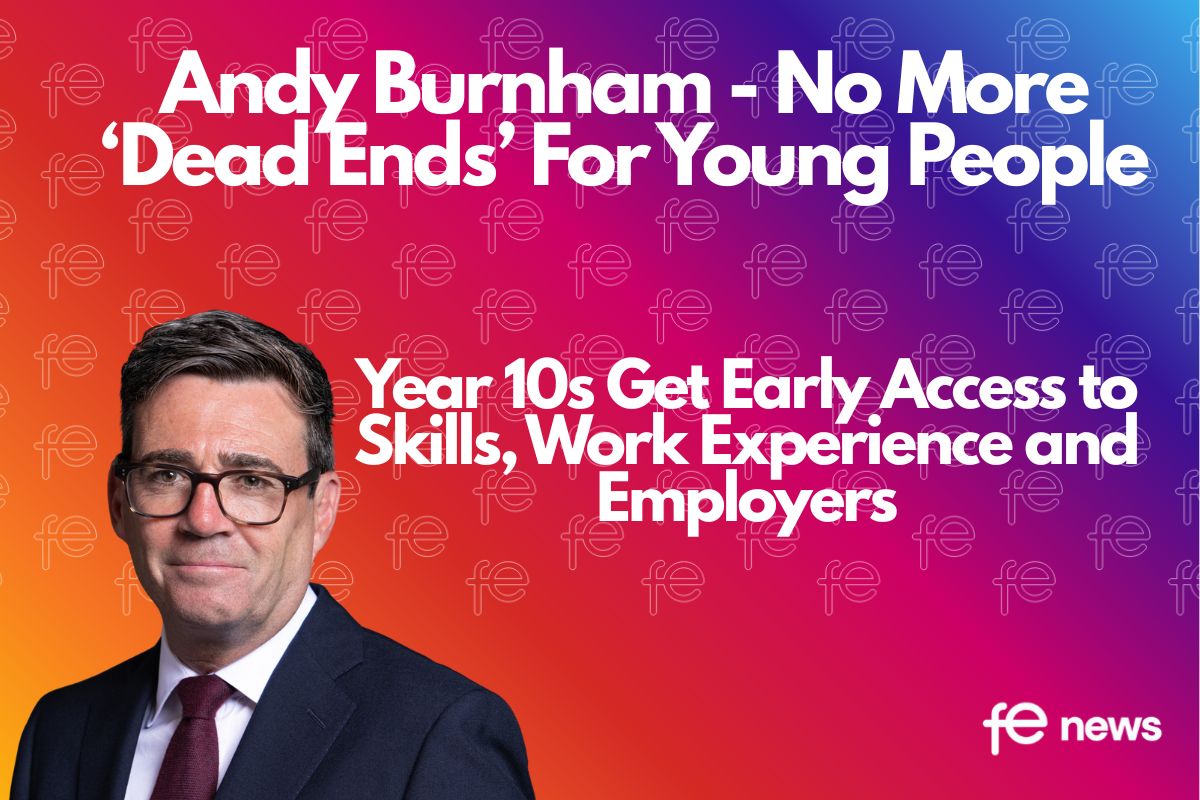
Prime Minister Andy Burnham: ‘From today Britain will value the Hard Hat as much as the Graduation Cap’
- Under the Prime Minister’s fundamental changes to the education system, 14-year-olds will be able to get early access to technical education, skills training, work experience and connections with employers
- Prime Minister to say to students: ‘whether you choose construction, coding or classics, you’ll get the skills you need and be given the respect you deserve’
- Schools, colleges, mayors, local leaders and employers will work together to create clear routes into good, skilled jobs in their area
- Ofsted to change the way they measure and inspect schools, ensuring they recognise the quality of technical education and the support aimed at preparing young people for work
- The changes follow Alan Milburn’s warning that Britain risks leaving behind a “lost generation” with over one million young people now not in education, employment or training
The Prime Minister will unveil a fundamental change to the education system today [Tuesday 28 July], with the launch of new prestigious technical educational routes. The new pathways will provide 14-year-olds with valuable early access to technical skills, work experience and connections with local employers.
‘No dead ends’ for young people
The Prime Minister is determined to put technical education on an equal footing with the traditional academic path and to ensure there are ‘no dead ends’ for young people coming out of the education system. This means providing high-quality technical education routes that are valued and respected by students, parents and employers. In a message directly to students, he will say ‘whether you choose construction, coding or classics, you’ll get the skills you need and be given the respect you deserve’.
From age 14 (Year 10)
From age 14 (Year 10), students will have the chance to combine core academic subjects – including English, maths and science – with a high-quality technical education that’s linked to the jobs available in their area. They will be able to spend time with employers and gain real-world experience.
Building on the MBacc
Building on successful local initiatives, such as the MBacc in Greater Manchester, the new technical routes will mean young people can develop the technical knowledge and skills needed to progress in areas like engineering, healthcare and digital technology, skilling them up with the specific knowledge and capabilities that local employers need.
Regional mayors, local leaders, schools, colleges and employers will work together to shape the new technical education pathways
Regional mayors, local leaders, schools, colleges and employers will work together to shape the new technical education pathways, which can be tailored around local industries and growth sectors. Rather than relying on a one-size-fits-all system designed in Whitehall, the approach will allow areas to shape education around the industries that matter and are growing in their communities. That could include advanced manufacturing, AI, digital and technology, clean energy, life sciences, construction, health and care, or the creative industries, depending on local strengths and where the jobs of the future are being created.
To support this, the Government will prioritise funding towards high-quality technical education and practical routes into work. The Government will also change the way school performance is measured. Inspectors will recognise the schools that provide high quality technical education and support young people to develop the skills, experience and confidence employers want.
Together, these changes will give schools clear incentives and strong support to expand high-quality technical pathways, rather than treating technical education as an optional add-on or a less valued alternative to academic study. This will also ensure that the new technical pathways are properly recognised alongside academic achievement, so young people have real choice over their future.
Whether young people choose university, an apprenticeship, further education or direct entry into a skilled profession, they will now be able to see a clear route from education into employment, gaining the knowledge, skills and experience they need to secure the good jobs and opportunities in their area.
The changes will be part of the Government’s wider programme of devolution – giving local leaders greater influence over education for 14 to 16-year-olds
The changes will be part of the Government’s wider programme of devolution – giving local leaders greater influence over education for 14 to 16-year-olds. The Government will now work together with mayors, local leaders, schools, colleges and employers to develop the new technical education pathways ahead of an ambition to begin rolling them out from September 2028.
The changes announced today are just the first step in the Prime Minister’s plans to tackle the youth unemployment crisis.
The Government will work with mayors, local leaders, schools, colleges and employers to design the new pathways and determine how they operate in different parts of the country. As that work progresses, the Department for Education will use its existing budgets can best support delivery, including through prioritising budgets to ensure investment in high-quality technical education and clearer routes into skilled work.
This work will build on the existing £570 million investment to create additional college places across the country, alongside the wider Department for Education settlement agreed at the 2025 Spending Review, which increased schools funding by £4.7 billion by 2028-29.
The plans will work alongside the Government’s wider reforms to improve support and opportunities for children with SEND, backed by at least £3.7 billion to create around 60,000 specialist places in mainstream schools. That will mean more young people can get the right support closer to home, including calm learning spaces and tailored provision, while still learning alongside their friends where appropriate. Strategic Authorities, schools, colleges and employers will be expected to make these new routes accessible, so young people with SEND can also build the skills, confidence and experience they need for further study, training or work.
The Government will continue its ambition to deliver 50,000 more youth apprenticeships, to reverse a 40 per cent decline over the past decade, and the Youth Guarantee, which provides incentives for employers to hire young people.
The announcement follows the Prime Minister’s first talks with leading business groups last week, where he made tackling rising youth unemployment a priority and called on employers to help restore the first rung on the ladder into work for young people, in return for the government reducing the frictions that make doing business and hiring people more difficult. Employers will be expected to play a bigger role in supporting young people through mentoring, workplace visits, projects and high-quality work experience. Strategic Authorities will help bring together schools, colleges and employers to identify priorities, coordinate employer involvement and help secure meaningful work experience opportunities, ensuring more young people can build the networks, experience and confidence often needed to access good careers.
Prime Minister Andy Burnham said:
“For too long in this country, students have been told that you must take the academic path to do well and to be respected. The whole school system has been built around it and that has let down young people seeking technical qualifications.
“I want an education system based on parity between academic and technical which gives all young people a clear path in life. From today, Britain will value the hard hat every bit as much as the graduation cap.
“In a fundamental change to the education system, we will introduce new technical education pathways from 14 – prestigious routes that will give students the chance to combine the core academic subjects with the skills, technical knowledge and experience they need to get quality, well-paid jobs where they live. My message to young people is this – whether you choose construction, coding or classics, or maths, manufacturing or mechanics, you’ll get the skills you need and be given the respect you deserve.
“Fixing the youth unemployment crisis in Britain will require a major shake-up in how we do things – and that’s what this government will do. I want to ensure that our education system leaves no dead ends for our young people. The changes we’re announcing today will just be the start of our work to restore opportunity and hope across the country.”
Building on Milburn’s Interim Report findings
Alan Milburn’s interim report warned that Britain is at risk of a “lost generation”, with over a million 16 to 24-year-olds now not in education, employment or training. His findings painted a stark picture of a system that too often leaves young people leaving school without the skills, experience or connections they need to step into the world of work.
Many young people are struggling to make the transition into employment, with growing evidence that qualifications alone are no longer enough to secure a good job. If a young person loses contact with work at the start of their adult life, the consequences can last for decades with lower earnings, fewer opportunities, worse health and a greater risk of long-term dependence on the state.
The Prime Minister believes the best way to bring down the welfare bill (currently £125 Billion per year for the 1 Million NEETs and £212 Billion for 2.7 Million people economically inactive due to ill health) is to stop people becoming disconnected from work in the first place, which is why the Government is intervening earlier to strengthen links between schools and employers and to create clear routes into employment.
Rather than relying on a one-size-fits-all system designed in Whitehall, the approach will allow areas to shape education around the industries that matter and are growing in their communities. That could include advanced manufacturing, digital and technology, clean energy, life sciences, construction, health and care, or the creative industries, depending on local strengths and where the jobs of the future are being created.
For example, in one area, the Strategic Authority could identify AI and technology as a growing local sector and bring schools, colleges and employers together to build a clearer route for young people into those jobs. A 14-year-old interested in AI and technology could continue studying English, maths and science while also studying a vocational digital qualification, visiting local tech employers, working on practical projects set by businesses and spending time in a workplace. By the time they choose their next step at 16, they would have a better understanding of the jobs available locally, the skills those employers need and whether an apprenticeship, college course or another route is right for them.
Education Secretary Lucy Powell said:
“Every young person should be able to see a route to success, whatever their talents or ambitions. That’s why today is so important. It marks the start of a real shared effort with employers, businesses, mayors and councils to design an education system that connects young people to jobs and careers in their local area.
“By offering high-quality technical and vocational education alongside academic achievement, we’ll give more young people the chance to leave education with the skills, confidence and opportunities they need to thrive in today’s economy and the careers of the future.
“The technological revolution we are living through should mean young people become the fresh lifeblood our economy needs to adapt and grow. I want to make sure this generation is able to seize that opportunity, whatever their background or postcode.”
Alan Milburn said:
“A million young people are being failed by a system that isn’t creating the opportunities for them to progress in life. The world of work is changing and the education system isn’t keeping up.
“The changes the PM is announcing today are very welcome. They are a big step in the right direction and consistent with the findings of my review. A whole system reset is needed across health, welfare and labour market policy as well as in education and skills. I know the PM recognises this and my final report will outline the further changes that are needed.”
Mayor of London, Sadiq Khan, said:
“For too long, young people leaving school, college or university have faced real uncertainty about what awaits them. They’re not short of talent or ambition, but the roles they need to kickstart their careers and build their futures appeared to have dried up. Meanwhile, rapid advances in AI are changing the world of work altogether.
“That’s why I welcome these new plans from the Prime Minister to tackle the root causes of youth unemployment. This is fully aligned with the work we’re already doing in London, including £18 million of new funding from City Hall, to help thousands more young Londoners into work and training and to prepare them for the jobs of tomorrow.
“Our ambition is to build a future where every young person has the chance to follow their dreams, fulfil their potential and shape our world for the better, and this is the future that we’ll continue to build together.”
Tracy Brabin, Mayor of West Yorkshire, said:
“Here in West Yorkshire, devolution has emboldened us to make a simple promise to our young people – that no one will leave education without having first set foot in a workplace. Now, these bold measures from the Prime Minister will empower us to go even further.
“By putting technical and academic education on an equal footing, we can help ensure that more of our young people leave school with the skills they need to succeed in life and work.”
Michelle Ovens CBE, CEO, Small Business Britain said:
“Small businesses are the heart of communities and are at the front line of working with schools and young people to create routes into work. Often supporting those furthest from the labour market, small business are and will be at the centre of this national effort, building on their strong local networks and driven by a personal investment in the success of their local economies.
“This is why we at Small Business Britain welcome this programme. This is a great step towards preparing young people for the future, which needs to include business skills and entrepreneurship as core to the changing world of work. We look forward to supporting the Government and local communities get this into action. ”
TUC General Secretary Paul Nowak said:
“Andy Burnham is absolutely right to launch a national effort to tackle the crisis number of young people out of work, education and training. The place-based approach the new prime minister has set out is welcome and unions can play a key role in ensuring it is a success.
“Putting technical education on an equal footing with academia brings us closer to the international standard for skills.
“And a qualifications framework that gives all young people opportunities to develop the skills and experience they need to move into a good first job with decent prospects is the right move. It’s vital this is met with adequate funding for both FE and schools to ensure meaningful careers guidance and relevant technical routes for young people.”
Helen Dickinson OBE, Chief Executive of the British Retail Consortium, said:
“Retail has long provided the first rung on the career ladder for millions of people, and will continue to offer young people the skills, opportunities and experiences they need to build lifelong rewarding careers. Retail has so much to offer young people, and the industry is ready to play its part in tackling the youth unemployment crisis.”
Jambu Palaniappan CEO of Checkatrade said:
“This is a very welcome step. Checkatrade’s recent Backing Britain’s Tradespeople report shows nearly half of young people are now considering a career in the trades, with apprenticeships more appealing to under-25s than a university degree.
“That makes sense. As AI reshapes the office jobs market, a trade is one of the most secure bets a young person can make: you earn from day one, you gain a skill nobody can automate, and in most trades there’s a job waiting for you the moment you qualify. The appetite to embrace trade careers is there, and giving 14-year-olds earlier access to technical education and real employer contact is exactly how we close the gap between ambition and opportunity.
“We’re partnering with technical colleges to give learners a leg up in starting a business, and we’d be ready to work with schools, colleges and employers to build the ambitious routes this plan calls for.”
Rose Marley, Chief Executive of Co-operatives UK said:
“We were delighted to be invited to join the Prime Minister and fellow business leaders to discuss this important agenda and the wider role that good business can play in delivering opportunity and growth. Businesses of every size have an important contribution to make in creating pathways into work, particularly for young people. In follow up, we’re convening a ‘Good Business for Good Growth’ forum to bring together organisations committed to creating lasting opportunity. No single organisation can solve these challenges alone. By working co-operatively, bringing together government, employers, education providers and communities, we can create stronger pathways into work and ensure every young person has the opportunity to thrive.”
“Having worked closely with the Prime Minister during his time as Mayor of Greater Manchester, I’ve seen first-hand his commitment to improving opportunities for young people and his determination to tackle the inequalities that too often hold them back. I have every confidence that he will bring that same passion and urgency to this national mission. Every young person deserves the chance to discover their talents, build confidence and see a clear route into a fulfilling career, regardless of their background or where they grow up.”
Neil Davy, CEO, Family Business UK said:
“Family businesses have always invested in the next generation. Across the UK, family-owned firms provide entry-level jobs, apprenticeships, training and long-term career opportunities for young people, rooted in the communities they serve.
“We welcome the Government’s effort to help more young people into good work and recognise that achieving this ambition will require genuine partnership between government, employers and educators. Family Business UK (FBUK) stands ready to play its part and mobilise family businesses from across the UK in support of the government’s objectives. Family businesses can make significant commitments on recruitment, training and investment and we look forward to working in partnership with government to address the barriers that are stopping family firms from doing so.
If the Government gives family firms renewed confidence to invest for the long term, they will help deliver the jobs, skills and opportunities the next generation needs.”
Aaron Asadi, CEO, Enterprise Nation said:
“The first rung on the ladder into work has disappeared for too many young people. Giving 14-year-olds real contact with employers and practical routes into skilled work is the right intervention at the right age – and small businesses, in every postcode, are where many will find that first opportunity… and where some will discover they can build their own. Enterprise Nation’s community of 240,000 small businesses is ready to play its full part in this national effort.”
Dom Hallas, Executive Director, Startup Coalition said:
“As tech and AI are transforming our economy and workplaces, anything that gets young people closer to the action as soon as they can, will make a huge difference to both their prospects going forward and the talent our startups can access to grow.”
Millie Kendall OBE, Chief Executive, British Beauty Council said:
“We have found that bringing young people in at an early age and allowing them to develop the skills and creativity to be part of the business eco-system gives them confidence and motivation, we are looking forward to working with the PM to tackle youth unemployment.”
Stephen Phipson CBE, CEO at Make UK said:
“Manufacturers know that the future of our economy will be shaped by the talent we inspire today. If the UK is to realise the Prime Minister’s ambition of reindustrialisation, we must give young people earlier and greater access to high-quality technical education. Expanding pathways into subjects such as engineering from the age of 14 will help unlock potential, widen opportunity and equip the next generation with the skills needed to drive innovation, growth and prosperity. The UTC programme is the ideal model for achieving this.
Make UK has long championed a stronger status for technical education, and it is encouraging to see the Government setting out plans to strengthen incentives and reshape the role of Ofsted in support of that goal. These reforms have the potential to elevate technical routes, ensuring they are recognised as prestigious, aspirational and essential to the country’s future success.
Manufacturers are passionate about opening young people’s eyes to the exciting careers our sector offers. From designing the technologies of tomorrow to building the products that power everyday life, manufacturing provides rewarding, secure and highly skilled opportunities. We look forward to working with the Government to turn this vision into reality, building on the success of initiatives such as National Manufacturing Day to forge stronger links between education and industry, bridge the gap between classroom and career, and inspire the talent that will shape Britain’s industrial future.”
Irene Graham OBE CEO of ScaleUp Institute said:
The ScaleUp Institute warmly welcomes the plans announced today by the Prime Minister on evolving the education system and careers pathways for young people. The plans align with the long-evidenced needs of scaling firms across the country who want to see more ’ready to work’ skills relevant to their industry and business, alongside greater flexibility in work placements, and apprenticeships.
Access to skilled talent is a proven driver of local scaleup growth. The plans today, backed by the intended change in measurement parameters, should help ensure that critical skills for local growth sectors and clusters are more readily accessible.
We look forward to continuing to work with the Government, local areas and regional Mayors as these initiatives are taken forward. “
Peter Holbrook CBE, Group CEO, Social Enterprise UK said:
“This is a welcome and critically important announcement. Today’s young people face greater uncertainty and more complex challenges than perhaps any previous generation. The UK’s future success demands us to ensure that every young person can achieve their greatest potential. This £3.5 bn commitment will provide young people with the skills and support needed to either start a fulfilling career or equipped as entrepreneurs, to start a business. This is the right thing to do.”
Rain Newton-Smith, CBI Chief Executive, said:
“There is an economic and moral imperative to tackle youth unemployment. Every young person out of work is unfulfilled potential, and economic growth is key to creating the opportunities they are looking for.
“Businesses need skills. Young people need opportunity. But right now, the system is not joining those two things up. We are asking young people to enter a labour market being reshaped at speed – and too many are not equipped to navigate it.
“Our members are ready to partner with the government and regional leaders to remove barriers to hiring and build pathways for young people into fulfilling work. Getting more people into work remains the most powerful route to higher living standards.”
Kate Shoesmith, Director of Policy at the British Chambers of Commerce said:
“Through our work on Local Skills Improvement Plans, we have seen the positive changes possible when all parts of the system work well together – employers, educators and local authorities. This announcement is another step in the right direction and is essential when 75% of firms trying to recruit tell us they have difficulty finding the people they need.
“A more collaborative system which embeds businesses and labour market intelligence in schools from an early age is needed to permanently shift the dial. Giving Ofsted responsibility to assess how well schools prepare children for work is also a much-needed step.
“For a long time now, we’ve argued that this is exactly the type of business-government partnership required. Together we can guide young people successfully into work and support the growth our economy desperately needs.”
Responding to the Prime Minister’s announcement of a new ‘ technical pathway’ approach to education, David Hughes, CEO, Association of Colleges, said:
“AoC is very pleased to see the new Prime Minister making young people and the expansion of technical education immediate priorities. With almost one million young people not in education, training or employment (NEET), today’s announcement of a new, place-based pathway approach from the age of 14 has the potential to be a game changer. The opportunity to routinely explore and gain skills in work-related routes from 14-years-old will motivate and engage many young people who do not view the current GCSE offer as relevant to their future ambitions.
“The change will open up access to training for every young person which directly leads into the employment opportunities in their local area, helping them to see how education and training can improve their life and work chances. This innovative approach will require greater alignment and partnership working, between strategic authorities, employers, colleges and schools, to ensure that the technical and vocational training is high quality, delivered by expert teachers and in facilities which reflect the modern workplace. Colleges will need investment to scale up to deliver to more 14 to 16-year-olds.
“The proposals should ensure young people from an early age are offered more flexible and tailored opportunities to thrive in education and progress into good jobs and higher level education and training. AoC looks forward to working with our members and officials on the next steps, drawing in existing best practice to co-design pathways that support young people and meet regional skills needs.”
Responding to reforms to education and training outlined this morning by the new Prime Minister, the Director of Campaigns at the Recruitment and Employment Confederation (REC), Shazia Ejaz, said:
“This must mark the start of a serious effort to bring schools closer to employers and repair ladders into work for young people. Too often, education and skills policy has been designed at a distance from labour market realities, when employers are best placed to help young people develop the skills and experience needed to succeed.
“Business will welcome the Prime Minister’s commitment to valuing the hard hat as much as the graduation cap. The scale of the challenge means a national effort is needed, with REC research suggesting labour and skills shortages risk costing the UK economy up to £39 billion a year.
“If this approach is to succeed, employers will want to see long-term consistency on apprenticeships and technical education, backed by strong engagement with businesses. Skills policy takes years to bear fruit, so we need generational change here. The focus on technical education is welcome, but we will need to see the Growth and Skills Levy work better to incentivise employer investment. A more flexible, modular approach to levy training will help businesses build the skills pipeline.
“Government also needs to engage more openly with legitimate concerns about the cost and practicality of employing people. Our JobsOutlook report published today shows that businesses remain hesitant about hiring, but also that there are gains there for the taking if the new Prime Minister tackles the burdens and costs associated with taking on staff.
“Extending the National Insurance reduction to age 25, as recommended by the House of Commons Work and Pensions Committee, would provide a real shot in the arm. But that addresses only part of the challenge. Greater pragmatism in implementing the Employment Rights Act, particularly on guaranteed hours, is also needed.
“If employers stay cautious about hiring, opportunities for young people will inevitably dry up. A clear plan on National Insurance and a pragmatic approach to employment rights would help turn this morning’s vision by the Prime Minister into a programme that works for employers and young people alike.”
Nigel Cann, Sizewell C CEO, said:
“We welcome the Prime Minister’s announcement to put technical education on an equal footing with academic learning and to create clearer pathways from the classroom into skilled careers. It is exactly the kind of approach needed if we are serious about tackling the challenge of young people who are not in education, employment or training (NEET).
“At Sizewell C, we are already investing in those opportunities. Just last week, we received planning permission for a new permanent post-16 College on the Coast and Apprentice Hub in Leiston, creating space for 150 students, alongside dedicated facilities for apprentices. Combined with our commitment to create 1,500 apprenticeships over the lifetime of the project, we are helping to build the skilled workforce the UK needs for generations to come.
“Major infrastructure projects like ours have a unique opportunity to connect young people with real jobs, real skills, and long-term careers. We want every young person, whatever their background or postcode, to see a future for themselves in engineering, construction, and the industries that will power the UK’s future. Today’s announcement is an important step towards making that ambition a reality.”
Lukas Kaminskis, CEO of EdTech platform Turing College, which provides online AI and data science courses, comments:
“Putting technical education at the heart of the curriculum, rather than treating it as an optional extra, is long overdue. With AI, automation and digital technology reshaping the workplace, earlier exposure to these skills makes clear sense.
“However, this cannot simply be about adding a few new subjects to the timetable or teaching pupils how to use the latest AI tools. Students will need strong foundations in critical thinking, problem-solving and data literacy, as well as an understanding of the limitations and risks of the technology. These are skills that will be valuable across almost every profession, not only in explicitly technical jobs.
“Schools will also need properly trained teachers, strong links with employers and access to technology that reflects what is actually being used in the workplace. Without sufficient investment and support, there is a risk that the ambition sounds good but does not translate into meaningful or consistent opportunities for pupils across the country.
“It is also important that these pathways remain broad and flexible. At 14, many pupils will not yet know what career they want, so technical education should open doors rather than push them down a fixed route too early. The direction is right, but the detail, funding and quality of delivery will determine whether these reforms genuinely improve their prospects.”
AAT CEO Sarah Beale said:
“It’s great to see the link from education to employment coming through loud and clear in today’s announcement, but it will be no easy task to achieve what has been set out. Helping young people to be work ready, with the skills needed by employers will take effort across government, industry, and education but one we applaud and support 100%.
“AAT has long championed the positive impact vocational routes have in leading to good jobs, careers, and future entrepreneurs. But there are other considerations and challenges to solve. Vocational routes absolutely need to be valued more, but we also need an environment where entry level roles are available for young people.
“To make that happen, employing a young person must be affordable and frictionless. Employers need stability and confidence to recruit and invest. On top of that, we need to better understand what the entry level roles of the future will be, so we can prepare our young people and employers for that future.”
Paul Whiteman, general secretary at school leaders’ union NAHT, said:
“We welcome the ambition to strengthen technical and vocational education and create clearer alternative pathways for young people into further study, training and employment.
“School leaders support the principle of giving technical and vocational education the same status and recognition as more traditional academic routes. Young people should be able to access pathways that reflect their strengths, interests and future aspirations, as part of a broad and balanced curriculum.
“However, this announcement sets out a direction of travel rather than detailed proposals, and schools will need much greater clarity about what it means in practice and over funding.
“It is important that any reforms are developed with the profession, fit alongside wider curriculum and assessment changes, and are realistic about schools’ capacity to build employer partnerships and secure meaningful work experience opportunities.
“School leaders will engage positively in that discussion, but schools, parents and pupils will need reassurance that changes will not be made too quickly, before the practicalities have been fully considered.”
Chief Executive of the Baker Dearing Educational Trust Kate Ambrosi commented:
“We are thrilled that the government is adopting a model of delivering high-quality technical education starting at 14 – which our network of University Technical College secondary schools has been delivering for nearly 20 years.
“UTCs are developed with local employers from the ground up so the technical and employability skills and knowledge that students learn is relevant to their local industries.
“We are already helping mainstream schools offer transformative technical education through our UTC Sleeve initiative. This is a technical pathway that sits beside the school’s academic route and, like the Greater Manchester Baccalaureate with which we have supported Andy Burnham, improves lines of sight between the classroom and workplace.
“The UTC model demonstrably helps young people thrive in work and life. Each year, around a fifth of year 13 UTC leavers progress to apprenticeships, compared to six per cent nationally. In 2025, half of the apprenticeships started by UTC leavers were higher or degree level, compared to two per cent nationally. Just five per cent of UTC leavers become NEET, versus ten per cent.
“This government has made an excellent start to building parity of esteem between technical and academic education. But we will need more apprenticeships, technical university courses, and bursaries for shortage occupations to meet this country’s skills needs and properly bring down youth unemployment.
“Schools must also be provided with the proper funding, resourcing and guidance to deliver high-quality technical education that truly meets local employer need. Baker Dearing is ready to support ministers and schools to effectively implement these new pathways.”
Commenting following the Prime Minister’s announcement on technical education, Pepe Di’Iasio, General Secretary of the Association of School and College Leaders, said:
“School and college leaders share the ambition of improving technical and vocational education, including better pathways for young people from 14. More than one million young people were not in education, employment, or training (NEET) as of January to March 2026 – a truly shocking state of affairs, so we’re pleased the government are treating this as an urgent priority. While we therefore support many of the aims announced today, the government must work to sensible and achievable timescales before implementing this policy. Bringing local politicians, school and college leaders and employers together is a noble objective, but to do it properly requires time, a national framework to work within, and investment. Right now there is little detail about what this will look like in practice.
“If the government is serious about parity between academic, technical and vocational routes, then this must be reflected in school and college performance measures. We have already called for the government to rethink its plans for Progress 8, so that it values all qualifications, not an arbitrary list of some subjects; and have lobbied for the new education secretary to urgently review the Ofsted framework to ensure that accountability supports school and college leaders in making the best decisions in the interests of their pupils.
“The timing of this announcement is unfortunate. To make major educational policy announcements in the middle of the summer holiday is wrong, particularly when there is so little detail. While we recognise the unique circumstances surrounding the change of Prime Minister, we hope that greater consideration will be given to the workload and wellbeing of the sector going forward. It is also not yet clear what the government will ask schools and colleges to do less of in the coming years, if they are to prioritise this instead. We look forward to working with the government to understand what this will look like in the future.”
Andy Clarke, Partnerships Director at Ahead Partnership
“It’s absolutely right that we tackle the UK’s growing NEET challenge, including connecting school to the world of work. But, if we’re serious about reducing the numbers for good, we have to stop waiting until young people are already disengaged.
“The real opportunity lies in starting earlier, before students reach the age of 14. Through our Shaping Our Future pilot we’re working with young people from the age of 12 to build confidence, raise expectations and connect education to future careers before disengagement takes hold.
“By bringing employers together with young people at an earlier stage, we’re helping prevent a negative cycle from setting in, rather than repairing it later.
“The early results speak for themselves. Attendance is improving, confidence is growing and for the first time, young people are telling us they can see a genuine link between what they learn today and the opportunities open to them tomorrow.
“One successful pilot in Leeds won’t solve a national challenge. However, if Government is serious about reducing the number of young people who become NEET, earlier intervention before it’s too late must sit at the heart of that strategy, backed with the same ambition and urgency that Andy Burnham is showing today. We know this approach works, and are ready to help take it further.”
Alice Gardner, Chief Executive of the Edge Foundation said:
“We warmly welcome the Prime Minister’s announcement today of plans to fundamentally overhaul the education system with a view to strengthening post-14 technical pathways for young people.
“Over the past decade, Edge has been outspoken in calling for changes to post-14 education to provide greater opportunity for young people to explore technical subjects and develop essential skills. We have mapped out our vision in various publications, including Our plan for schools and Bacc to the drawing board. Today’s announcement represents the culmination of Edge’s extensive work and advice to policymakers over this period.”
Charlotte Bosworth, CEO of Lifetime Training, said:
“This is a positive step towards challenging the perception that university is the only route to success. Every young person should have access to high quality technical and vocational education, including apprenticeships, that is valued equally alongside academic pathways. Apprenticeships provide a proven route into skilled careers, enabling people to earn, learn and develop throughout their working lives. Achieving genuine parity of esteem between academic and technical routes will help learners make informed choices while giving employers access to the talent and skills they urgently need.
“However, these reforms will only deliver lasting impact if employers are genuinely supported to play their full role. Employers are at the heart of a successful skills system, but many need clearer guidance, simpler processes and sustainable funding to confidently invest in apprenticeships and help shape the workforce of the future. By working in closer partnership with employers and Training Providers, we can ensure technical education and apprenticeships lead to meaningful careers, address critical skills shortages and drive long term economic growth.”
Alastair Morris, Managing Director at Accu Components said:
“This is exactly the long-overdue shift British manufacturing has been calling for. For years, young people have been steered towards a university path that isn’t right for everyone, and the industry has felt the consequences in a widening skills gap. Putting subjects like manufacturing on the timetable from age 14, tied to working alongside real local employers, sends a clear message: engineering is a first-choice career, not a fallback.
“The Prime Minister is right that AI makes practical skills more valuable, not less. Someone still has to design, build and maintain the physical world. With more than a million young people currently out of education, employment or training, giving them a genuine route into skilled manufacturing is one of the smartest investments this country can make for their futures and for ours.”
Jeanette Wheeler, Chief People Officer at MHR:
“With more than one million young people not in education, employment or training, current routes into work clearly aren’t doing their job. Giving technical subjects the same importance as academic subjects will provide young people with the clarity they need on where they should be building their skillset.
“However, putting these subjects on the timetable is only half the solution. Businesses need the opportunity to get involved in shaping what’s being taught, or schools will end up teaching skills that don’t match the ones needed in the workplace. Our research found that 41% of HR leaders name skills shortages as the biggest barrier to their AI plans, and employers are the ones who can see what those gaps look like day to day. That knowledge needs to reach the people designing these courses.
“Another crucial point is that the first batch of these students won’t be looking for work until the 2030s. Addressing today’s NEET challenges requires HR teams to change how they recruit and onboard candidates. A big part of the solution comes down to creating a process that allows an individual’s skills and ways of thinking to shine through. Placing more importance on capability and potential rather than measuring and understanding previous experience is the next best step for businesses to take now.”
Commenting on the Prime Minister, Andy Burnham’s announcement that secondary school pupils in England will be able to study technical subjects, including manufacturing and artificial intelligence (AI), alongside core academic learning from the age of 14, Jude Hillary, Co-Head of Policy and Practice at NFER, said:
“As AI reshapes the labour market and the jobs available in future, it is essential that young people develop the knowledge, skills, and confidence they need to thrive in a changing economy, so it is encouraging to see the Prime Minister place a clear focus on broadening access to technical education from an earlier age.
“This is particularly important given the scale of the challenge facing young people, with more than one million 16–24-year-olds currently not in education, employment, or training. Apprenticeships, work-based learning, and high-quality technical education all have a vital role to play in creating clear, high-quality pathways into good careers, while helping employers meet their skills needs.
“However, introducing new technical pathways at pace will present significant challenges, particularly given existing workforce pressures and significant special education need reforms that schools are already implementing. Delivering this ambition will require careful planning, sustained investment and close collaboration with schools, colleges, and employers.
“Ensuring schools and colleges have access to the specialist expertise, resources and support they need will be essential if these reforms are to be successfully implemented and deliver the opportunities young people need.”
Paraic O’Lochlainn VP eMaint, a Fluke Brand said:
“Britain’s youth unemployment and growing skills gap have too long been treated as separate issues. The Prime Minister’s introduction of a new education pathway is a welcome step – if overdue – towards fixing a broken education system that has remained largely unchanged since 2007. For too long, young people have been told that success means university, a degree and an office job. Everything else was quietly branded second-best.
“That mindset hasn’t served anyone. We currently have over a million young people outside education or work, yet industries such as manufacturing cannot find enough people to close this gap. This is not a lack of ambition from our young workers; it is a failure of imagination from the system around them.
“It is heartening to see this government recognise this issue and take immediate steps to alleviate it. By changing the way education views career pathways, young people will be given the chance to spend time with employers and gain real-world experience. This is a strong step in the right direction. By providing structured workplace training, young people can gain key skills and build industry knowledge, growing their personal confidence in the job while also creating a stronger pipeline of skilled workers for the future. Trades will no longer be viewed as a Plan B.”
Responding to the Government’s technical education announcement, University and College Union (UCU) general secretary Jo Grady said:
“Educators are ready to support the Government’s bold plans to improve technical education outcomes and we welcome these proposals. We now need the Prime Minister to match these ambitious plans with new funding for post-16 education. Burnt out and underpaid staff cannot deliver transformation, and it is shameful that college educators earn far less than their counterparts in schools. To really put technical qualifications on an equal footing with GCSEs and A-levels, college pay must be increased, as this cannot be done on the cheap or off the back of exploiting workers.
“Ministers must also ensure that any investment in further education does not come at the expense of universities, which remain drivers of economic growth, locally and nationally. Higher education is in crisis with thousands of courses and over 15,000 jobs being axed. Universities are central to Andy Burnham’s vision of thriving regional economies, as is investment in the arts. Government needs to support higher education and help reverse the brutal cuts on campus so the sector – and its staff – can thrive once again.
“This moment is a crossroads for the new Prime Minister, and a chance to reject and reverse decades of Tory cuts, underfunding, and undermining of post-16 education and educators. We will be engaging him and the Education Secretary on these issues as a matter of urgency.”
Frances Li, Founder of Biscuit Recruitment, warns that internships are just as crucial as work experience in helping young people bridge the gap between education and the workplace.
Frances says: “For previous generations, an entry-level job was where people were expected to learn. Increasingly, employers are asking candidates to arrive already equipped with experience, commercial awareness and workplace confidence, but young people cannot develop those qualities unless somebody first gives them an opportunity.”
“The government-commissioned Young People and Work interim report led by Alan Milburn, published in May this year, highlighted the scale of this workplace-readiness gap. Fewer than half of 18-to-24-year-olds said they felt ready for work when they left education, while a lack of work experience was identified as the most commonly cited barrier to employment. Well-structured internships can help close that gap by giving young people the opportunity to understand workplace expectations, practise professional skills and build confidence before entering a permanent role.”
“That makes a well-designed internship more important than ever. It can provide the first credible line on a CV, but its value goes far beyond that. Internships help young people learn how organisations operate, understand professional expectations, build networks and discover where their strengths can make a meaningful contribution.”
Julie McCulloch, Chief Executive, EPI said
“The Education Policy Institute welcomes the ambitions on education set out by the new Prime Minister today. While there is much to admire about England’s education system, major challenges remain. As our recent annual report starkly highlighted, the attainment gap between children and young people from disadvantaged backgrounds and their peers remains stubbornly wide, and recent attempts to address this disparity have stalled or reversed.
“Our research has also shone a spotlight on the widening participation gap in post-16 education. Nearly one-in-four students from low income backgrounds do not go on to post-16 education or training, compared with one-in-ten other students. This gap has been widening and is particularly acute for those living in persistent poverty. The interim report of the Milburn review into young people and work found a similar picture. It documented myriad and interconnected reasons, across the labour market, education, health and welfare, for the shockingly high numbers of young people now not in education, employment or training.
“Clearly, something must change. It is essential, though, that the reforms the new Prime Minster wishes to see are underpinned by a robust evidence base, and learn from previous attempts to create greater parity between vocational and academic pathways.
“It is also crucial that everyone involved in developing this new approach is mindful both of current capacity constraints, and of potential unintended consequences. Offering more technical education to students from age 14 may help to engage more young people, but it will also require teachers with different expertise. Disadvantaged students need more focussed support than is often currently possible in our underfunded schools and colleges, whatever route they take. And there is a risk that, if implemented poorly, an over-focus on the needs of the local economy and on greater student choice below the age of 16 could have the opposite effect on social mobility from the one intended.
“The number of young people, particularly those from less advantaged backgrounds, who are currently disengaged from education is a major national problem, and the Burnham government is right to signal an early focus this issue. The challenge will be to stop the policy pendulum from swinging too far, and ensure these reforms are set up in a way which addresses what doesn’t work about the current system without dismantling what does.”
Responding to the Prime Minister’s announcement of new steps to help young people access vocational education and enable local leaders to shape pathways into work, Mark Hilton, Policy Delivery Director at BusinessLDN, which leads on development of the London Local Skills Improvement Plan, and recently found that just half of London firms have the skills they need to meet the requirements of their businesses, said:
“These new measures mark a positive step towards making our education system more responsive to the skills needs of businesses at a time when the world of work is being transformed by AI.
“The Government is right to back locally led approaches to bringing employers and educators together to co-design training programmes that will equip young people with the skills that growth sectors in their areas are seeking.
“The capital has the highest unemployment rate in the country, with one in four young Londoners not currently in education, employment or training, so tackling this challenge is critical to unlocking the city’s full potential as an engine of growth for the whole UK.
“The Government should also look again at ways to bring down the high costs of employment, highlighted in the Milburn Review, to make it easier for firms to hire those at the start of their careers.”
Asli Atay, Senior Policy Advisor (she/her), Work Foundation at Lancaster University – a leading think tank for improving working lives in the UK – on the Prime Minister’s youth employment speech:
“Putting technical and academic routes on an equal footing is a welcome and overdue step. The focus on local partnerships, real work experience, and earlier contact with employers should help more young people find a route into work that suits them.
“But skills and experience count for little without jobs to use them in. Over a million young people are not in education, employment, or training, and our research shows starter jobs have halved over the last decade.
“These pressures aren’t evenly shared. In too many communities, the pathways into sustainable work simply aren’t working, and the private sector alone is unlikely to fix that in the near future. That points to a bigger role for the public sector – a stronger Jobs Guarantee for young people, not built around placements in already insecure sectors like hospitality and retail, but focused on longer-term positions offering secure, socially valuable work, whether in care, local government or elsewhere.
“Early intervention is where the evidence is clearest. Young people consistently tell us that poor experiences of school, particularly where their needs went unsupported, leave a lasting impact on their confidence going into work. The 2028 timeline is sensible if it means getting this right, and strengthening the skills pipeline is an important step for the next generation. But it must be complemented by direct support to the million young people who need help now.”
Vivienne Stern MBE, Chief Executive of Universities UK said:
“University is the right choice for many, but not all young people. The education system is deeply connected and universities deliver a huge amount of technical and vocational education. But there has been a decline in non-university routes into employment, so we fully support the ambition to create a variety of high-quality routes from education to employment for all.
“We are working to strengthen the links between universities and local employers, help graduates into good jobs and give businesses the talent they rely on. We are also deepening our work with the Association of Colleges to improve collaboration between universities and colleges.”
Suzanna Kemal, Head of HR at Reward Gateway, Edenred, comments:
“Andy Burnham is entirely right to call for a radical rethink of vocational pathways to tackle the £125 billion cost of youth unemployment – but government reforms can only go so far if corporate UK remains passive. For years, employers have complained about a ‘skills shortage,’ but allowing tens of thousands of young people to fall into economic inactivity every year proves the crisis isn’t a lack of talent; it’s a systemic delivery failure.
“HR and business leaders can no longer afford to sit quietly at the end of the education pipeline. While employers can’t fix early-years education, we have complete control over what avenues open up to young people when they turn 16. If we want to break the conveyor belt to long-term unemployment, businesses must step up as co-creators of talent – scaling non-graduate pathways, expanding early-career opportunities, and hiring for potential over credentials.”
Jane Harris, Chief Executive of Speech and Language UK, said:
“Expanding technical education is welcome, but this policy will fail unless it is matched by a much stronger focus on communication skills.
“Speaking, listening and understanding language are fundamental to securing a first job, learning safely at work and progressing in a career. Yet a record one in five children are now struggling with speech and language.
“New pathways, work experience and employer links will not deliver their full promise if young people cannot understand instructions, explain their ideas or communicate with confidence.
“The government must put speech, language and communication at the heart of these reforms, with properly trained staff, early identification and targeted and specialist support. Because technical opportunity without communication support will leave too many young people locked out of the jobs these reforms are meant to create.”
Matt Wrack, General Secretary of NASUWT-The Teachers’ Union, said:
“The Prime Minister has identified a significant issue with the learning offer made to secondary pupils in England. It is entirely legitimate for him to look at how programmes can be reshaped to support young people’s engagement with and enjoyment of learning and create the breadth and balance that the current curriculum lacks.
“However, to date there is a dearth of detail on how these new pathways will work and how they will be integrated with the existing curriculum. It will be essential as further details of these proposals are developed that teachers and school leaders are able to help shape the structure and implementation of any plans.
“There are important changes already in train, including those to the curriculum and changes which have already been introduced to the inspection system, that have been developed without reference to the Prime Minister’s aspirations. The government also has plans for significant changes to the system for supporting children and young people with SEND about which teachers have expressed profound concerns. The government will need to make sure that any changes in policy in this area are manageable for schools and cohere with wider policy.
“Serious curriculum and qualification reform also requires resources and funding. Currently, schools are under significant and increasing financial pressure. They are being asked to do even more with even less. No successful and sustainable package of change is deliverable in such circumstances and the Prime Minister must take action to invest in education if the aims of this announcement are to become a reality.”
Imran Tahir, a Senior Research Economist at the IFS, said:
“The problems this announcement is designed to solve are clear: the share of young people not in education, employment or training has been rising, and many workers are in jobs mismatched to their qualifications. The vocational education system is a sensible place to look for part of the answer to these issues. This government is certainly not the first to reach for this lever – constant reform has been the order of the day in recent decades. But today’s announcement differs by looking much earlier in life, at age 14. That brings its own challenges, not least the risk of asking young people to specialise too soon, though there are other countries which specialise even earlier. Getting employers to engage with designing – and perhaps helping to deliver – training programmes will be vital to their success. Recent experience with T Levels shows how challenging it can be to secure their involvement in delivery.”
Gareth Smith chief of strategy and student life at UA92 said:
“The headlines don’t go far enough. Andy Burnham is right to champion vocational education, but the national debate still frames it as degrees versus vocational training, when that’s the wrong conversation.
“The real reform should be challenging universities to design every degree around employment outcomes, regardless of subject.
“If a degree doesn’t clearly improve a student’s career prospects, universities should ask why they’re offering it.
“We’ve worked with Andy Burnham previously on these issues through the Greater Manchester Baccalaureate and one point we’ve consistently challenged is the idea that young people have to choose one route or the other. There isn’t a binary choice between vocational and academic.
“Many of the people wearing those hard hats are graduate engineers, surveyors and architects. Doctors also follow one of the most vocational education pathways there is.
“While there will always be a place for subjects studied for their intrinsic value, universities also have a responsibility to be honest about graduate outcomes. English Literature, for example, consistently has one of the weakest employment outcomes.
“Students deserve to understand where a degree is likely to lead before they commit years of their lives and thousands of pounds to it.
“Young people shouldn’t have to choose between an academic education and a career-focused one. They deserve both.
“The universities that thrive over the next decade will be those that stop seeing academic excellence and employability as competing priorities. Government should expect every university to demonstrate that industry projects, placements and professional qualifications are embedded into every degree from day one.”
Daniel Green, Policy Director from the Federation of Awarding Bodies (FAB) said:
“We welcome the Government’s intention for students from 14-16 to have greater access to technical education. The Federation has long advocated for improving the connection between the pre-16 and post-16 curriculum for technical and vocational routes.
“There are now important questions to address, including which qualifications will be available to learners aged 14-16, how new provision will align with wider reforms to technical pathways, and how local authorities and employers can help coordinate opportunities that reflect local skills needs.
“The expertise of awarding organisations will be vital in ensuring that these routes support progression, meet employer needs and maintain confidence in the qualifications system.”
Myles McGinley, Managing Director of Cambridge OCR, said: “This is an important step forward. The untapped potential of technical pathways deserves serious attention, and it seems to be getting it from the Prime Minister.
“Technical awards, such as Cambridge Nationals, create an explicit link between school and work for hundreds of thousands of young people. Scaling that up will open new opportunities for a whole generation.
“If we get this right, technical education can offer practical insights and connections with industries like engineering, tech, health and social care, construction, business, media, sport and the creative sectors. That will not only help tackle youth unemployment, but inspire and motivate teenagers at a pivotal moment in their lives.”
Responses