
Housebuilding and clean energy at risk as plumbing workforce set to shrink by 30%
England’s plumbing workforce is on course to shrink by 30% by 2039, according to a new report. This is the first time data has been…

An apprenticeship is a real job where you learn, gain experience and get paid. You’re an employee with a contract of employment and holiday leave. By the end of it, you’ll have the right skills and knowledge needed for your chosen career.
To embark on your apprenticeship journey, ensure you:
*You can apply for an apprenticeship while still in school.
Real Job, Real Pay: Earn a wage and enjoy holiday pay while working in your chosen field.
On-the-Job Learning: Work alongside seasoned professionals, gaining practical, job-specific skills.
Structured Training: Allocate time for training and study related to your role, whether at your workplace, a college, with a training provider, or online.
With over 600 different apprenticeships available, there’s a perfect match for every career aspiration. You can view all types of apprenticeships on GOV.UK.
The apprenticeship levy is paid by large employers with a pay bill of over £3 million. Currently, only 2% of employers pay the levy, which is set at a rate of 0.5% of their total annual pay bill.
Levy funds are used to pay for apprentices to achieve qualifications that are set out in their approved apprenticeship training programme and are deemed necessary to being effective in the job, such as a degree or a diploma.
Find out more about the Apprenticeship Levy here
Frameworks, developed by sector bodies, are used to assess apprenticeships. Frameworks are primarily qualification-focused. The main aim at the end of a framework is to have achieved a competency-based qualification, such as an NVQ, and a technical qualification, such as a BTEC.
A standard contains a list of the skills, knowledge and behaviours an apprentice will need to have learned by the end of their apprenticeship.
Standards are occupation-focused; they are not qualification-led. The learning happens throughout the apprenticeship. And the apprentice is assessed at the end. They need to prove that they can carry out all aspects of their job.
You could get a job with your current employer once you have finished. They might like to hire you because they trained you and know you can do the job well.
You could also:
You can watch videos of real apprentices talking about their experiences, including what they did afterwards.
Apprenticeships come in four different levels:
Intermediate: Level 2
Advanced: Level 3
Higher: Level 4 or 5
Degree Apprenticeship: Level 6 or 7
For equivalent educational levels, refer to GOV.UK.
England’s plumbing workforce is on course to shrink by 30% by 2039, according to a new report. This is the first time data has been…

Every year, apprenticeship providers brace themselves for a new set of funding rules. The annual ritual is familiar: download the document, highlight the changes, update…

A YOUNG engineer building her career with a global technology company has been shortlisted for a prestigious industry award after making impressive strides in advanced…


Leading apprenticeship provider JTL will be opening its new Merseyside Training Centre in Huyton early in 2027, expanding access to high-quality electrical apprenticeship training across…

Published just days after Labour Party Conference and ahead of the upcoming Milburn Review’s final report and recommendations, a new report has found that 24%…

A MANUFACTURING leader responsible for more than 300 employees at one of North Wales’s largest production sites completed a business degree with Coleg Cambria to…

Winners of the Cambrian Training Apprenticeship, Employer and Skills Awards 2026 Cambrian Training Company (CTC) has every reason to be proud as it reflects on…


Lauren Edwards has built a career defined by steady progression, growing confidence, and a genuine passion for hospitality management. Working at Royal Porthcawl Golf Club,…
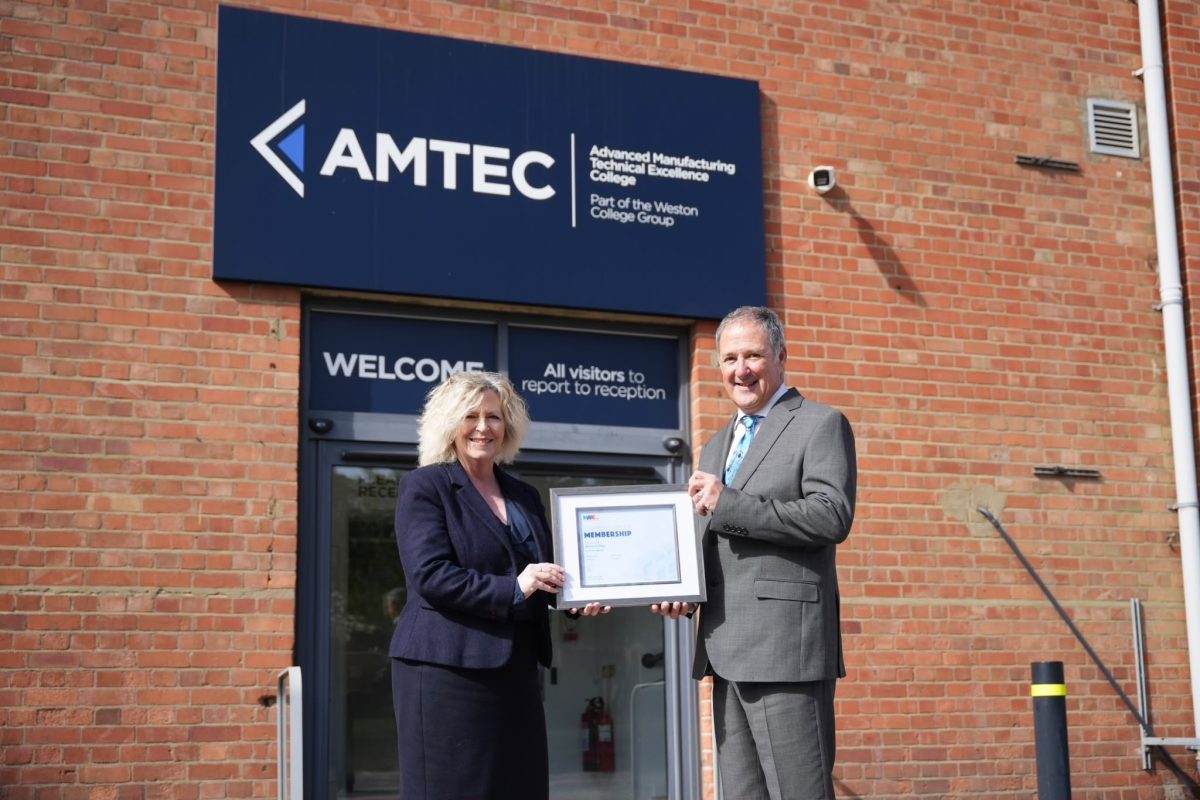
Yesterday Weston College welcomed Jim Davison, National Membership Director at Make UK, to its Advanced Manufacturing Technical Excellence College (AMTEC) on National Manufacturing Day, celebrating…


For many individuals with disabilities and additional learning needs, the journey into employment can be challenging. Too often, opportunities and support do not lead to…
Please confirm you want to block this member.
You will no longer be able to:
Please allow a few minutes for this process to complete.