
Colleges launch STAR network to strengthen FE’s role in UK space workforce development

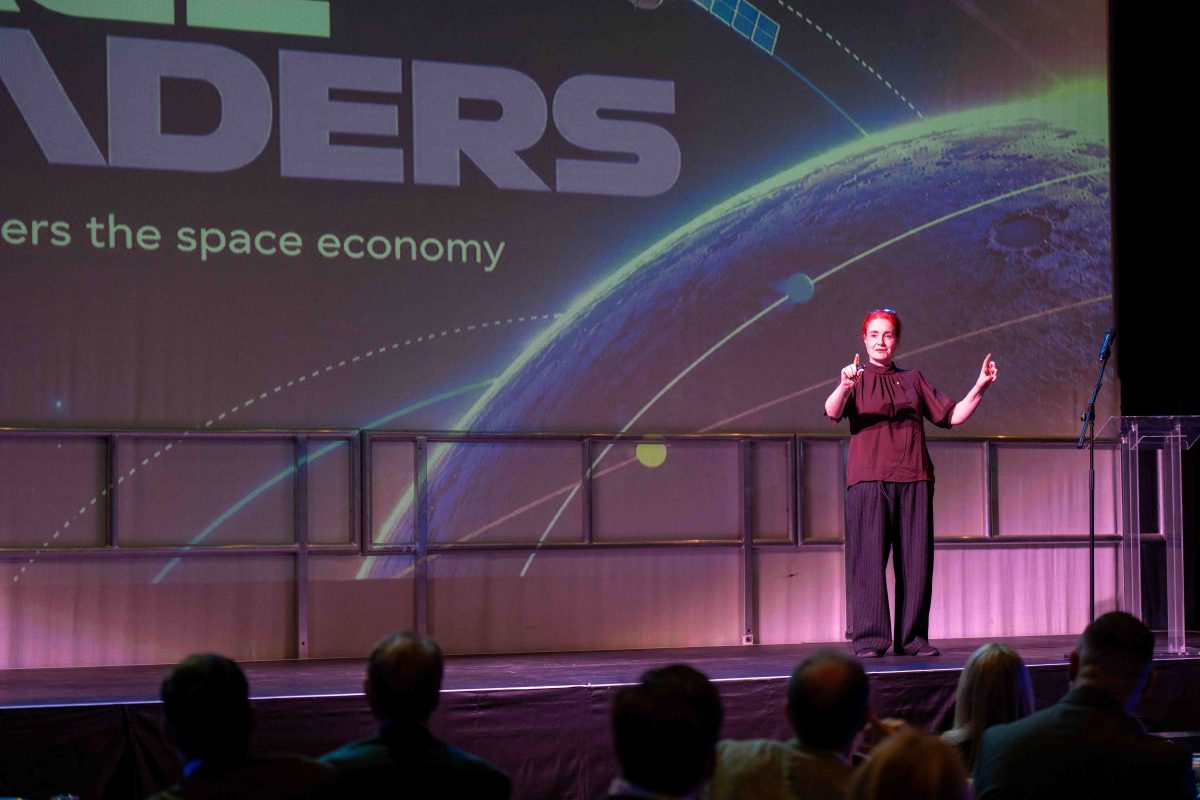
A national Further Education network has been launched to strengthen the role of colleges in developing the UK’s space workforce and open up careers in the sector to a wider range of learners.
STAR (Space Tertiary Applied Routes) will bring colleges and other post-16 providers together to develop curriculum, share expertise and build stronger relationships with employers, giving FE a collective voice in the future of space education.
The network was launched at Hull College’s The Workforce Beneath the Satellites: Building the UK’s Space Workforce Together conference, held during World Space Week.
Hull College Principal and CEO Debra Gray CBE outlined how STAR will connect expertise across FE and help providers respond collectively to workforce needs extending far beyond astronauts and scientists.
Debra said:
“The future space workforce is already in our colleges. We are teaching the engineers, technicians, digital specialists and business professionals this industry needs, but too many learners don’t yet recognise that their skills could take them into space-related careers.
“Colleges have the expertise, the employer relationships and the reach into communities to change that. What has been missing is a coordinated approach that brings those strengths together and gives FE a clear voice in shaping what happens next.
“That is what STAR will do. A college might have an excellent employer partnership, a lecturer who has developed an inspiring project or teaching resources that could benefit students across the country. By sharing that work, we can achieve far more together.
“We want space to become a relevant part of the subjects we already teach, with employers helping us understand how technology and occupations are changing. That means supporting our staff as well as our students.
“We also need to look beyond traditional routes into the industry. A young person starting an apprenticeship, a parent returning to education or an adult changing careers could all have something valuable to offer.
“Our ambition is to make those opportunities visible and achievable. FE should be helping to shape the future space workforce, and STAR gives us a practical way to do that collectively.”
STAR forms the FE community within the Space Universities Network (SUN). Membership is voluntary and open to UK FE colleges, sixth form colleges, University Technical Colleges and other post-16 providers interested in developing space education.
So far, there are 16 members of STAR across the country.
The network recognises that strong practice already exists, but is often developed independently. It will connect providers to reduce duplication, share effective approaches and support colleges at every stage of developing their space-related provision.
STAR’s initial two-year strategy sets out six priorities: building the national community; inspiring world-class curriculum; developing outstanding educators; connecting education with industry; inspiring the next generation; and shaping the future of space education.
Planned activity includes a shared library of teaching resources, collaborative curriculum projects, professional development, employer masterclasses and technical briefings.
The network also aims to create opportunities for learners through live industry projects, mentoring, competitions, site visits and guest speakers.
Alison Maynard, Deputy Principal at New College Durham and a member of the STAR board, said:
“The launch of STAR is an important step towards ensuring Further Education plays a central role in developing the skills needed by the UK’s growing space sector.
“Here in the North East, that opportunity is particularly exciting. We already have a strong foundation of engineering, advanced manufacturing and digital expertise, alongside a growing cluster of more than 80 businesses contributing to the space economy and creating opportunities for future talent.
“From satellite communications and space technology to precision engineering and data applications, the sector needs people with a wide range of practical and technical skills as well as those following more traditional routes into science and aerospace.
“Colleges have a vital role in helping learners recognise how the skills they are developing can translate into careers in this exciting industry.
“Through STAR, we can share expertise, strengthen links with employers and make space-related learning more accessible to people of all ages and backgrounds.
“Here at New College Durham, we want to help connect regional talent with emerging opportunities, supporting businesses to access the skills they need while inspiring the next generation to see a future for themselves in the space sector.”
Hull College’s contribution to STAR builds on ORBIT (Opening Routes Between Industry and Talent), its space awareness programme for FE learners.
Developed through a SUN special project with UK Space Agency funding, ORBIT comprises 12 flexible micromodules designed to fit into existing Level 2 and Level 3 vocational programmes. The ambition is to make it freely available to colleges nationally.
STAR provides a wider framework through which providers can share initiatives such as ORBIT, contribute their own expertise and shape future activity.
The launch conference, developed in partnership with Space Hub Yorkshire, brought education and industry together to examine workforce needs.
Delegates were asked to identify what needed to start happening, what should change and what they could help deliver, establishing an emphasis on practical collaboration that will underpin STAR’s work.
Gaynor Hilton, Strategic Projects and Quality Lead – Construction and Engineering at Activate Learning, which offers education and training across Oxfordshire, Berkshire and Surrey, said:
“Being involved with STAR is an exciting opportunity for Activate Learning to contribute to a growing national collaboration between Further Education and the UK space industry.
“What particularly interests me is that the space sector needs far more than aerospace specialists. It needs engineers, technicians, digital professionals and people with practical technical skills – many of which are already being developed within our colleges.
“Initiatives such as ORBIT are particularly exciting because they offer the potential to introduce space-related learning into existing technical and vocational programmes, helping learners understand how the skills they are developing connect to emerging industries and future careers.
“Through STAR and ORBIT, we have an opportunity to share expertise, strengthen employer relationships and make the space sector more accessible to learners who may never previously have considered it as a career destination.
“For me, the real value is bringing colleges and industry together to develop the skills, opportunities and aspirations of the next generation.”
Responses