
AI-powered student startups to battle for innovation awards in London final

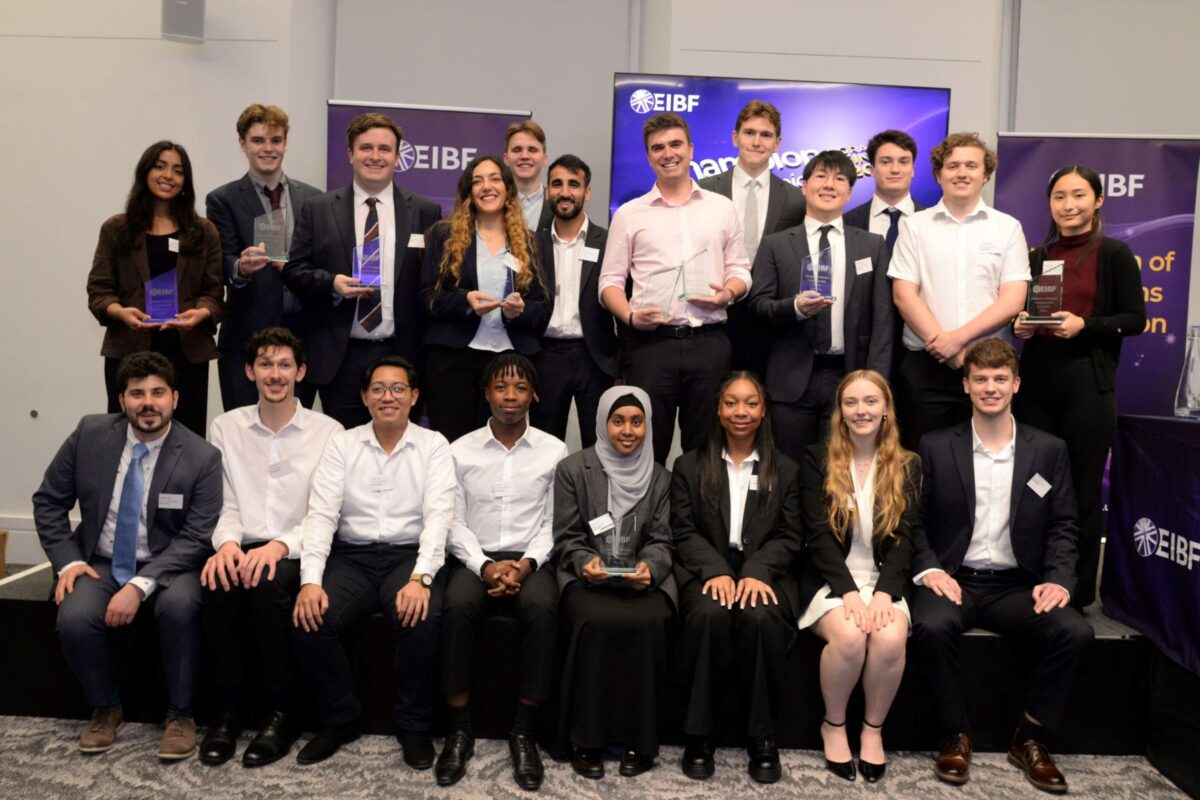
AI-powered innovations will take centre stage as the UK’s next generation of entrepreneurs go head-to-head in the final of the 2026 ESBF Champion of Champions competition in London on 13 November.
From AI virtual patients that help train medical students to a device that identifies malaria-carrying mosquitoes by the sound of their wingbeat, the student finalists are using artificial intelligence to develop solutions to some of today’s biggest challenges.
The ESBF Champion of Champions final will take place at the Royal Academy of Engineering in London on 13 November 2026, following a day of intensive coaching for the finalists on 12 November.
The finalists will compete in two categories – Big Ideas (undergraduates) and Startup (postgraduates) – with the teams competing for a share of the £16,500 prize fund.
Now in its eighth year, the Champion of Champions competition brings together some of the UK’s most promising STEM student and graduate entrepreneurs, giving them the opportunity to turn innovative ideas into solutions to real-world challenges.
The event marks the culmination of a year-long programme of enterprise competitions held at universities across the UK, giving thousands of students the chance to develop their entrepreneurial skills and put their ideas to the test.
The AI finalists
Virtual Medic (Queen’s University Belfast)
Virtual Medic was developed by Abhay Shivamurthy, 22, a medical student at Queen’s University Belfast originally from Newcastle-under-Lyme. The AI-powered platform allows medical students to practise clinical consultations with animated virtual patients.
Students speak naturally with the virtual patients, asking about symptoms and medical history, and receive structured feedback showing what they covered, what they missed and how they could improve. Consultations reflect the format of OSCEs, the practical exams used by medical schools, and universities can create their own cases and track student progress.
Abhay came up with the idea while preparing for his own second-year practical exams, finding that practising with friends felt artificial and gave limited feedback. He started building Virtual Medic the night he finished his exams and has developed it alongside his medical degree.
Epile-X (Imperial College London)
Epile-X was founded by Imperial College London graduate Estelle D’Alterio, 28, with teammates Alexis DeVillard, Muireann Hogan and Calvin Yap. It is a discreet behind-the-ear wearable being developed to help people with epilepsy feel safer and better supported in their daily lives.
The device monitors brain activity day and night, with the aim of detecting patterns that may indicate a seizure and sending real-time alerts to chosen caregivers through a connected app. It is also designed to create an objective record of events that can be shared with clinicians, alongside medication reminders and health tracking.
For Estelle, the motivation is deeply personal. When she was eight years old, she lost a childhood friend to a night-time seizure.
CVSuite.AI (Durham University)
CVSuite.AI was founded by Isaac Kennington, 20, a Durham University computer science student, with design lead and fellow student Eila O’Connor, 20. The AI-powered platform helps students and graduates improve and tailor their CVs and job applications.
Rather than generating generic AI-written content, the platform helps students understand how to match their experience to individual opportunities. University careers teams can also use live data to see where students are being screened out and where extra support is needed.
Isaac came up with the idea after applying for around 100 jobs, placements and internships himself. The system he built to tailor his applications quickly led to multiple offers, and when friends started asking for help, he realised he could build the process into a platform.
ISARS (University of Southampton)
ISARS (Intelligent Species-Specific Acoustic Repulsion System) was created by Ulrich Ronald Mefenya Tanetsing, 23, a University of Southampton Biomedical Engineering postgraduate. It is a small, low-cost, AI-powered device designed to detect and repel mosquitoes using sound.
The device uses the sound of a mosquito’s wingbeat to identify the species most likely to transmit malaria, then uses targeted sound to disrupt the mosquito’s navigation, with the frequency continuously adapting rather than relying on a single, repeated tone. It is designed to work without chemicals, an internet connection or complex infrastructure, potentially making it suitable for homes in remote communities.
Growing up in Cameroon, Ulrich saw countless people suffer and die from malaria. The idea came to him after watching a documentary about submarines using acoustic technology to detect and steer whales away from their path, and realising that mosquitoes, like whales, communicate and navigate using sound.
Dragons’ Den style final
Before taking to the stage for the Grand Final, the ten teams will spend a day working with a select group of Sainsbury Management Fellows.
The Fellows – business leaders who themselves benefited from an MBA scholarship awarded by ESBF – will each take two finalist teams under their wing, sharing their experience and helping the students sharpen their ideas, presentations and pitches ahead of the final.
The following day, the finalists will face a Dragons’ Den-style showdown in front of a panel of experts, pitching their innovations and making the case for why their idea could make a real difference.
The competition provides a platform for students not only to showcase their innovations, but also to develop the business skills, confidence and experience needed to take their ideas further.
Responses