
How this science teacher sceptic learned about the value of apprenticeships
At the Skills Federation we are proud to work with our 19 members and between us we cover more than 20 different sectors of the…

An apprenticeship is a real job where you learn, gain experience and get paid. You’re an employee with a contract of employment and holiday leave. By the end of it, you’ll have the right skills and knowledge needed for your chosen career.
To embark on your apprenticeship journey, ensure you:
*You can apply for an apprenticeship while still in school.
Real Job, Real Pay: Earn a wage and enjoy holiday pay while working in your chosen field.
On-the-Job Learning: Work alongside seasoned professionals, gaining practical, job-specific skills.
Structured Training: Allocate time for training and study related to your role, whether at your workplace, a college, with a training provider, or online.
With over 600 different apprenticeships available, there’s a perfect match for every career aspiration. You can view all types of apprenticeships on GOV.UK.
The apprenticeship levy is paid by large employers with a pay bill of over £3 million. Currently, only 2% of employers pay the levy, which is set at a rate of 0.5% of their total annual pay bill.
Levy funds are used to pay for apprentices to achieve qualifications that are set out in their approved apprenticeship training programme and are deemed necessary to being effective in the job, such as a degree or a diploma.
Find out more about the Apprenticeship Levy here
Frameworks, developed by sector bodies, are used to assess apprenticeships. Frameworks are primarily qualification-focused. The main aim at the end of a framework is to have achieved a competency-based qualification, such as an NVQ, and a technical qualification, such as a BTEC.
A standard contains a list of the skills, knowledge and behaviours an apprentice will need to have learned by the end of their apprenticeship.
Standards are occupation-focused; they are not qualification-led. The learning happens throughout the apprenticeship. And the apprentice is assessed at the end. They need to prove that they can carry out all aspects of their job.
You could get a job with your current employer once you have finished. They might like to hire you because they trained you and know you can do the job well.
You could also:
You can watch videos of real apprentices talking about their experiences, including what they did afterwards.
Apprenticeships come in four different levels:
Intermediate: Level 2
Advanced: Level 3
Higher: Level 4 or 5
Degree Apprenticeship: Level 6 or 7
For equivalent educational levels, refer to GOV.UK.

At the Skills Federation we are proud to work with our 19 members and between us we cover more than 20 different sectors of the…

A new online module for training providers has been developed that’s designed to increase the number of autistic individuals choosing and succeeding in further education…


AELP has today published its Autumn Budget consultation submission – estimating that government investment in skills could lead to over 500,000 high-quality apprenticeships per year…


Introduction End-Point Assessments are a pivotal element in apprenticeships, serving as the final measure of an apprentice’s competency before they can be certified. While EPAs…


A growing body of evidence suggests that lived experience is central to the delivery of a variety of frontline public services, particularly those aimed at…


A new bursary has been launched to help apprentices with their employability and professional recognition. The Post-Apprenticeship Recognition Scheme (PARS) has been created by the…

With GCSE and A-level results recently released, the best and brightest young people are now ready to make their mark in the workforce. For many,…
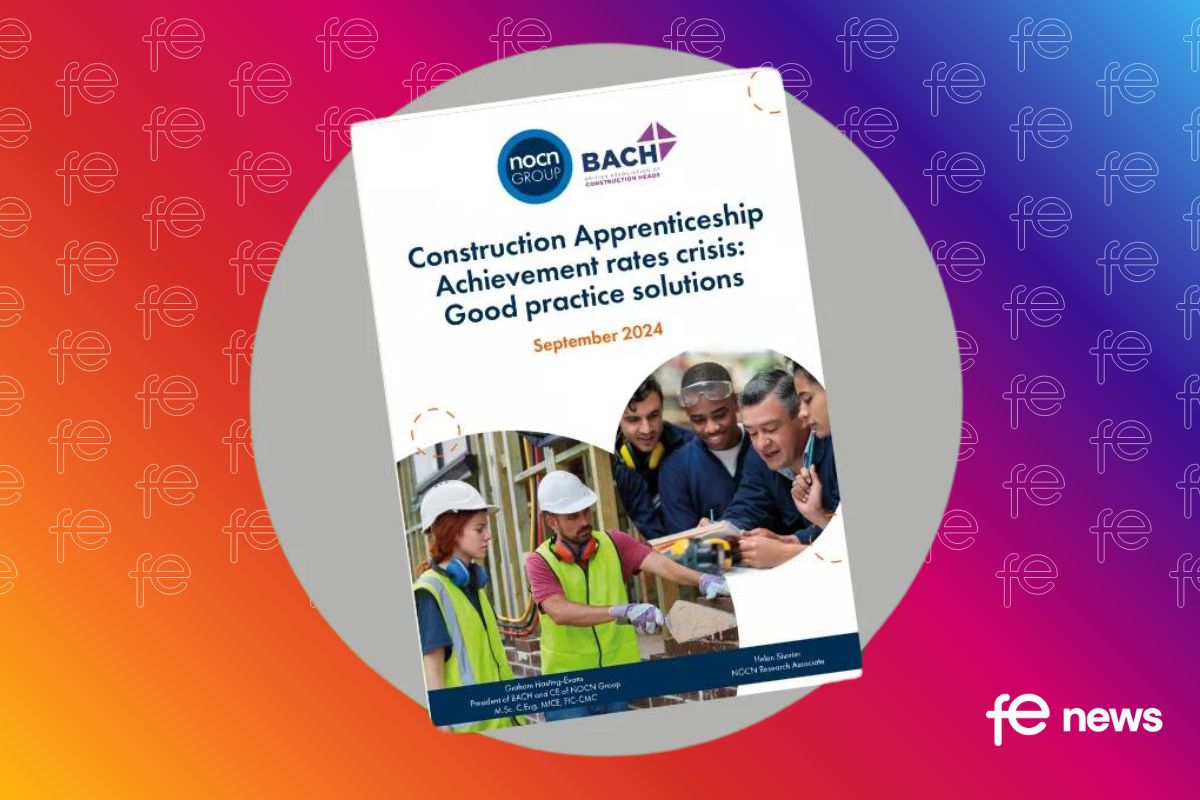
A new report from the British Association of Construction Heads (BACH) investigates the reasons behind why 47% of construction apprentices do not complete their apprenticeship.…


A mum from Barrow has completed various courses at PHX Training to improve her skills – which has led to an apprenticeship with BAE Systems.…


Fix Radio urges young Brits to take an apprenticeship amid the national skills deficit as 59% of young people aged 13 to 17 are considering…
Please confirm you want to block this member.
You will no longer be able to:
Please allow a few minutes for this process to complete.